


Browsing Category
Semiconductors
29 posts
Semiconductor industry coverage, including chips, lithography, foundries, memory, packaging, chipmaking equipment, export controls, supply chains, and the hardware behind AI and modern computing.
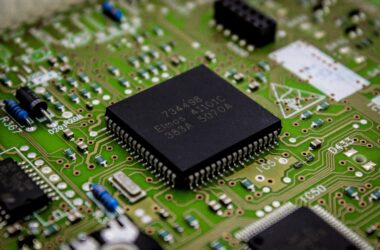
AI Memory Shortage Turns Into a Fight Over Who Gets Chips
A July 1 SEMI letter warns Washington that direct intervention in memory-chip pricing or production could worsen an AI-driven shortage. The fight now reaches beyond data centers, with broadband, automotive, medical-device, retail, and consumer-electronics groups worried that HBM demand will squeeze ordinary DRAM supply.

Hong Kong’s AI Chip Trade Boom Turns Logistics Into a Policy Risk
Hong Kong re-exported $124 billion in semiconductors to mainland China in the first five months of 2026, according to Bloomberg’s review of official data. The city’s rising role as an AI-chip gateway shows why logistics, payments, and export-control exposure now matter as much as chip supply itself.
Micron’s Hiroshima HBM Expansion Shows AI Memory Is the Next Supply Fight
Micron has broken ground on a roughly $9.3 billion Hiroshima expansion that will produce high-bandwidth memory for AI processors, with shipments expected around summer 2028. The timing shows why memory, not just GPUs, has become a strategic bottleneck for AI infrastructure buyers.
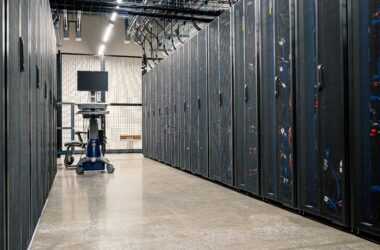
SoftBank SB Neo Turns AI Cloud Capacity Into a 10-Gigawatt Race
SoftBank has formed SB Neo, a U.S.-based neocloud company meant to supply AI chips and cloud services to model developers and large enterprises. The plan, tied to SoftBank's 10-gigawatt AI infrastructure target by 2030, shows how AI compute is shifting from scarce GPU rental toward vertically managed infrastructure businesses built around power, chips, networking, and operations.
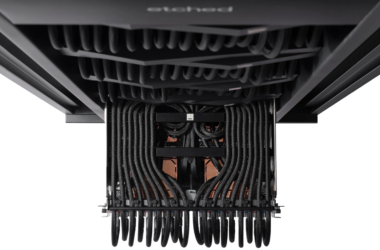
Etched’s $1B Sohu Backlog Turns AI Inference Into the Next Chip Fight
Etched says it has raised $800 million, signed more than $1 billion in customer contracts, and started production of its Sohu-based inference racks. The startup’s transformer-specialized chip is a serious bet that AI’s next hardware fight will be won on serving models, not just training them.

Nvidia’s Firmus Deal Turns Batam Into an AI Factory Test Case
Firmus will build a 360 MW Nvidia DSX AI factory campus in Batam, Indonesia, with access to as many as 170,000 Nvidia accelerators. The deal shows how AI infrastructure is shifting from one-off data centers toward financed cloud capacity for AI-native companies.
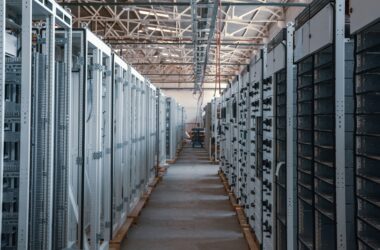
Pax Silica Summit Turns AI Policy Into a Supply Chain Race
The second Pax Silica Summit brought 35 countries behind an AI Opportunity statement and expanded the U.S.-led supply-chain initiative to 24 signatories. The move shows AI policy shifting from abstract model rules toward chips, energy, critical minerals, data centers, logistics, and manufacturing capacity.

Xbox Price Hike Shows AI Memory Costs Hitting Game Consoles
Microsoft is raising Xbox console prices worldwide on August 1, adding $100 to 512 GB models and $150 to 1 TB models while discontinuing the 2 TB Xbox Series X. The move shows how AI-driven memory and storage costs are now reshaping game-console economics.

Apple’s Mac and iPad Price Hikes Show AI Costs Reaching Consumer Devices
Apple raised prices on several Macs and iPads after AI data-center demand pushed up memory and storage costs. The move makes the AI infrastructure boom visible in ordinary consumer hardware prices.

OpenAI’s Jalapeño Chip Puts Inference Costs at the Center of the AI Race
OpenAI and Broadcom unveiled Jalapeño, OpenAI’s first custom inference accelerator for large language models. The chip is less about replacing Nvidia overnight than controlling the cost, latency, and supply of the compute that runs products like ChatGPT, Codex, and the API.