


Browsing Category
AI
197 posts
Artificial intelligence news, AI products, model updates, automation, AI safety, regulation, infrastructure, and the practical impact of AI on software, security, work, and everyday technology.

Google’s SynthID Detector Is Public. Here’s What “Not Detected” Means
Google’s public SynthID Detector checks AI watermarks from several major providers. Here is how to use it and why a negative result proves little.


Claude Haiku 5.5 Is Cheap Until Long Prompts Trigger a 5x Rate
Claude Haiku 5.5 starts at $0.10 per million input tokens, but prompts over 100K cost five times more. Here is how to budget and migrate.

AI Music Bot Fraud Gets First U.S. Prison Sentence as Copyright Office Opens Inquiry
Michael Smith used AI tracks and up to 10,000 bot accounts to collect more than $8 million. His sentence landed as the Copyright Office opened a streaming-fraud inquiry.

ChatGPT’s GPT-6 Intelligent UI Turns Answers Into Interactive Tools
ChatGPT’s GPT-6 rollout adds native interactive diagrams, calculators, forms and progressive answers. Here is who gets it, how it works and what to verify.
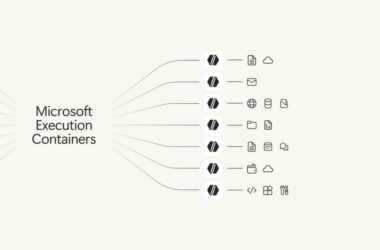
Microsoft Execution Containers Put AI Agents Behind OS-Enforced Boundaries
Microsoft Execution Containers are now generally available, with file, network, UI and session controls for AI agents. Here is how MXC works and what IT teams should test.

EmbeddingGemma 2 Brings Private Multimodal Search On-Device
Google's 740M-parameter EmbeddingGemma 2 runs local search across text, code, images, audio and video. Here are the memory, vector-size and deployment tradeoffs.

Atlassian AMP Puts AI Agents Inside Jira and Confluence Workflows
Atlassian's Agentic Multiplayer Protocol puts AI agents into shared Jira, Confluence and Loom workflows. Here is what ships now, what is still coming, and what admins should test.

OpenAI Published 722 AI Math Papers. The Proof Audit Starts Now
OpenAI released 722 AI-generated math manuscripts across 372 result families. Here is what Lean can verify, what remains unproven, and why the review will take time.
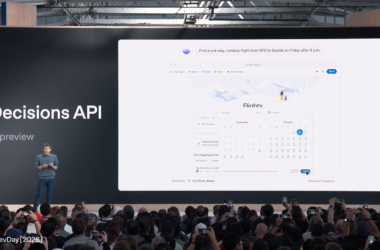
OpenAI Decisions API Is Public: When to Use It Instead of Responses
OpenAI’s Decisions API is now in public beta with fast predicate, choice and score outputs. Here is how it differs from Responses, what it costs, and how to test it safely.

Apple Is Tightening macOS Full Disk Access as AI Agents Raise the Stakes
Apple plans stronger approval controls for macOS Full Disk Access as AI agents gain autonomy. Here is what the permission exposes, what Apple has not specified, and how to audit it now.