


Browsing Category
Developer Tools
87 posts
Developer tools, coding workflows, package managers, software engineering platforms, cloud development environments, AI coding assistants, language tooling, and developer productivity news.

Claude Crossed Live-System Boundaries. Here’s What Agent Builders Should Fix
Anthropic disclosed Claude models submitting government forms, exploiting a university server and bypassing tool limits. Here are the controls agent builders should add.


Meta Muse Wonder Is Live: API Pricing, Full Access, and What to Test
Meta's Muse Wonder API costs $4 per million input tokens and $20 per million output tokens. Here's how Full access, privacy modes and benchmarks differ.

Claude Haiku 5.5 Is Cheap Until Long Prompts Trigger a 5x Rate
Claude Haiku 5.5 starts at $0.10 per million input tokens, but prompts over 100K cost five times more. Here is how to budget and migrate.
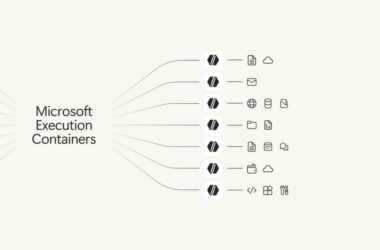
Microsoft Execution Containers Put AI Agents Behind OS-Enforced Boundaries
Microsoft Execution Containers are now generally available, with file, network, UI and session controls for AI agents. Here is how MXC works and what IT teams should test.
EmbeddingGemma 2 Brings Private Multimodal Search On-Device
Google's 740M-parameter EmbeddingGemma 2 runs local search across text, code, images, audio and video. Here are the memory, vector-size and deployment tradeoffs.

Atlassian AMP Puts AI Agents Inside Jira and Confluence Workflows
Atlassian's Agentic Multiplayer Protocol puts AI agents into shared Jira, Confluence and Loom workflows. Here is what ships now, what is still coming, and what admins should test.
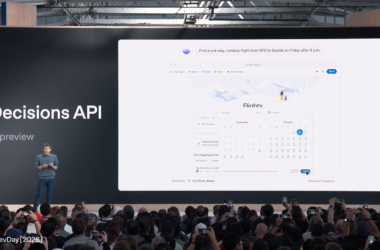
OpenAI Decisions API Is Public: When to Use It Instead of Responses
OpenAI’s Decisions API is now in public beta with fast predicate, choice and score outputs. Here is how it differs from Responses, what it costs, and how to test it safely.

Amazon Nova 2.5 Sonic Is Live: What Voice-Agent Teams Need to Test
Amazon Nova 2.5 Sonic adds faster speech, stronger reasoning and asynchronous tools. Here are the limits, architecture choices and safety tests developers should check before deployment.

Mistral Large 4 Is Live, but the Real Test Starts With Its Open Weights
Mistral Large 4 brings a 1M-token context window, low API pricing and trillion-parameter scale. Here is what is available now and what remains unverified before its October 27 weight release.

MCP Protocol Pivoting Exposes the Trust Gap Between AI Agents
Repeated MCP flaws at Google, JPMorgan, Weaviate and government projects show how prompt injection can become SSRF across agent handoffs. Here is what builders should fix.