


Browsing Category
AI Infrastructure
62 posts
Cloud infrastructure, chips, data centers, model deployment, edge AI, compute platforms, secure systems, and the physical infrastructure behind artificial intelligence products and services.

Microsoft Maia 300: Specs, 2027 Rollout, and What the Claims Mean
Microsoft’s Maia 300 packs eight HBM4 stacks into a 950W accelerator and 96 chips into a 167kW rack. Here’s what its 2027 rollout means.


Surface Laptop Ultra Starts at $2,599, but Battery Life Is Still the Big Unknown
Microsoft’s RTX Spark Surface Laptop Ultra can run 120B-parameter AI models locally, but its $2,599 price, Arm compatibility and undisclosed battery life deserve scrutiny.
EmbeddingGemma 2 Brings Private Multimodal Search On-Device
Google's 740M-parameter EmbeddingGemma 2 runs local search across text, code, images, audio and video. Here are the memory, vector-size and deployment tradeoffs.
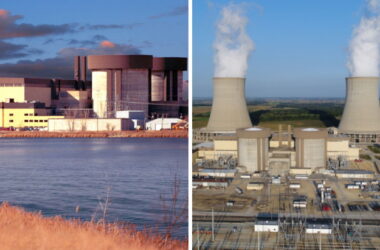
Google’s Constellation Nuclear Deal: What the 3.59 GW Figure Really Means
Google and Constellation signed agreements covering 3.59 GW in PJM, but only 890 MW is planned new nuclear capacity. Here is how the uprates, supply contract and Gemini work differ.

Mistral Large 4 Is Live, but the Real Test Starts With Its Open Weights
Mistral Large 4 brings a 1M-token context window, low API pricing and trillion-parameter scale. Here is what is available now and what remains unverified before its October 27 weight release.

Google’s First Orbital AI Test Is Four TPUs, Not a Data Center
Google's first Project Suncatcher flight carries four TPUs, about 1 kW of solar power and a tough cooling problem. Here is what the orbital AI experiment can actually prove.
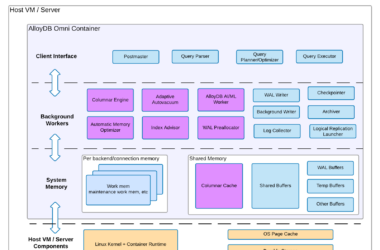
Google’s AlloyDB Isolates AI Agent Queries From Production PostgreSQL
Google’s new AlloyDB preview gives AI agents isolated, scale-to-zero access to fresh production data. Here is what it solves, what remains risky, and what teams should test.
NVIDIA’s Open Agent Safety Platform Moves Guardrails Outside the Model
NVIDIA’s OpenShell runtime restricts AI-agent files, networks, processes and credentials, while Sentry adds a BlueField-4 hardware watchdog. Here is how the stack works and where its claims still need proof.

AMD’s $8.2B World Labs Deal Is a Bet on AI Beyond Language
AMD is buying Fei-Fei Li’s World Labs for $8.2 billion. The strategic prize is a model lab that can shape future chips, robotics simulation, and the physical AI stack.
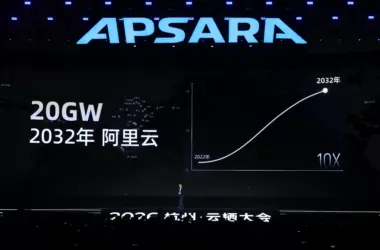
Alibaba’s Zhenwu V900 Turns China’s AI Push Into a Full-Stack Scale Test
Alibaba’s Zhenwu V900 pairs 216 GB of memory with a Qwen 4 roadmap and a 20 GW cloud target. Here is what is shipping, what remains a claim, and what buyers should verify.