Anthropic filed publicly for a U.S. initial public offering on Monday, giving investors their first full look at the economics behind Claude. The company plans to list Class A shares on the Nasdaq Global Select Market under the ticker ANT, although the prospectus still leaves the share count, price range and final valuation blank.
The numbers are unusually large even by frontier-AI standards. Anthropic generated $16.3 billion in revenue during the first six months of 2026, up from about $1.2 billion in the same period a year earlier. Its net loss reached $80.7 billion, but that figure needs context: roughly $72.4 billion came from a non-cash accounting adjustment tied to the rising value of convertible financing instruments.
Underneath that headline loss, the operating picture changed much faster. Anthropic reported a first-half operating loss of $693 million, down from $2.1 billion a year earlier. Revenue climbed from $4.73 billion in the first quarter to about $11.6 billion in the second, and the June quarter produced $974 million of operating income. The company has not yet shown that one profitable operating quarter can survive slower growth, aggressive model pricing or the full cost of its long-term infrastructure contracts.
Revenue grew 14-fold, but the comparison is getting harder
Anthropic’s filing shows a company that moved from a research lab with commercial products into a large enterprise supplier in little more than a year. Revenue for the three months through June rose 1,368% from the same quarter in 2025, according to the prospectus.
The customer base has also moved beyond small developer experiments. More than half of the Fortune 500 and over 30% of the Global 2000 generated at least $100,000 each in revenue for Anthropic during the 12 months through September 30. The company says its net revenue retention was about 900% at the end of the third quarter, meaning the relevant existing-customer cohort spent roughly nine times as much as it had a year earlier after expansion, contraction and churn.
Claude Code appears to be a major expansion lever. In the third quarter, the highest-spending 5% of Claude Enterprise customers that used the coding agent spent about 20 times more per month than the average enterprise user who did not use it, according to the filing. That helps explain why Anthropic has pushed Claude from a chatbot into coding, research and business workflows: the commercial opportunity depends not only on adding accounts, but on persuading existing customers to delegate more work.
That growth rate is unlikely to remain a sensible baseline. Anthropic warns that revenue growth will fluctuate and could slow. The second quarter alone supplied more than 70% of first-half revenue, making future comparisons substantially tougher.
More than $400 billion of compute is already contracted
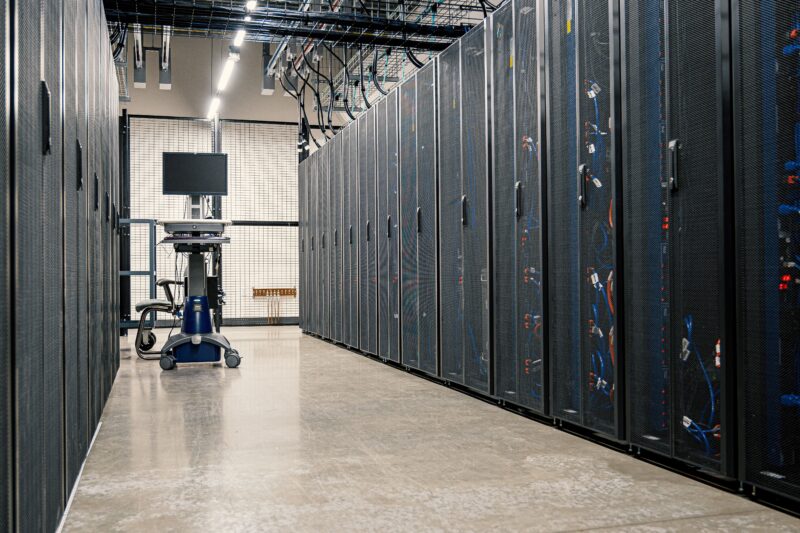
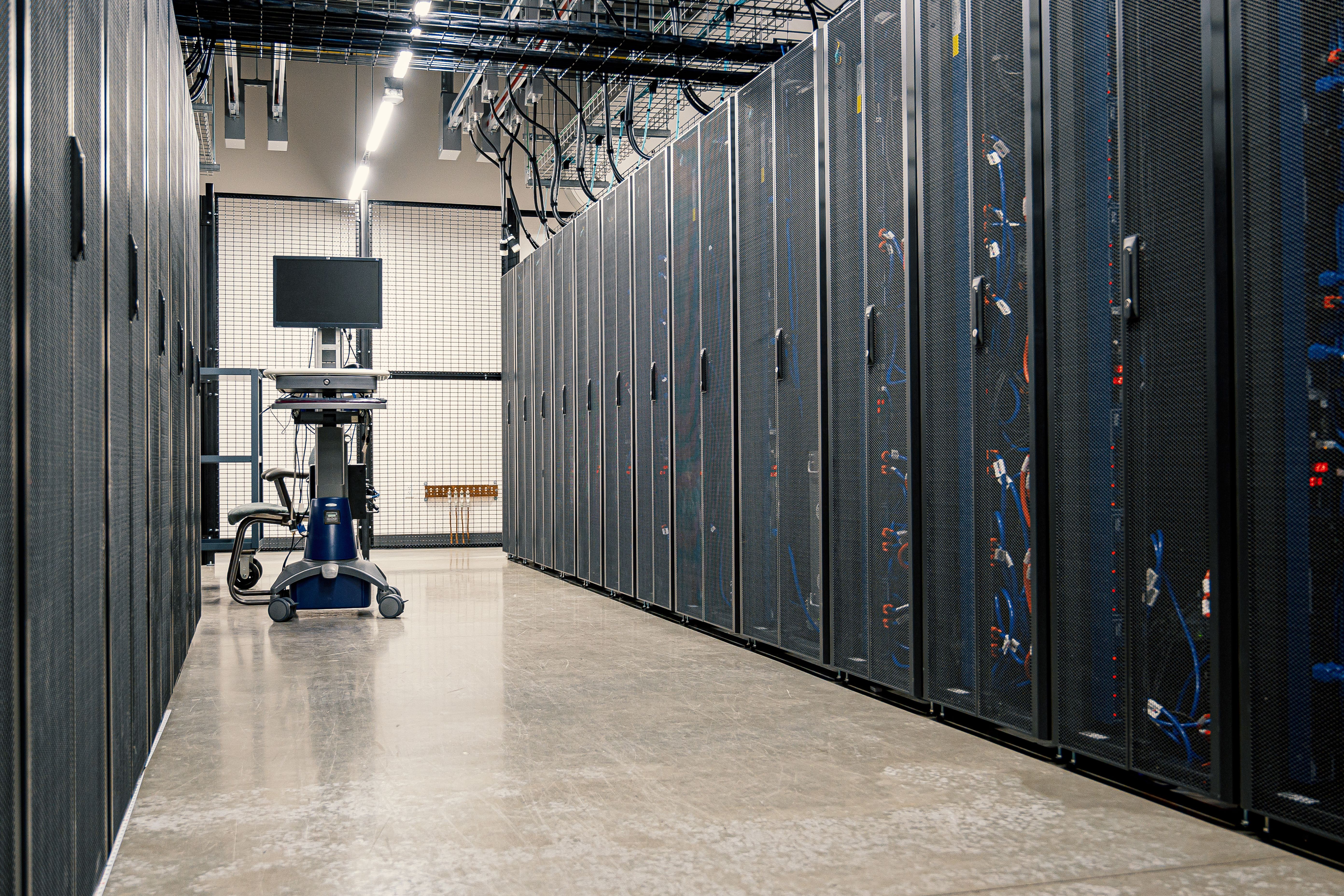
The filing’s biggest operational risk is the amount of infrastructure Anthropic has agreed to buy or lease. Public analyses of the prospectus put fixed or minimum compute commitments above $400 billion, with obligations extending into the 2030s and, for some leases, as far as 2045. The total potential capacity bill is higher because Anthropic also has agreements that do not specify a fixed minimum dollar amount.
Those contracts span Amazon, Google, Microsoft, Broadcom and specialist infrastructure providers. Some are largely non-cancelable unless a supplier fails to deliver or materially breaches the agreement. In practical terms, Anthropic has reserved capacity before earning all the revenue needed to pay for it.
The arrangement is not a simple cash drain. The prospectus also describes up to $77 billion of potential financing connected to infrastructure agreements, subject to conditions, including support from Google, Amazon and Broadcom. That financing can reduce near-term pressure, but it deepens Anthropic’s dependence on a small set of companies that are simultaneously suppliers, distributors, investors or competitors.
The distribution relationship matters as much as the hardware. Reuters previously reported that Amazon and Google’s cloud marketplaces routed 47% of Anthropic’s 2025 sales. Claude’s availability through AWS Bedrock, Google Vertex AI and Microsoft Azure Foundry gives the company enterprise reach, but it also leaves margins, customer access and service availability partly tied to partners with their own AI products.
The $80.7 billion loss is not the same as cash burn
The prospectus will inevitably be summarized with the $80.7 billion net-loss figure. Most of that loss reflects the increase in the fair value of convertible securities as Anthropic’s private valuation rose. It is an accounting expense rather than a matching cash payment for chips, cloud instances or payroll.
That does not make the financial risk imaginary. Compute and infrastructure remain Anthropic’s largest operating expense, and the company says those costs will increase in absolute dollars. A business can improve its operating margin while still taking on fixed obligations that become painful if demand falls, prices decline or a major model generation disappoints.
The more informative questions are therefore whether second-quarter operating profitability can persist, how much revenue Anthropic can generate from each dollar of reserved compute, and how quickly contracted capacity becomes productive. The IPO will transfer those execution risks from private backers to public shareholders without giving new Class A investors much control over the company.
Public shareholders will buy into an unusual control structure
Anthropic identifies itself as a controlled company. Its Long-Term Benefit Trust can elect a majority of the board, while a special founder structure gives the seven co-founders 50.1% of the voting power described in the prospectus. Reed Hastings, the Netflix co-founder, is the lead independent director.
The structure is designed to preserve Anthropic’s public-benefit mission under pressure from investors. It also means holders of the publicly traded Class A stock will have limited influence over board composition and corporate policy. Anthropic’s separate pledge to direct 5% of its shares to a public-benefit fund remains subject to shareholder approval after the offering.
Governance is not a decorative detail for an AI company spending at this scale. Decisions about model releases, military work, safety pauses and infrastructure contracts can materially change both Anthropic’s risk profile and its revenue. The filing asks public investors to fund that strategy while accepting a structure deliberately built to resist ordinary shareholder control.
What the filing leaves unanswered
The S-1 starts the public offering process; it does not set the deal’s final economics. Anthropic has not yet disclosed the number of shares it will sell, an expected price range, the final valuation or the amount of capital it intends to raise. Those figures should arrive in amendments before shares begin trading.
Investors will also need newer operating data. The filing gives detailed results through June and selected customer metrics through September, but the second quarter was an inflection point for both revenue and profitability. A third-quarter income statement will show whether that acceleration continued or whether June marked an unusually strong period.
For enterprise customers, the filing provides a different signal. Anthropic is no longer planning capacity like a startup that can switch providers or shrink its footprint quickly. It is committing to a global infrastructure base measured in hundreds of billions of dollars. That may improve availability and model development, but it also makes Claude’s roadmap inseparable from the cloud companies, chip suppliers and financing agreements underneath it.
Sources
- Anthropic Form S-1 registration statement
- Reuters report on Anthropic’s public filing and financial results
- Associated Press report on the proposed IPO and governance structure
- TechCrunch analysis of enterprise expansion and Claude Code usage
- Data Center Dynamics analysis of fixed compute commitments