


Browsing Category
Semiconductors
29 posts
Semiconductor industry coverage, including chips, lithography, foundries, memory, packaging, chipmaking equipment, export controls, supply chains, and the hardware behind AI and modern computing.

Microsoft Maia 300: Specs, 2027 Rollout, and What the Claims Mean
Microsoft’s Maia 300 packs eight HBM4 stacks into a 950W accelerator and 96 chips into a 167kW rack. Here’s what its 2027 rollout means.


AMD’s $8.2B World Labs Deal Is a Bet on AI Beyond Language
AMD is buying Fei-Fei Li’s World Labs for $8.2 billion. The strategic prize is a model lab that can shape future chips, robotics simulation, and the physical AI stack.
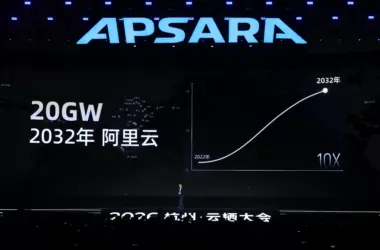
Alibaba’s Zhenwu V900 Turns China’s AI Push Into a Full-Stack Scale Test
Alibaba’s Zhenwu V900 pairs 216 GB of memory with a Qwen 4 roadmap and a 20 GW cloud target. Here is what is shipping, what remains a claim, and what buyers should verify.

Dell’s $95B AI Server Backlog Turns Compute Demand Into a Delivery Test
Dell reported $60.9 billion in AI server orders, $16.4 billion in AI-optimized server revenue, and a $95 billion backlog in its fiscal second quarter. The numbers show how AI infrastructure demand is moving from GPU hype into a harder test of supply chains, racks, storage, networking, and delivery schedules.

OpenAI’s Jalapeño Benchmarks Turn Inference Power Into the AI Chip Fight
OpenAI published first benchmark results for Jalapeño, its Broadcom-built inference chip, claiming higher performance per watt and lower latency than leading commercial AI systems. The useful question is not whether it replaces Nvidia immediately, but whether custom inference silicon can turn power limits into a product advantage for ChatGPT, Codex, and agentic AI workloads.

NVIDIA’s Ohio Backstop Turns OpenAI’s Data Center Demand Into Infrastructure Finance
NVIDIA is investing $1.5 billion in SB Energy and backing land, power, and shell capacity for OpenAI's planned PORTS-Pike AI data center in Ohio. The deal shows how frontier AI demand is pushing chipmakers deeper into power, real estate, financing, and local infrastructure.

Qualcomm’s Chip Price Hike Could Make Android Upgrades More Expensive
Qualcomm has reportedly told customers it will raise chip prices by a double-digit percentage for shipments after September 1. The move could push Android phone makers, smart-glasses vendors, and Windows-on-Arm PC builders toward higher prices, tighter specs, or delayed launches.
Chip Sales Just Hit a Record as AI Demand Spreads Beyond GPUs
SIA says global semiconductor sales reached $120.6 billion in May 2026, the highest monthly total it has recorded and more than double the level from a year earlier. The data suggests the AI chip boom is now lifting a wider stack of memory, networking, logic, and foundational semiconductors across every major region.
Apple’s Broadcom Deal Makes Edge AI a Supply-Chain Commitment
Broadcom’s July 6 SEC filing says it will supply custom ASIC silicon for multiple generations of Apple products through 2031. The sparse disclosure does not confirm specific Apple Intelligence hardware, but it locks in a key supplier relationship as Apple tries to make more AI run locally on phones, Macs, watches, and tablets.
NVIDIA’s AI Cloud Deals Turn GPUs Into a Revenue-Share Business
NVIDIA’s July 1 revenue-sharing and credit-support model gives AI cloud partners a new way to finance large GPU deployments, while giving NVIDIA a usage-linked cut of supported cloud revenue. Sharon AI and Firmus are the first test cases, with plans for up to 210,000 GPUs across Australia and Indonesia.