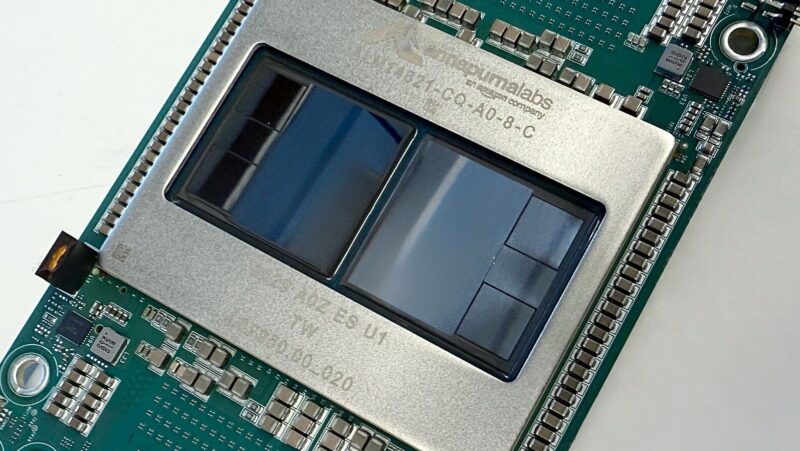
Amazon Web Services is in early talks to sell its Trainium AI chips for use inside other companies’ data centers, a move that would push Amazon’s custom silicon strategy beyond cloud rental and into more direct competition with Nvidia’s data center hardware business.
The discussions were described by AWS AI chief Peter DeSantis in an interview with Bloomberg and reported by TechCrunch on June 18. Amazon has not named prospective buyers, and the company is still presenting the effort as exploratory. Even so, the talks matter because Trainium has so far been available mainly as AWS infrastructure, not as a chip product that outside operators can install in their own facilities.
For AI labs, cloud customers, and data center operators, the shift would create a new question: whether Amazon can turn Trainium from a way to make AWS cheaper into a broader hardware platform for AI training and inference. That is harder than simply shipping accelerators. Nvidia’s advantage is not only the GPU; it is CUDA, networking, systems integration, developer familiarity, enterprise support, and a supply chain tuned around AI racks.
Why AWS Would Sell Trainium Outside AWS
Amazon has been unusually direct about the economics. In Andy Jassy’s 2025 shareholder letter, the Amazon CEO wrote that the company’s chip business, including Graviton, Trainium, and Nitro, had passed a $20 billion annual revenue run rate and was growing at triple-digit percentages year over year. He also argued that if the chip business were treated like a stand-alone supplier selling to AWS and third parties, its run rate would be roughly $50 billion.
Jassy’s letter framed the case around price-performance and AWS margins. Trainium2 was described as largely sold out, Trainium3 as nearly fully subscribed after beginning shipments in early 2026, and Trainium4 as already partly reserved despite being more than a year from broad availability. In Amazon’s view, owning more of the accelerator stack can lower customer costs while saving AWS tens of billions of dollars in annual capital spending over time.
Selling racks to third parties would turn that internal advantage into an external product line. It could appeal to companies that want AI capacity but do not want all of that capacity tied to one public cloud. It could also help sovereign AI projects, large colocation operators, research labs, and cloud rivals looking for alternatives to Nvidia GPUs when availability, cost, or power efficiency becomes a bottleneck.
What Trainium3 Actually Offers
Trainium3 is Amazon’s latest custom AI accelerator generation. AWS describes EC2 Trn3 UltraServers as rack-scale systems built for agentic, reasoning, long-context, mixture-of-experts, and video-generation workloads. Each UltraServer can scale to 144 Trainium3 chips, with AWS listing up to 362 MXFP8 PFLOPs, up to 20.7 TB of HBM3e memory, and 706 TB/s of aggregate memory bandwidth.
The system design is as important as the chip. Trn3 UltraServers use NeuronSwitch-v1 and NeuronLink-v4 interconnects, with AWS claiming 2 TB/s of bandwidth per chip and improved model-parallel communication for very large transformer and mixture-of-experts workloads. AWS also says Trn3 offers up to 4.4 times higher performance, 3.9 times higher memory bandwidth, and four times better performance per watt than Trn2 UltraServers.
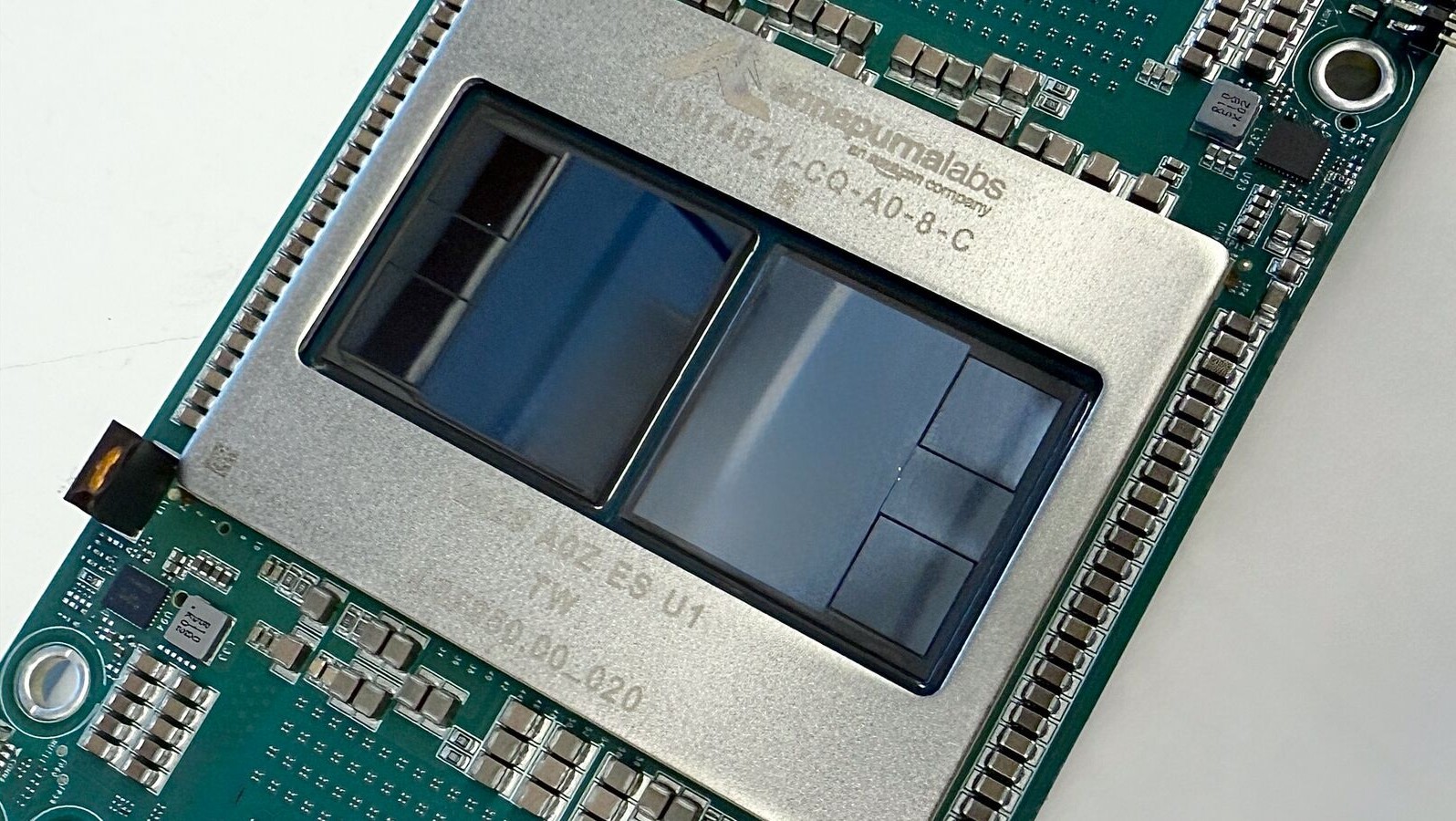
Those claims are aimed at workloads where GPU scarcity is only one part of the problem. AI companies increasingly care about cost per token, power per generated output, memory bandwidth for long-context inference, and cluster-level communication overhead. Trainium is Amazon’s answer to all of those pressures: a custom accelerator, a software stack called Neuron, and a cloud infrastructure layer that can hide much of the complexity from customers who stay inside AWS.
The Hard Part Is Leaving the Cloud Bundle
The same cloud bundle that makes Trainium attractive inside AWS could become a complication outside it. On AWS, customers rent compute and can attach storage, networking, security, monitoring, orchestration, and managed AI services around it. Amazon earns from the accelerator and from the surrounding cloud stack. A direct hardware sale changes that model.
That does not make the move impossible. AWS already sells hardware-adjacent infrastructure through products such as Outposts, and large AI customers are increasingly buying capacity in rack-scale chunks rather than treating accelerators as isolated parts. But a third-party Trainium deployment would need clear answers on support, replacement parts, Neuron software updates, security patching, networking compatibility, and how much of the AWS operating model follows the rack.
Software adoption is another constraint. Trainium supports common frameworks including PyTorch, JAX, Hugging Face Optimum Neuron, vLLM, and other tools through the Neuron stack, but Nvidia’s CUDA ecosystem remains the default target for much AI infrastructure work. The question for buyers is not whether Trainium can run major models. It is whether their teams can move fast enough, debug deeply enough, and hire easily enough on Trainium to justify a second accelerator platform.
Capacity May Decide How Fast This Moves
Trainium demand is already tight by Amazon’s own account. If AWS sells racks outside its cloud, it needs enough chips to serve existing EC2 and Bedrock demand, major committed customers, and new third-party buyers. That depends not only on Amazon’s design work but also on advanced manufacturing capacity, packaging, memory supply, and the same foundry constraints that affect the rest of the AI chip market.
That is why the near-term effect may be more strategic than immediate. The talks tell AI infrastructure buyers that Amazon wants Trainium to be seen as more than an AWS instance family. They also tell Nvidia that its largest cloud customers are no longer content to be only GPU renters and resellers. Google has been opening TPU access more selectively, Microsoft has Maia, and Amazon now appears willing to discuss Trainium as hardware infrastructure in its own right.
Nvidia is still far ahead in installed base, software maturity, and ecosystem depth. Amazon does not need to replace Nvidia for Trainium rack sales to matter. Even a modest shift could give big AI buyers more leverage, give AWS another revenue path, and make custom cloud silicon a real procurement category rather than an invisible ingredient inside hyperscaler services.
The important distinction is that Amazon is not simply trying to sell another chip. It is testing whether the AI factory market is ready for hyperscaler-designed systems to leave the hyperscaler and compete for space in someone else’s data center.