Hewlett Packard Enterprise used its Discover event in Las Vegas this week to make a blunt infrastructure argument: if companies want AI agents and inference systems to run in production, the network has to become part of the AI stack, not a background utility.
The company announced a set of Juniper-powered networking, operations, and security updates on June 16, tying its post-acquisition Juniper portfolio more directly into AI data centers, enterprise edge deployments, and what HPE calls “self-driving” networks. The most concrete additions include new HPE Juniper Networking QFX switches for inference and rack-scale AI systems, expanded Mist and Marvis AIOps capabilities, deeper GreenLake and Compute Ops Management integrations, and a unified SASE platform built around zero-trust access.
The timing matters because AI infrastructure conversations have been dominated by GPUs, power, and model choice. HPE is trying to shift part of that discussion toward the fabric connecting those systems: the switches, routers, observability tools, and security controls that determine whether expensive accelerators spend their time processing work or waiting on data movement, troubleshooting, or manual operations.
What HPE Added
HPE is adding Juniper data center switching to its HPE AI Data Center Solution, managed through HPE Networking Data Center Director. The company says that gives customers a more pre-integrated stack spanning compute, networking, storage, software, and services, with predictable performance for production AI deployments.
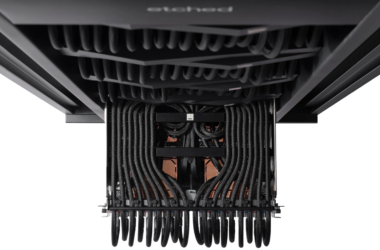
Two QFX products sit at the center of the announcement. The HPE Juniper Networking QFX5140 Switch is aimed at inference clusters and edge AI workloads, where traffic patterns can be different from large centralized training clusters. The QFX5252 Switch tray is designed for AMD Helios, the rack-scale AI platform AMD has positioned as an open Ethernet alternative in the accelerator market.
HPE frames both products as a way to reduce network bottlenecks in GPU-heavy environments. That is not just a performance claim. Inference costs increasingly depend on utilization, latency, and the ability to keep systems fed with data at scale. If a network fabric cannot keep up, a company can end up paying for accelerators that sit underused.
Outside the data center core, HPE is also pushing more AI-assisted operations across its Aruba and Juniper families. The HPE Mist platform is gaining support for HPE Networking CX wired access switches, including AI-native visibility, zero-touch provisioning, wired assurance for layer 2 access, dynamic packet capture, service-level insights, and Marvis-driven actions. HPE Aruba Central is getting Marvis self-driving capabilities, including trusted actions such as wired port remediation.
For data center operations, HPE described predictive maintenance that uses machine learning to flag system and optics failures before they cause outages. It also introduced an advanced reasoning agent that draws on HPE Networking Data Center Director’s contextual graph database and millions of technical-support cases to help with root-cause analysis and remediation.
Why Juniper Is the Real Story
HPE closed its $14 billion Juniper Networks acquisition in 2025, and Discover 2026 is one of the clearest signs yet of how the company wants to use it. The pitch is not only that HPE can sell more networking gear. It is that Juniper’s switching, routing, Mist AI, and data center operations assets can become the connective tissue for HPE’s broader AI factory strategy.
That matters in a market where NVIDIA’s networking stack has become strategically important alongside its GPUs. HPE is not trying to out-NVIDIA NVIDIA on every layer. It is presenting a mixed infrastructure path: HPE and Juniper networking for AI data centers and AMD Helios systems, while also continuing to work with NVIDIA in its broader AI Factory portfolio.
HPE also announced new Private Cloud AI and AI Factory updates with NVIDIA, including NVIDIA Agent Toolkit support, agent registration controls, HPE Zerto features meant to detect and recover from rogue agent actions, and future confidential-computing support for sovereign and at-scale AI factory deployments. Taken together, the announcements show HPE trying to sell a production AI architecture rather than a single appliance.
Independent coverage from ServeTheHome adds more hardware color from the keynote floor, including live notes on the QFX5252 scale-up switch for AMD Helios, the QFX5140 inference switch, PTX routing, and SRX firewall updates. Investor’s Business Daily also framed the event as HPE using Juniper to strengthen its position in AI and cloud networking after a year of strong AI-infrastructure demand.
Self-Driving Networks Still Need Boundaries
The phrase “self-driving network” can sound like marketing shorthand, but the practical version is more constrained: network software that can detect failures, correlate symptoms across domains, recommend fixes, and in some cases take pre-approved actions. The useful question for enterprises is not whether the network becomes autonomous overnight. It is which actions are trusted, logged, reversible, and limited enough to run safely.
HPE’s SASE update is important in that context. The company says its unified AI-native SASE platform is meant to bring networking and security operations together, using zero-trust controls so authorized users and devices can reach the resources they need while hiding those resources from attackers. That security layer becomes more important as network operations tools start making or recommending changes on their own.
For CIOs and infrastructure teams, the near-term checklist is fairly concrete. They need to know which remediation actions can run automatically, how approvals work, what telemetry is retained, whether AIOps decisions can be audited, how SASE policies map to existing identity systems, and whether the network tools understand both AI data center traffic and ordinary enterprise traffic. They also need to model lock-in risk, because self-driving operations become stickier when they rely on a vendor’s hardware, graph data, support history, and management plane.
The Bottleneck Is Broader Than GPUs
The most useful read on HPE’s Discover message is that production AI is becoming an operations problem. Buying accelerators is only one part of the buildout. Enterprises also need high-throughput fabrics, observability, access control, recovery plans, and people who can run mixed environments across data centers, cloud, branch offices, and edge sites.
That is why HPE’s Juniper integration deserves attention even from companies that are not ready to buy an AI factory. The announcement points to where enterprise AI infrastructure is heading: inference closer to users, more distributed data center designs, more automated network operations, and more pressure to prove that autonomous infrastructure actions are secure enough for production.
HPE still has to prove these pieces work cleanly outside keynote demos and reference architectures. The customer test will be whether its combined Aruba, Juniper, GreenLake, NVIDIA, and AMD story reduces operational friction or simply gives buyers another tightly bundled stack to manage. Either way, the direction is clear: the AI infrastructure race is no longer just about who has the fastest chip. It is also about who can keep the network, security layer, and operations model from becoming the limit.