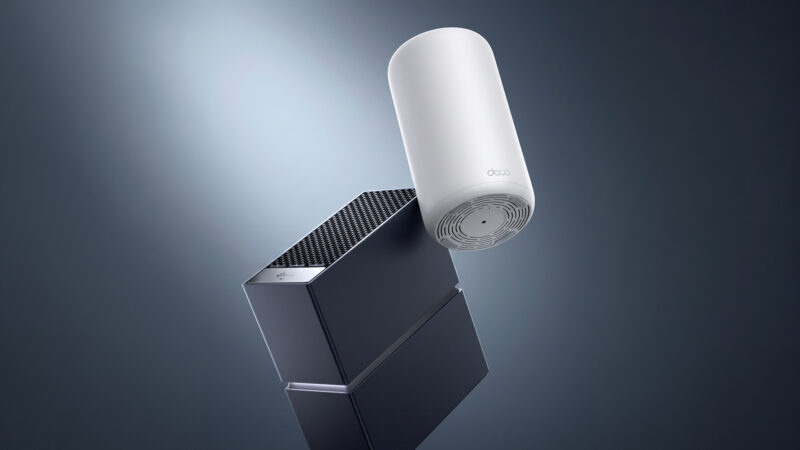
TP-Link used IFA 2026 to unveil its first Wi-Fi 8 consumer lineup, led by the Archer 8 Ultra router and Deco 8 Ultra mesh system, with regional preorders for the Archer model set to begin September 30. The announcement arrives well before the IEEE 802.11bn standard is finalized, but it also shows how router makers are already trying to move the next home-networking upgrade away from raw speed claims and toward reliability.
The company is calling the platform its first complete Wi-Fi 8 lineup. The initial products are the Archer 8 Ultra BN19000, also listed as the Archer BN800, and the Deco 8 Ultra BN22000 mesh system, also listed as the Deco BN85 in some regions. TP-Link says both are built around the upcoming IEEE 802.11bn standard and will use Wi-Fi 8 chipsets from Broadcom, Qualcomm, and MediaTek with U.S.-led hardware and software engineering.
That last detail matters because Wi-Fi 8 is arriving into a more complicated market than Wi-Fi 6 or Wi-Fi 7. Homes are already crowded with phones, laptops, consoles, cameras, smart speakers, wearables, TVs, and work devices. At the same time, router vendors are under more scrutiny over supply chains, firmware security, and whether expensive pre-standard hardware will age well once final certification arrives.
What TP-Link Announced
The Archer 8 Ultra is a tri-band router rated for up to 19Gbps of aggregate wireless speed and 10Gbps wired connectivity. TP-Link says it has 18 internal antennas and is designed to be placed in the open rather than hidden behind furniture, a small but practical point for any router that depends on radio performance.
The Deco 8 Ultra is the matching mesh system. TP-Link says the tri-band setup can reach up to 22Gbps of aggregate wireless speed and 10Gbps wired connectivity, while a three-pack can cover up to 9,800 square feet and support more than 200 connected devices. Availability is later than the Archer: the Deco 8 Wi-Fi 8 mesh system is planned for the first quarter of 2027, followed by the Roam 8 travel router, range extenders, and adapters in the second quarter of 2027.
Prices were not announced. TP-Link also cautions that specifications and availability can vary by region, and the Deco 8 Ultra’s model designation and rated speed may differ because of local regulations.
Why Wi-Fi 8 Is Not Just Another Speed Badge
Wi-Fi upgrades are usually sold through bigger numbers, but 802.11bn is being framed differently. Qualcomm, one of the chipset companies TP-Link named in the lineup, describes Wi-Fi 8 as a shift toward ultra-high reliability rather than another round of headline throughput alone. Its summary of the IEEE scope points to at least 25 percent higher throughput in difficult signal conditions, 25 percent lower 95th-percentile latency, and 25 percent fewer dropped packets, especially during roaming between access points.
Those targets are more useful for the way people actually experience bad Wi-Fi. A household usually notices the video call freezing in the back bedroom, the smart camera dropping offline, the console lag spike, or the laptop clinging to the wrong mesh node, not whether the router box advertised another theoretical multi-gigabit ceiling.
TP-Link’s own name for its implementation is StabilityEngine. The company says it draws on Enhanced Long Range, Distributed Resource Units, Non-Primary Channel Access, Unequal Modulation, and new Modulation and Coding Schemes. In plain terms, the company is trying to improve edge coverage, uplink performance for distant or lower-power devices, congestion handling, and usable throughput when interference is messy.
That is a more grounded sales pitch than promising that every device in a home will suddenly see 19Gbps. Most broadband connections, client devices, storage systems, and home wiring still will not come close to that. The better question for buyers is whether early Wi-Fi 8 hardware can keep more devices stable under stress.
The Catch: Wi-Fi 8 Is Still Early
Anyone tempted by the first wave should treat it as early hardware. Wi-Fi NOW reported in June that final IEEE 802.11bn approval is expected in May 2028, with Wi-Fi Alliance certification expected several months earlier, around CES 2028. TP-Link is therefore selling into a pre-certification period, the same kind of early window that has existed around previous Wi-Fi generations but one that still carries risk for mainstream buyers.
That does not automatically make the Archer 8 Ultra a bad buy. Early routers can be worthwhile for people who replace networking gear often, run many wireless devices, have multi-gig wired internet, or want to test the next standard as firmware matures. But for most homes, Wi-Fi 7 is still new enough that waiting for pricing, reviews, firmware stability, client-device support, and certification clarity is the calmer move.
The client-device question is especially important. A Wi-Fi 8 router can still serve older Wi-Fi devices, but the most meaningful gains require phones, laptops, adapters, and smart-home hardware that can use the new capabilities. A household full of Wi-Fi 6 and Wi-Fi 7 devices may benefit from a stronger router design, better antennas, and cleaner mesh behavior, but it should not expect every Wi-Fi 8 feature to come alive immediately.
What Buyers Should Watch Before Preordering
The first issue is price. TP-Link has not disclosed it, and high-end routers already carry serious premiums. If the Archer 8 Ultra lands far above mature Wi-Fi 7 gear, the value case will depend on whether independent testing shows better range, roaming, and latency under realistic load.
The second issue is firmware. Early networking hardware lives or dies by software updates. Buyers should look for clear commitments around security patches, WPA features, HomeShield terms, interoperability with older clients, mesh compatibility, and whether final Wi-Fi 8 certification will require a hardware revision or only software updates.
The third issue is topology. A single high-end router can be the right answer for an apartment, small home, or wired backhaul setup, but larger homes and multi-floor layouts often benefit more from mesh placement than from buying the fastest single box. TP-Link’s Deco 8 Ultra may be the more interesting product for people who care about reliable coverage, but it is not expected until 2027.
Finally, buyers should pay attention to wired ports. TP-Link is advertising 10Gbps wired connectivity, which matters for NAS devices, gaming PCs, fiber broadband, and wired mesh backhaul. A router with impressive wireless numbers but weak wired options can become a bottleneck as soon as a home network grows beyond casual streaming.
The Bottom Line
TP-Link’s Wi-Fi 8 announcement is less important as a reason to preorder immediately than as a sign of where home networking is going next. The strongest pitch is not that Wi-Fi 8 makes home internet dramatically faster on day one. It is that router makers are beginning to compete on the parts of Wi-Fi people complain about most: weak rooms, crowded device lists, handoff drops, latency spikes, and inconsistent performance.
For early adopters with heavy networks, the Archer 8 Ultra will be worth watching when preorders open September 30. For everyone else, the better move is to wait for pricing, reviews, certification details, and more Wi-Fi 8 client devices. Reliability is the right promise. The question is how quickly first-generation hardware can prove it outside a press image.
Sources: TP-Link announcement, Qualcomm Wi-Fi 8 overview, Wi-Fi NOW standards timeline, The Verge.