


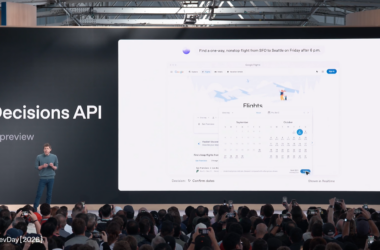
OpenAI Decisions API Is Public: When to Use It Instead of Responses
OpenAI’s Decisions API is now in public beta with fast predicate, choice and score outputs. Here is how it differs from Responses, what it costs, and how to test it safely.

Fake Google HTTPS Certificates Came From Hijacked Country Domains
Attackers hijacked .gh, .sl and .as registries to obtain valid HTTPS certificates. Here is how the attack worked and what domain owners should check.
Apple Is Tightening macOS Full Disk Access as AI Agents Raise the Stakes
Apple plans stronger approval controls for macOS Full Disk Access as AI agents gain autonomy. Here is what the permission exposes, what Apple has not specified, and how to audit it now.

Amazon Nova 2.5 Sonic Is Live: What Voice-Agent Teams Need to Test
Amazon Nova 2.5 Sonic adds faster speech, stronger reasoning and asynchronous tools. Here are the limits, architecture choices and safety tests developers should check before deployment.
Paramount Closes Warner Bros. Deal: What Changes for HBO Max and Paramount+
Paramount’s Warner Bros. Discovery deal is closed and HBO Max and Paramount+ will eventually become one service. Here is what changes now, what does not, and what subscribers should watch.

Mistral Large 4 Is Live, but the Real Test Starts With Its Open Weights
Mistral Large 4 brings a 1M-token context window, low API pricing and trillion-parameter scale. Here is what is available now and what remains unverified before its October 27 weight release.

MCP Protocol Pivoting Exposes the Trust Gap Between AI Agents
Repeated MCP flaws at Google, JPMorgan, Weaviate and government projects show how prompt injection can become SSRF across agent handoffs. Here is what builders should fix.

OpenAI’s textGrain Watermark Is Coming to EU ChatGPT: What It Can Detect
OpenAI will watermark eligible EU ChatGPT and Codex text with textGrain. Its own tests show why detection cannot prove authorship.
Gemini 4 Argon Debuts With 1M-Token Output, but Access Starts With Cyber Defenders
Google's Gemini 4 Argon pairs a one-million-token output limit with low introductory pricing, but only vetted cyber defenders can use it first.

Google’s First Orbital AI Test Is Four TPUs, Not a Data Center
Google's first Project Suncatcher flight carries four TPUs, about 1 kW of solar power and a tough cooling problem. Here is what the orbital AI experiment can actually prove.