


Browsing Category
Health Tech
6 posts
Medical technology, digital health, clinical AI, healthcare software, genomics tools, medical devices, and the technology systems changing care delivery and biomedical research.
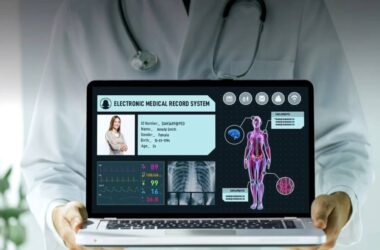
ChatGPT Health Turns Medical Records Into AI’s Next Trust Test
OpenAI is rolling out Health in ChatGPT to U.S. users 18 and older, letting the chatbot draw on Apple Health data and supported medical records with permission. The useful promise is clearer health context; the harder question is whether privacy controls, emergency triage, and user trust can keep up.

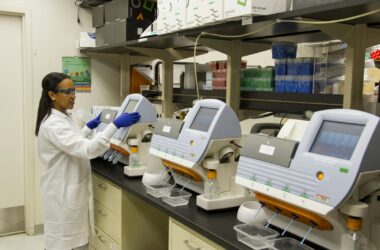
OpenAI GeneBench-Pro Shows Scientific AI Agents Still Need Supervision
OpenAI’s GeneBench-Pro benchmark tests whether AI agents can make messy judgment calls in genomics and translational biology. GPT-5.6 Sol leads the field, but a 31.5% top score shows scientific AI still needs expert supervision before it can be trusted with consequential research decisions.
Claude Science Turns Research AI Into a Lab Workflow Layer
Anthropic’s Claude Science beta gives researchers an AI workbench for literature review, code, compute jobs, scientific figures, and lab-specific agents. The launch matters because it treats AI for science less like a single model race and more like a workflow layer that has to connect databases, HPC systems, NVIDIA BioNeMo tools, and reproducible artifacts.

NASA’s Space Medical AI Test Moves Care From Cloud to Edge
NASA researchers are testing the Crew Medical Officer Digital Assistant with Red Hat’s RamaLama so astronaut medical guidance can run locally when a spacecraft cannot depend on Earth or the cloud. The work turns space medicine into a serious edge AI test case.
ChatGPT Health Update Puts Medical AI Advice in Front of Free Users
OpenAI says GPT-5.5 Instant now gives stronger health and wellness answers to free ChatGPT users, backed by physician-led evaluations and a 71% drop in flagged factuality issues. The update matters because health questions are already one of ChatGPT’s largest uses, even as regulators scrutinize safety, minors, and sensitive data.
OpenAI o3 Helps Doctors Revisit Rare Disease Cases in NEJM AI Study
Researchers at Boston Children’s, Harvard, and OpenAI used o3 Deep Research to reanalyze 376 previously unsolved rare disease cases. The model surfaced evidence-linked leads that helped specialists confirm 18 diagnoses, but the study is careful about what AI did and did not decide.