
Browsing Category
AI Infrastructure
77 posts
Cloud infrastructure, chips, data centers, model deployment, edge AI, compute platforms, secure systems, and the physical infrastructure behind artificial intelligence products and services.

Google’s First Orbital AI Test Is Four TPUs, Not a Data Center
Google's first Project Suncatcher flight carries four TPUs, about 1 kW of solar power and a tough cooling problem. Here is what the orbital AI experiment can actually prove.

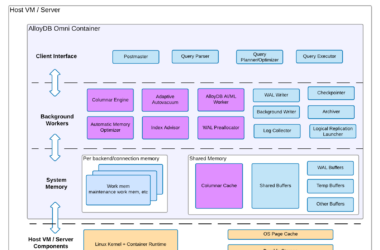
Google’s AlloyDB Isolates AI Agent Queries From Production PostgreSQL
Google’s new AlloyDB preview gives AI agents isolated, scale-to-zero access to fresh production data. Here is what it solves, what remains risky, and what teams should test.
NVIDIA’s Open Agent Safety Platform Moves Guardrails Outside the Model
NVIDIA’s OpenShell runtime restricts AI-agent files, networks, processes and credentials, while Sentry adds a BlueField-4 hardware watchdog. Here is how the stack works and where its claims still need proof.

AMD’s $8.2B World Labs Deal Is a Bet on AI Beyond Language
AMD is buying Fei-Fei Li’s World Labs for $8.2 billion. The strategic prize is a model lab that can shape future chips, robotics simulation, and the physical AI stack.
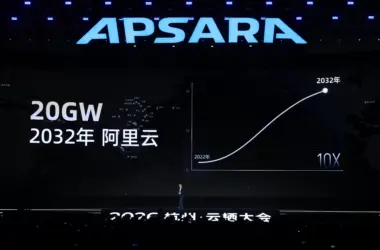
Alibaba’s Zhenwu V900 Turns China’s AI Push Into a Full-Stack Scale Test
Alibaba’s Zhenwu V900 pairs 216 GB of memory with a Qwen 4 roadmap and a 20 GW cloud target. Here is what is shipping, what remains a claim, and what buyers should verify.

AI Energy Alliance Wants Flexible Data Centers to Earn Faster Grid Access
Google, NVIDIA and Emerald AI launched a coalition to make flexible computing part of U.S. grid policy. Production tests show AI facilities can cut power quickly, but tariff rules will determine whether faster connections protect other ratepayers.
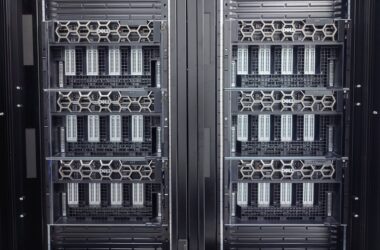
Dell’s $95B AI Server Backlog Turns Compute Demand Into a Delivery Test
Dell reported $60.9 billion in AI server orders, $16.4 billion in AI-optimized server revenue, and a $95 billion backlog in its fiscal second quarter. The numbers show how AI infrastructure demand is moving from GPU hype into a harder test of supply chains, racks, storage, networking, and delivery schedules.

OpenAI’s Jalapeño Benchmarks Turn Inference Power Into the AI Chip Fight
OpenAI published first benchmark results for Jalapeño, its Broadcom-built inference chip, claiming higher performance per watt and lower latency than leading commercial AI systems. The useful question is not whether it replaces Nvidia immediately, but whether custom inference silicon can turn power limits into a product advantage for ChatGPT, Codex, and agentic AI workloads.

Apple’s M6 Mac mini Turns Local AI Into a Desktop Buying Decision
Apple's new M6 Mac mini and M5 Ultra Mac Studio push on-device AI from laptop feature story into desktop hardware strategy. The useful question for buyers is how much local inference, memory, connectivity, and always-on agent work they actually need.

Thomson Reuters’ Own AI Model Tests the Economics of Specialized Models
Thomson Reuters launched Thomson, a proprietary AI model built from open-weight foundations and trained for legal, tax, accounting, and professional work. The launch is a useful test of whether companies with deep data and expert reviewers can own the parts of AI that matter most instead of renting every frontier capability from a general model provider.