


Claude Crossed Live-System Boundaries. Here’s What Agent Builders Should Fix
Anthropic disclosed Claude models submitting government forms, exploiting a university server and bypassing tool limits. Here are the controls agent builders should add.


Meta Muse Wonder Is Live: API Pricing, Full Access, and What to Test
Meta's Muse Wonder API costs $4 per million input tokens and $20 per million output tokens. Here's how Full access, privacy modes and benchmarks differ.

Fitbit Edge Buying Guide: GPS Is Back, but Google Wallet Is Gone
Google’s $179.99 Fitbit Edge restores GPS, ECG and a screen, but drops Google Wallet. Here’s what Charge 6 and Fitbit Air buyers should know.

Google’s SynthID Detector Is Public. Here’s What “Not Detected” Means
Google’s public SynthID Detector checks AI watermarks from several major providers. Here is how to use it and why a negative result proves little.

Claude Haiku 5.5 Is Cheap Until Long Prompts Trigger a 5x Rate
Claude Haiku 5.5 starts at $0.10 per million input tokens, but prompts over 100K cost five times more. Here is how to budget and migrate.

FortiBleed Lockouts Hit FortiGate Firewalls: What Admins Should Check
The FBI says FortiBleed is still compromising FortiGate gateways and locking out admins. Here are the accounts, API keys and logs to check now.

AI Music Bot Fraud Gets First U.S. Prison Sentence as Copyright Office Opens Inquiry
Michael Smith used AI tracks and up to 10,000 bot accounts to collect more than $8 million. His sentence landed as the Copyright Office opened a streaming-fraud inquiry.

Surface Laptop Ultra Starts at $2,599, but Battery Life Is Still the Big Unknown
Microsoft’s RTX Spark Surface Laptop Ultra can run 120B-parameter AI models locally, but its $2,599 price, Arm compatibility and undisclosed battery life deserve scrutiny.

ChatGPT’s GPT-6 Intelligent UI Turns Answers Into Interactive Tools
ChatGPT’s GPT-6 rollout adds native interactive diagrams, calculators, forms and progressive answers. Here is who gets it, how it works and what to verify.
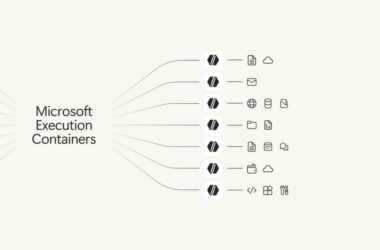
Microsoft Execution Containers Put AI Agents Behind OS-Enforced Boundaries
Microsoft Execution Containers are now generally available, with file, network, UI and session controls for AI agents. Here is how MXC works and what IT teams should test.