Google has opened preorders for the Fitbit Edge, a $179.99 fitness tracker that puts a 1.34-inch AMOLED screen, built-in GPS and electrocardiogram hardware into a 17.7-gram aluminum body. The tracker goes on sale October 27 and is designed to sit between the $99.99 screenless Fitbit Air and the $349.99 Pixel Watch 5.
That middle position is unusually clear. The Edge restores the glanceable screen and stand-alone route tracking many Fitbit Charge owners want, while keeping a claimed seven-day battery life and compatibility with both Android phones and iPhones. But Google has also removed NFC, which means there is no Google Wallet tap-to-pay support. For Charge 6 owners, that omission makes the Edge a mixed upgrade rather than an automatic replacement.
Fitbit Edge price, release date and core specifications
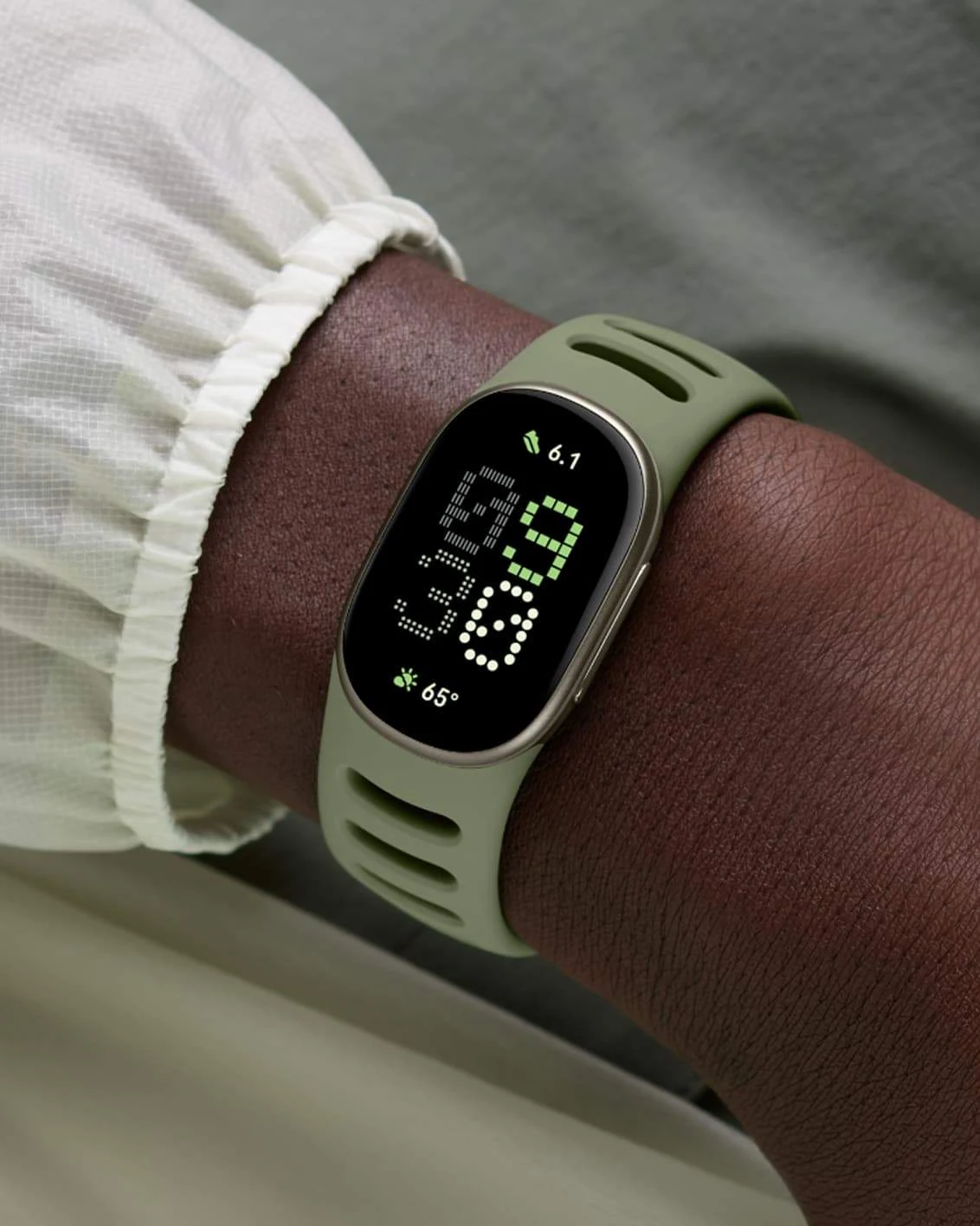
The standard Fitbit Edge costs $179.99 in the United States, with preorders available now and retail availability beginning October 27. Google is also selling a $219.99 Stephen Curry Special Edition with a water-repellent woven band. The standard model comes in four case-and-band combinations, and both small and large Active Bands are included.
The case measures 39.22 by 25.56 millimeters and is 11.58 millimeters thick. Its 1.34-inch color AMOLED display supports an always-on mode, and a mechanical button provides a reliable way to wake the screen, open the app list or pause a workout. The housing is rated IP68 and 5 ATM, so it is built for sweat, rain and swimming rather than diving.
Google claims up to seven days of battery life with typical use and a full charge in about 90 minutes. Five minutes on the charger is rated to provide up to one day of use. There is a major catch: Google’s support documentation cuts the estimate to two days when the always-on display is enabled. Buyers who want the Edge to behave like a continuously visible watch should plan around that much shorter figure.
What the $80 upgrade over Fitbit Air buys
The screen is only part of the difference. The Edge includes GPS and Galileo reception for phone-free route tracking, an altimeter for elevation and floor counts, electrical sensors for the ECG app, red and infrared sensors for blood-oxygen estimates, a skin-temperature sensor, an optical heart-rate sensor, accelerometer and gyroscope. The Fitbit Air lacks the Edge’s display, built-in GPS and ECG hardware.
Google says the new GPS system improves tracking accuracy by up to 40 percent over earlier generations, though that is a manufacturer claim and independent route testing will matter. The Edge also records cardio load, readiness, VO2 max, heart-rate zones, Active Zone Minutes and post-workout summaries. Its local storage holds seven days of minute-by-minute motion data, 30 days of daily totals and heart-rate samples at two-second intervals.
The launch announcement says automatic activity recognition can categorize up to 100 workouts, while Google’s current technical specification page lists more than 40 exercise modes for on-device tracking and automatic recognition. Those figures describe different parts of the experience, but buyers should not assume all 100 activities expose the same live metrics or manual controls on the tracker.
The Edge is not a small Pixel Watch
The interface borrows tiles, complications and watch faces from Google’s smartwatch design, but the Edge does not run the full Wear OS app platform. It mirrors phone notifications, supports preset quick replies and controls media playing on a connected phone. Google Maps turn-by-turn directions are marked as coming soon.
There is no microphone, speaker or on-wrist Gemini conversation. Users also cannot download a general catalog of third-party watch apps or faces. Most importantly, the Edge has no NFC radio, so it cannot make contactless payments. The older Charge 6 supports Google Wallet, making the missing feature especially conspicuous for anyone who leaves a phone behind during a run.
The simpler software helps explain the battery advantage over a smartwatch. It also defines the intended buyer: someone who wants health sensing, routes and workout feedback on the wrist without calls, a full app platform or daily charging.
Google Health Premium changes the real cost
Every Edge purchase includes a three-month Google Health Premium trial. After that, the subscription costs $9.99 per month in the United States, although it is also included with Google AI Pro. The paid tier unlocks the Gemini-powered Google Health Coach, personalized workout plans and advanced health guidance. The core tracker still records activity and health metrics without a paid plan, and the coach can be disabled.
Premium is also tied to Google’s newer Health Guardian features, including monthly blood-pressure and insulin-resistance trends. Those features analyze patterns from wearable data; they do not turn the Edge into a blood-pressure cuff or a blood test. They should be treated as wellness signals to discuss with a clinician, not as diagnoses or replacements for medical measurement.
Setup requires a Google account and the Google Health app. The tracker works with most phones running Android 11 or newer and iPhones running iOS 16.4 or newer. That iPhone support gives it a broader audience than a Pixel Watch, although Apple users will still miss the deeper system integration of an Apple Watch.
Should Charge 6 owners upgrade?
Charge 6 owners gain a substantially larger and brighter display, a physical button, an altimeter, a newer interface and a design intended to support battery replacement. Google also promises improved GPS and adds on-wrist cycle tracking. The larger screen should make pace, heart-rate-zone and navigation information easier to read during exercise.
They lose Google Wallet, however, and should not expect a full smartwatch app ecosystem. Battery life is still rated at seven days with the screen used normally, while always-on use reduces it sharply. Unless the larger display, elevation sensing or repair-oriented design solves a specific problem, an otherwise healthy Charge 6 remains competitive.
Who should preorder and who should wait
The Fitbit Edge makes the most sense for runners, cyclists and gym users who want built-in GPS, ECG capability and visible workout metrics in a lighter device than a smartwatch. It is also the obvious Fitbit option for people who reject the Air’s screenless design but do not want the size, price or charging routine of a Pixel Watch.
Wait for independent reviews if GPS precision, heart-rate accuracy during intervals, screen visibility in sunlight or real-world battery life will determine the purchase. Skip it if tap-to-pay, voice interaction or third-party apps are essential. The hardware looks like a credible modern successor to the Charge line, but its most consequential buying decision is not the sensor list. It is whether seven-day tracking matters more than the smartwatch functions Google deliberately left out.
Sources: Google’s Fitbit Edge announcement, official technical specifications, Google Store product page, and independent launch reporting from Ars Technica and WIRED.