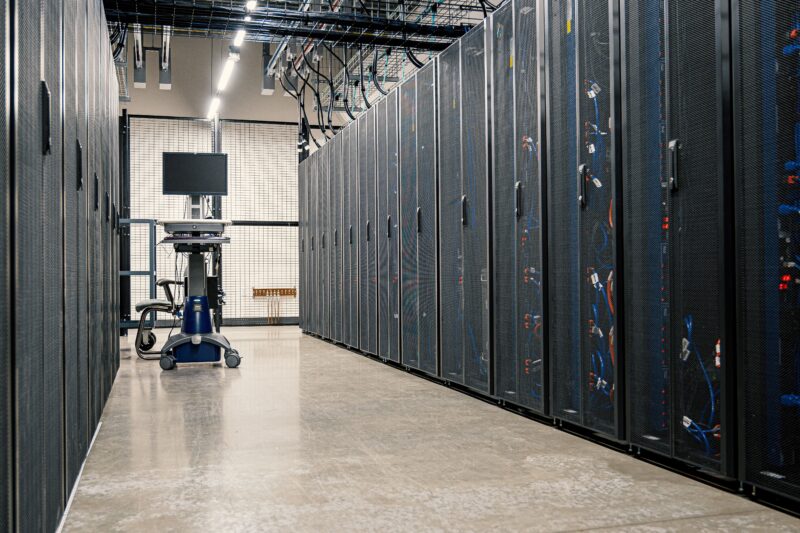
Anthropic has signed a 20-year lease for a purpose-built AI infrastructure campus in Hawesville, Kentucky, giving TeraWulf a long-term customer for roughly 401 megawatts of critical IT load at a former aluminum industrial site.
The agreement, announced by TeraWulf on July 6, is expected to generate about $19 billion in contracted lease revenue over the initial term. Initial capacity is scheduled to enter service in the second half of 2027, with the campus ramping to the full 401 MW by early 2028.
For Anthropic, the deal is another sign that frontier AI companies are treating data center access as a strategic supply chain, not a commodity cloud purchase. For TeraWulf, it marks a sharper turn from power-linked digital infrastructure into AI campus ownership, with a named model developer attached to a site that already has heavy industrial zoning and electrical infrastructure.
What the lease actually covers
TeraWulf’s July 6 Form 8-K says its subsidiary Raylan Data LLC will provide Anthropic with about 401 MW of critical IT load for high-performance computing operations at the Justified Data campus. The filing says delivery will happen in phases from late 2027 through early 2028, and that Anthropic’s rent obligations begin as each leased premise is delivered.
The 8-K also gives Anthropic room to extend the relationship beyond the initial 20 years through two successive five-year renewal options. TeraWulf said Anthropic’s payment obligations are expected to be supported by an investment-grade credit, an important detail for investors and lenders because data center projects at this scale depend on financing confidence long before servers arrive.
The company is pairing the Anthropic lease with a separate capital move. TeraWulf agreed to sell its 50.1% interest in the Abernathy Joint Venture, a 168 MW AI data center project in Texas, to an investor group led by Fluidstack. The 8-K lists aggregate consideration of about $530 million, paid in three installments through April 2027.
That second transaction matters because it shows TeraWulf choosing wholly owned campuses over shared structures when it believes it can control more of the economics. The company framed the sale as a way to recycle capital into infrastructure where it keeps direct customer relationships, operational control, and more long-term upside.
Why Hawesville is the point
The Kentucky site is not a blank field waiting for speculative construction. Data Center Dynamics reported that the Justified Data property was formerly an aluminum processing site and was sold to TeraWulf in February for $200 million. Local reporting from The Owensboro Times identifies it as the former Century Aluminum smelter, which has been idle since 2022 after operations halted and more than 600 jobs were eliminated.
That history explains why the site is attractive for AI infrastructure. Large AI campuses need available power, transmission access, cooling plans, zoning clarity, and enough land to phase in capacity without restarting the entire permitting process every time demand grows. Former industrial properties can offer some of those advantages, though they also bring local questions about noise, water use, jobs, and tax impact.
Hancock County Judge-Executive Johnnie Roberts told The Owensboro Times that the project is expected to create 100 to 120 permanent jobs, fewer than the former smelter supported. County officials are also asking about power demand, water consumption, and noise; Roberts said TeraWulf has agreed to complete noise studies before and after operations begin, and that the company has maintained that electricity use will be similar to the former aluminum operation while daily water use will be lower.
Those details are not side issues. As AI companies chase hundreds of megawatts at a time, local acceptance is becoming part of the infrastructure stack. A campus can look strong in a press release and still face pressure if residents believe electricity, water, sound, or tax assumptions are vague.
Anthropic is buying time, not just capacity
The lease does not immediately add compute for Claude. TeraWulf expects initial capacity only in the second half of 2027, with full ramp in early 2028. That lag is the story: frontier AI companies are now signing for infrastructure on a multi-year horizon because model training, inference growth, and enterprise demand can no longer be planned around short-term GPU availability alone.
Data Center Dynamics noted that Anthropic has already relied heavily on cloud providers and has signed large capacity agreements with companies including Google, Amazon Web Services, CoreWeave, Fluidstack, and others. The TeraWulf lease adds a different kind of commitment: not merely cloud capacity from an existing hyperscaler, but a long-duration anchor tenancy tied to a specific power-heavy campus.
That distinction matters for how AI infrastructure is being financed. A 20-year lease backed by a major AI customer can make a data center project easier to underwrite, while giving the AI lab a clearer claim on future capacity. It also moves more AI buildout risk into local power markets, construction schedules, equipment procurement, and operator execution.
What to watch next
The first test is whether TeraWulf can deliver the initial capacity in late 2027. AI data center schedules are often announced in clean phases, but real projects can be slowed by transformers, switchgear, cooling equipment, grid coordination, financing, and construction labor.
The second test is whether the local operating promises hold. The Hawesville site starts with an advantage because it already carried heavy industrial use, but the public conversation around AI campuses is shifting from abstract energy demand to specific questions: how loud the site is, how much water it uses, what power contracts look like, how many permanent jobs appear, and whether the tax base changes enough to justify the disruption.
The third test is whether more AI labs follow the same pattern. If long-duration leases at former industrial or power-rich sites become the default, the AI race will be measured less by model releases and more by who has secured land, electricity, cooling, financing, and a credible operator two years before the next wave of compute is needed.
Anthropic’s TeraWulf deal is therefore less useful as a single company milestone than as a map of where frontier AI is headed. The bottleneck is not just chips. It is the ability to turn a power-connected site into reliable, financeable compute before the next model cycle arrives.