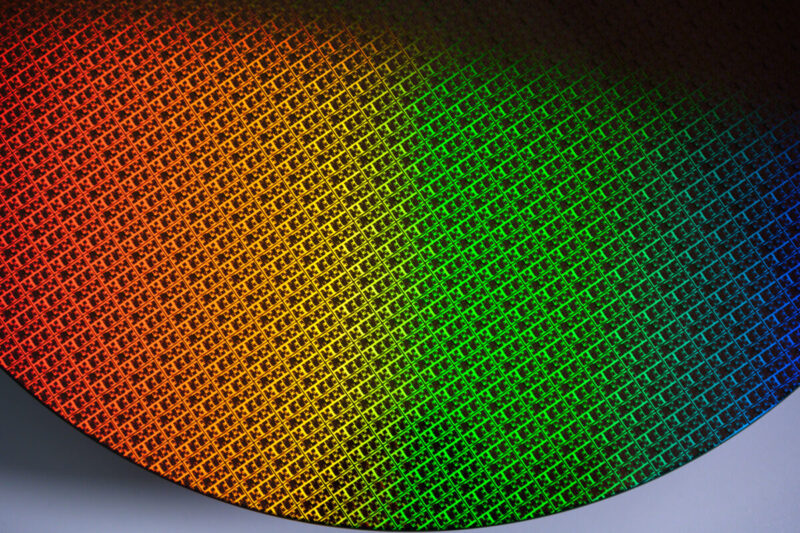
President Trump’s claim that Apple has agreed to work with Intel on chips made in the United States has turned Intel Foundry’s 18A-P process from a manufacturing milestone into a public test of whether Intel can win back one of the most demanding chip customers in consumer technology.
The announcement did not come from Apple or Intel. Trump posted on Truth Social on June 18 that Apple had agreed to work with Intel to design and build chips in America, according to Axios and other market coverage. Intel declined to comment to Axios, and Apple had not publicly detailed the arrangement. That makes the story important but still unfinished: it is a political and market-moving claim, not yet a normal customer win announced by the two companies.
The timing is why it matters. Two days earlier, Intel Foundry said its 18A-P node had entered risk production, the early manufacturing stage used to collect yield, defect, performance, and variability data before a process is ready for larger customer volumes. Intel described 18A-P as the first performance enhancement to the Intel 18A family and said it met a timeline shared with customers and partners last year.
What Intel has actually confirmed
Intel’s confirmed news is technical. The company says 18A-P can deliver 9% higher performance at the same power or 18% lower power at the same performance versus Intel 18A. It also lists a 20% to 40% improvement in thermal resistance, a 10% to 30% improvement in via resistance on performance-critical layers, and design-rule compatibility with Intel 18A so customers can reuse existing IP and design flows more easily.
Those numbers are meaningful because Apple’s chip strategy is built around tight control over performance per watt, thermal behavior, and product integration. A MacBook Air or iPad Pro chip cannot merely work on an advanced node. It has to ship at large scale, stay inside thin-device thermal limits, and arrive on a predictable product calendar. Intel’s own release is careful about that gap: risk production is progress, but it is not proof of Apple-level high-volume manufacturing.
Intel also highlighted Power Boost, a dual-contact, low-resistance transistor option meant to raise drive current and frequency headroom. Its broader VLSI update pointed to gate-all-around transistors, backside power delivery, and longer-term research in CFET devices, gallium nitride integration, and ruthenium interconnects. In plain terms, Intel is trying to show that 18A-P is not just a branding refresh. It is a process update designed to make the foundry business more credible to outside chip designers.
What remains unconfirmed
The Apple part is less settled. Market reports have centered on the possibility that Apple could test Intel’s process for future Apple Silicon, including lower-volume or less-critical components before any larger production commitment. Axios cited Bernstein analyst Stacy Rasgon as saying an initial arrangement would likely begin with smaller runs rather than immediately handing Intel a central role across Apple’s highest-volume chips.
That cautious reading fits Apple’s manufacturing history. Apple moved the Mac away from Intel processors beginning in 2020, but that was a chip-design shift, not a permanent rule against Intel as a manufacturing partner. If Apple used Intel Foundry, Intel would be acting more like TSMC does today: a contract manufacturer building chips from Apple’s designs. That is a very different relationship from Apple buying Intel CPUs.
It also means the key question is not whether Apple is returning to Intel chips. It is whether Intel can meet the standards Apple already gets from TSMC: mature yields, reliable delivery, tight process-design collaboration, packaging options, and enough capacity to support product launches without visible supply risk.
Why Apple would even look at Intel
Apple has strong reasons to avoid unnecessary foundry risk, but there are also reasons to explore a second advanced-node source. Demand for AI accelerators, high-end mobile chips, memory, and advanced packaging has kept pressure on the semiconductor supply chain. U.S. policy has also pushed major chip buyers toward domestic manufacturing capacity, with Intel positioned as the main American candidate trying to compete at the leading edge.
For Apple, even a limited Intel relationship could create negotiating leverage, geopolitical resilience, and a possible U.S.-made path for some future silicon. For Intel, Apple would be more than another customer logo. It would be a signal to the rest of the market that Intel Foundry can satisfy a company famous for squeezing suppliers on performance, power, secrecy, yield, and launch discipline.
The stock-market reaction shows how much investors want that validation. Axios reported that Intel shares surged 11% after Trump’s statement. That optimism is understandable, but it also front-loads expectations before the hardest evidence exists. A foundry turnaround is measured in wafers, yields, defect curves, product teardowns, and repeat customer orders, not in a single political post or one early production milestone.
The 18A-P test is bigger than Apple
Intel’s 18A-P progress matters even if the first Apple work is narrow. Advanced chip manufacturing has become a strategic bottleneck for AI infrastructure, PCs, mobile devices, and national technology policy. TSMC remains the leading outside foundry for many of the world’s most important chips, while Samsung and Intel are trying to prove they can offer credible alternatives at the top end of the market.
For Intel, the next phase is execution. 18A-P entering risk production gives customers a concrete process to evaluate. The reported Apple talks give Intel a high-profile credibility test. What is still missing is the part that would turn the story from market excitement into a durable semiconductor shift: a confirmed customer plan, named products or components, production timing, and evidence that Intel can deliver Apple-grade silicon at scale.
Until then, the cleanest read is also the most useful one. Intel has made a real manufacturing milestone public. Trump has put an Apple relationship into the spotlight. Apple and Intel have not yet filled in the commercial details. The difference between those three facts is where the foundry race now sits.