


Browsing Tag
AI Memory
6 posts
Memory and storage infrastructure for artificial intelligence training, inference, long-context models, and data-center systems.
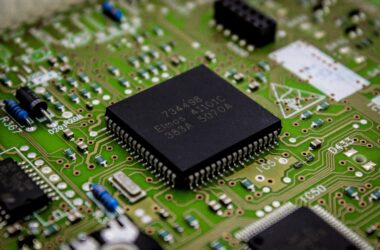
Chip Sales Just Hit a Record as AI Demand Spreads Beyond GPUs
SIA says global semiconductor sales reached $120.6 billion in May 2026, the highest monthly total it has recorded and more than double the level from a year earlier. The data suggests the AI chip boom is now lifting a wider stack of memory, networking, logic, and foundational semiconductors across every major region.

AI Memory Shortage Turns Into a Fight Over Who Gets Chips
A July 1 SEMI letter warns Washington that direct intervention in memory-chip pricing or production could worsen an AI-driven shortage. The fight now reaches beyond data centers, with broadband, automotive, medical-device, retail, and consumer-electronics groups worried that HBM demand will squeeze ordinary DRAM supply.
Micron’s Hiroshima HBM Expansion Shows AI Memory Is the Next Supply Fight
Micron has broken ground on a roughly $9.3 billion Hiroshima expansion that will produce high-bandwidth memory for AI processors, with shipments expected around summer 2028. The timing shows why memory, not just GPUs, has become a strategic bottleneck for AI infrastructure buyers.

Xbox Price Hike Shows AI Memory Costs Hitting Game Consoles
Microsoft is raising Xbox console prices worldwide on August 1, adding $100 to 512 GB models and $150 to 1 TB models while discontinuing the 2 TB Xbox Series X. The move shows how AI-driven memory and storage costs are now reshaping game-console economics.

Apple’s Mac and iPad Price Hikes Show AI Costs Reaching Consumer Devices
Apple raised prices on several Macs and iPads after AI data-center demand pushed up memory and storage costs. The move makes the AI infrastructure boom visible in ordinary consumer hardware prices.
Micron’s Anthropic Deal Makes Memory Part of the AI Model Roadmap
Micron’s new Anthropic agreement ties HBM, DRAM, SSDs, supply planning, Claude adoption, and a strategic investment into one AI infrastructure deal. The move shows why memory and storage are becoming part of frontier model design instead of commodity parts bought after the GPU decision.