CISA has warned that ST Engineering iDirect iQ-Series satellite terminals contain two high-severity API flaws that could expose sensitive device information or let an attacker force a reboot that disrupts a satellite link. The advisory, published July 2, applies to Evolution iQ-Series, 3315-Series, and 9-Series terminals running software version 4.5.2.1 or earlier.
The fix is available in version 4.5.2.2 or newer, according to CISA’s advisory. ST Engineering iDirect has made patches available to registered users through its support portal. CISA says it has not received reports of known public exploitation targeting the vulnerabilities so far, but the affected equipment sits in communications paths where exposure and uptime matter: communications providers, defense industrial base organizations, energy operators, government facilities, and transportation systems.
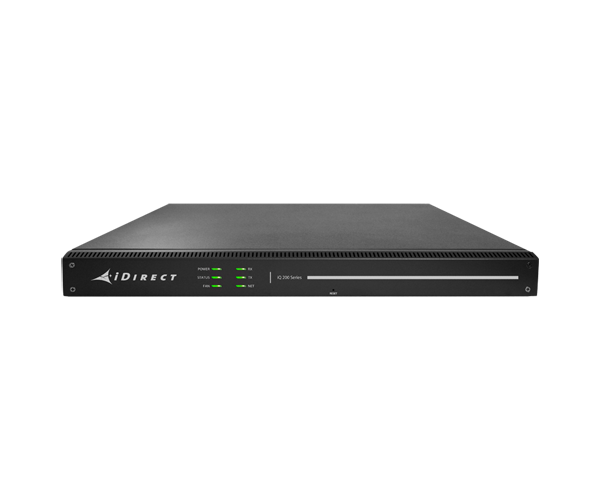
This is not a consumer router scare story. The affected terminals are satellite communications endpoints used in enterprise, maritime, remote-site, government, defense, disaster response, oil and gas, and mobility contexts. ST Engineering iDirect describes the iQ 200 Rackmount as a DVB-S2/S2X modem for fixed and mobile networks, with enterprise, cellular backhaul, and maritime use cases. That context changes how defenders should read the advisory: weak API controls on satellite edge gear can become an availability and trust-boundary problem, not just an appliance patch note.
What the Two iDirect Flaws Allow
The first vulnerability, CVE-2026-38059, is a missing-authentication issue affecting REST API endpoints. CISA says an unauthenticated attacker with network access can retrieve device information including serial number, Device ID, Terminal Private Key identifier, MAC address, and exact firmware version. The advisory notes that the Device ID and Terminal Private Key identifier are used for satellite network authentication in the iDirect platform, which makes the leak more serious than ordinary asset metadata.
A leaked identifier is not the same as a stolen private key, and CISA does not describe this as a full terminal-takeover flaw. The operational concern is narrower and still important: unauthenticated API responses can help an attacker identify the exact device, firmware state, and trust model before attempting credential attacks, support impersonation, vulnerability matching, or broader reconnaissance against the management network.
The second vulnerability, CVE-2026-38057, is a cross-site request forgery weakness in state-changing API endpoints after authentication. CISA says the reboot endpoint accepts POST requests authenticated only by a session cookie without the SameSite attribute. If a terminal administrator is already logged in and visits a malicious page, the browser could submit a reboot request using that session. A single reboot can interrupt a link; repeated abuse could sustain a denial-of-service condition.
Why Satellite Terminal APIs Deserve Extra Attention
Satellite terminals often live at awkward network edges. They may connect vessels, remote facilities, energy sites, field offices, emergency-response teams, or transportation operations where ordinary broadband is unavailable or unreliable. That makes remote administration useful, but it also makes management interfaces easy to normalize as plumbing: always there, rarely touched, and sometimes reachable from more places than the security team expects.
The iDirect advisory is a reminder that specialized infrastructure frequently fails through ordinary web-security mistakes. Missing authentication, CSRF, weak session-cookie attributes, overly chatty APIs, and broad management reachability are familiar problems. They become sharper when the affected system is part of a satellite link that operators depend on for monitoring, logistics, safety workflows, remote support, or business continuity.
The CSRF path is especially easy to underrate because it requires user interaction. In practice, administrator interaction is exactly what attackers try to manufacture through support-themed emails, vendor-looking web pages, ticketing-system links, or shared documents. If a browser session to the terminal management interface is active, the administrator’s workstation and browsing habits become part of the link’s security posture.
What Operators Should Check Now
The first job is inventory. Operators should identify whether they run Evolution iQ-Series, 3315-Series, or 9-Series terminals, then confirm whether each device is on software version 4.5.2.1 or earlier. Version 4.5.2.2 or newer contains the vendor fix, according to CISA.
- Confirm ownership for every affected terminal, including units managed by service providers, field teams, or regional operations.
- Patch affected terminals to version 4.5.2.2 or newer through the vendor’s supported channel.
- Restrict management interfaces to trusted administrative networks, VPN paths, allow-listed source addresses, or hardened jump hosts.
- Verify that administrative APIs are not reachable from the public internet or from broad business LAN segments.
- Review logs for access to
/api/identity,/api/,/api/reboot, anomalous API activity, and unexplained device reboots. - Separate sensitive terminal-management browsing from ordinary email and web use where possible.
- Document compensating controls and a real patch deadline if a maintenance window cannot be scheduled immediately.
CISA’s broader industrial-control guidance still applies: minimize network exposure, isolate control-system networks from business networks, put remote devices behind firewalls, and treat VPNs as one layer rather than a magic shield. A vulnerable remote-access gateway in front of a vulnerable management interface is not a strong boundary.
The Useful Lesson Beyond This Advisory
The immediate remediation is version-specific, but the more durable lesson is architectural. Any organization that depends on satellite connectivity should know which devices expose web APIs, where those interfaces are reachable from, who can authenticate to them, what actions can be triggered from a browser session, and whether reboot events are visible to both operations and security teams.
Nothing in CISA’s advisory suggests attackers are actively exploiting these iDirect vulnerabilities today. That is good news, not a reason to wait. Once device identifiers, firmware versions, and reboot paths are exposed through weak API controls, the management plane becomes a map of future opportunity. The patch closes the named flaws; the exposure audit tells operators whether similar assumptions are still sitting in the network.