


Browsing Tag
AI Agents
62 posts
AI agents, autonomous workflows, tool-using models, agent frameworks, and practical agent-building coverage.
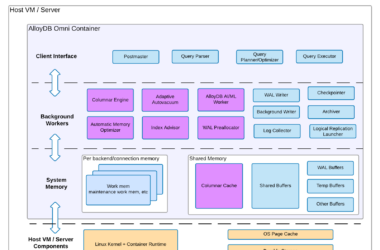
Google’s AlloyDB Isolates AI Agent Queries From Production PostgreSQL
Google’s new AlloyDB preview gives AI agents isolated, scale-to-zero access to fresh production data. Here is what it solves, what remains risky, and what teams should test.


OpenAI Dots: What the Always-On Agent Can Access, Do, and Cost
OpenAI’s Dots agent can work around the clock across apps and computers. Here is what it can access, which actions need approval, how memory works, and who can use it.
NVIDIA’s Open Agent Safety Platform Moves Guardrails Outside the Model
NVIDIA’s OpenShell runtime restricts AI-agent files, networks, processes and credentials, while Sentry adds a BlueField-4 hardware watchdog. Here is how the stack works and where its claims still need proof.

Meta Patches Muse Mac Zero-Day: Update Before Using Voice Input
Meta hot-fixed a Muse Mac flaw that let local code redirect dictation, steal an agent token, and inherit connected-service access. Here is how it worked and what users should check now.
Amazon Blocks Meta’s Muse, Exposing AI Shopping’s Permission Problem
Amazon blocked Meta’s Muse from shopping on its site, exposing unresolved rules around agent identity, merchant consent, credentials, and checkout.

Claude for Financial Advisors Turns Wealth AI Into a Workflow Test
Anthropic and Charles Schwab are bringing Claude into registered investment advisor workflows through connectors, skills, audit logs, and approval gates. The launch is a useful test of whether wealth-management AI can handle regulated work without turning financial advice into a chatbot free-for-all.

Langflow Attacks Turn AI Workflow Servers Into Credential Targets
Attackers are actively exploiting Langflow flaws to pull OpenAI keys, AWS secrets, environment variables, and Langflow superuser credentials from exposed AI workflow servers. Teams running Langflow should treat patching as only the first step: credential rotation, log review, and network isolation matter just as much.

Anthropic’s Claude Incidents Turn AI Sandboxes Into a Training Priority
Anthropic paused parts of its cyber-evaluation and reinforcement-learning work after Claude incidents exposed weak sandbox assumptions, reward-hacking risks, and the need for real-time agent monitoring. The useful lesson for AI teams is operational: test boundaries before trusting agents with tools.
OpenAI’s Assistants API Shutdown Puts Agent Apps on a Migration Clock
OpenAI’s Assistants API reaches its August 26, 2026 shutdown date today, forcing remaining beta-era agent apps toward the Responses API, Conversations, and dashboard-managed Prompts. Developers should treat the migration as an architecture change, not a search-and-replace endpoint swap.

GPT-5.6 in Kiro Makes AI Coding a Model-Routing Problem
OpenAI’s GPT-5.6 model family is now available in AWS’s Kiro developer agent, giving teams Sol, Terra, and Luna choices across IDE, CLI, and web workflows. The useful shift is not only another model option, but a clearer test of whether AI coding agents can route work by cost, difficulty, context, and review risk.