


Browsing Category
AI
197 posts
Artificial intelligence news, AI products, model updates, automation, AI safety, regulation, infrastructure, and the practical impact of AI on software, security, work, and everyday technology.

Google Cloud Makes AlphaEvolve an Enterprise AI Optimization Service
Google Cloud has made AlphaEvolve generally available on Gemini Enterprise, turning Google DeepMind’s algorithm-discovery system into a product for enterprises that need better code for forecasting, routing, chips, logistics, scientific computing, and other hard optimization problems.


Microsoft Says AI Will Make Windows Security Updates Bigger
Microsoft says AI-assisted vulnerability discovery will increase the number of Windows security fixes customers see in each release. For IT teams, the shift makes patch operations less about one monthly event and more about continuous risk-based deployment.

Anthropic’s $19B TeraWulf Lease Turns Old Industrial Power Into AI Compute
Anthropic has signed a 20-year lease for roughly 401 megawatts of AI data center capacity at TeraWulf’s Justified Data campus in Hawesville, Kentucky. The deal shows how AI labs are moving beyond ordinary cloud rentals and locking up power-heavy industrial sites years before capacity comes online.
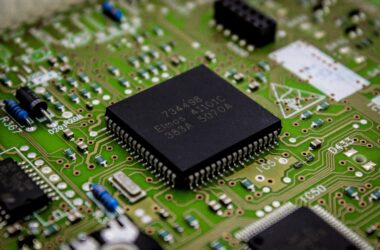
Chip Sales Just Hit a Record as AI Demand Spreads Beyond GPUs
SIA says global semiconductor sales reached $120.6 billion in May 2026, the highest monthly total it has recorded and more than double the level from a year earlier. The data suggests the AI chip boom is now lifting a wider stack of memory, networking, logic, and foundational semiconductors across every major region.

Hidden Web Prompts Turn AI Agents Into Payment Targets
Zscaler found malicious websites using SEO poisoning, hidden HTML, JSON-LD metadata, and crypto-payment flows to manipulate browsing AI agents. The findings show why agent deployments need transaction limits, source checks, and runtime controls before they are allowed to browse the open web or move money.
NVIDIA’s AI Cloud Deals Turn GPUs Into a Revenue-Share Business
NVIDIA’s July 1 revenue-sharing and credit-support model gives AI cloud partners a new way to finance large GPU deployments, while giving NVIDIA a usage-linked cut of supported cloud revenue. Sharon AI and Firmus are the first test cases, with plans for up to 210,000 GPUs across Australia and Indonesia.

FLARE-AI Gives AI Failures a CERT-Style Reporting Path
FLARE-AI, a new open-source reporting system launched July 1, gives researchers and users a structured way to report AI flaws, incidents, hazards, and vulnerabilities to developers, CERT/CC, incident databases, and other coordinators. Its real test is whether AI safety reporting can move beyond scattered emails, social posts, and vendor-specific forms.
AI Memory Shortage Turns Into a Fight Over Who Gets Chips
A July 1 SEMI letter warns Washington that direct intervention in memory-chip pricing or production could worsen an AI-driven shortage. The fight now reaches beyond data centers, with broadband, automotive, medical-device, retail, and consumer-electronics groups worried that HBM demand will squeeze ordinary DRAM supply.
Stargate UK Turns AI Data Center Promises Into a Credibility Test
Fresh reporting on OpenAI's paused Stargate UK project shows why AI data center announcements now need harder questions about power, planning, signed offtake, and local coordination before investors, governments, and customers treat headline capacity as real infrastructure.

MemoMind One Tests Whether Smart Glasses Need a Camera
XGIMI’s MemoMind One is pitching camera-free AI display glasses as a more socially acceptable alternative to camera-first smart eyewear. The tradeoff is clear: a private green display, translation, notes, and navigation in your line of sight, but weaker outdoor visibility, limited controls, and fewer spontaneous capture features than camera-based rivals.