


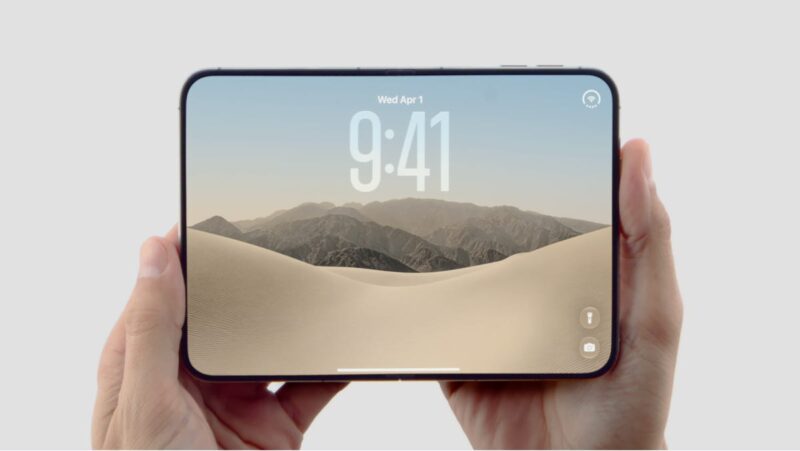
Apple’s iPhone Duo earned the highest repairability score iFixit has given a foldable phone, but the teardown also identified a possible hinge stress point near the same area where some early units have developed cracked inner screens and bright pixel lines.
iFixit published its teardown on October 25, two days after Apple’s first foldable reached customers. Its provisional 5-out-of-10 score reflects several welcome design choices: both batteries release electrically, the outer display can be removed intact, smaller components are relatively accessible, and Apple has already published a repair manual.
Those gains do not resolve the most expensive and mechanically delicate part of the phone. A complete inner-display repair costs $999 without coverage, half the $1,999 starting price of the device. More importantly, teardown footage, CT imaging and a 3D hinge model led iFixit to a plausible explanation for a cluster of early failures. It is a hypothesis, not a confirmed diagnosis, and neither Apple nor iFixit has established how many phones are affected.
Screen Failures Cluster Near the Hinge Center
Owners in several markets have posted similar symptoms: resistance or a noise while opening or closing the phone, followed by a thin line down the fold and a bright horizontal or vertical band of failed pixels. Tom’s Guide collected reports from the United States, China and Australia, including an Australian unit that failed after fewer than 20 openings. Apple replaced that phone in a store, but isolated replacements do not establish a general service policy or the scale of the problem.
The damage pattern matters. iFixit’s overlay of reported failures against CT scans places the intersection of the failed pixel rows and columns just below the flex cable that crosses the hinge. That makes the cable an unlikely primary culprit. The cluster instead sits where the cable opening transitions into the central hinge support and several edges change how the thin display is supported.
In iFixit’s closing simulation, the center support bar can fail to drop far enough. The curved portion of the folding display then comes down on that support, creating a concentrated pressure point close to the reported break locations. A stuck pivot, contamination or manufacturing tolerance could potentially produce that behavior, but the teardown does not prove which mechanism is responsible. A broader defect would require failure-rate data and an engineering response from Apple.
How the Duo Folds Without a Deep Crease
The Duo uses the waterdrop-style fold common to modern book-shaped foldables. Although the phone closes flat, the flexible OLED follows a wider curve inside the hinge instead of being pinched into a sharp bend. Linked metal joints, synchronization gears and springs distribute the movement and hold the device at intermediate angles.
The screen itself is a stack of more than 10 thin layers and adhesives that must slide slightly as the phone opens and closes. Apple also uses a matte nano-texture cover layer to scatter reflections and make the crease less noticeable. Under a microscope, iFixit found differently oriented oval subpixels that appear consistent with an Apple patent for disrupting visible diffraction patterns. The display therefore hides the fold through both mechanical support and optical design.
That complexity helps explain why a small fault can cause a large visible failure. Damage to one tiny electrical connection can disable an entire row or column of pixels, producing a bright line that extends far beyond the original pressure point.
The Most Repairable Foldable Still Has a $999 Screen
The provisional 5/10 score is meaningful, but it needs context. iFixit has not called the Duo easy to repair; it has called it easier to repair than other foldables it has dismantled.
The two battery cells are a genuine improvement. Electrically releasable adhesive allows a technician to loosen them without the aggressive bending, prying and solvents that raise puncture and fire risk. The cells also have metal shells, and the phone’s relatively flat internal layout reduces the number of unrelated parts that must be removed to reach cameras or charging hardware.
The outer display and the trim around the folding screen came off intact during the teardown. Apple also treats the nano-texture cover as a separate serviceable layer. iFixit lists a $49 out-of-coverage charge for that layer, or $19 with AppleCare, allowing superficial damage to be addressed without discarding the OLED underneath.
A full inner-screen or hinge repair is another matter. The display is heavily bonded, alignment is exacting, and reaching the hinge requires removing the flexible panel and its supports. Apple has published documentation, but replacement parts were not yet available through its Self Service Repair program when iFixit assigned the score. That is why the rating remains provisional.
IP68 Does Not Mean a Dustproof Hinge
Apple rates the iPhone Duo IP68 under IEC 60529, covering immersion to six meters for up to 30 minutes under controlled laboratory conditions. Apple also cautions that water and dust resistance are not permanent and can decline with wear.
iFixit’s fluorescent-powder test was not an IP certification test. It was designed to show where very fine particles travel as the hinge moves. Adhesive barriers kept most powder away from the electronics, and the Duo collected less visible material than the Galaxy Z Fold8 and Pixel 11 Pro Fold in comparable teardowns. Some particles still reached the hinge, however, and the mechanism began to crunch.
That distinction is useful for owners. A phone can meet an enclosure ingress rating while its exposed moving mechanism remains vulnerable to abrasive particles. Cleaning or replacing contaminated hinge parts is particularly difficult because the flexible display sits above them.
What iPhone Duo Owners Should Do
Early reports are not enough to conclude that every Duo has a defective hinge. They are enough to justify treating a change in hinge feel as a warning rather than forcing the phone through it.
- Stop if the hinge becomes tight, gritty or noisy. Do not push past unexpected resistance. The reported failures often followed a pop or a change in movement.
- Back up the phone and document the symptoms. Photograph or record the hinge behavior and display lines with another device, then contact Apple or an authorized service provider promptly.
- Keep fine debris away from the fold. Avoid sand, dusty work surfaces and pockets or bags containing grit. Do not insert tools, compressed air or liquid into the hinge.
- Separate defects from accidental damage. A manufacturing failure may be handled under Apple’s limited warranty, while impact or debris damage can be treated differently after inspection. Apple’s repair page notes that final eligibility and pricing depend on the device assessment.
- Check the return and coverage window. Recent buyers who are uncomfortable with first-generation hardware should review the return terms for their seller. Owners keeping the phone should compare AppleCare service fees with the $999 out-of-warranty inner-display estimate.
Apple sells the iPhone Duo from $1,999, and the teardown makes its tradeoff clearer than launch specifications did. The phone is thoughtfully arranged for battery and component service, yet its defining part remains costly, difficult to replace and exposed to stresses that conventional phones do not face.
That is a substantial post-launch development from the broader buying questions in TechsCurrent’s original iPhone Duo launch report. A 5/10 repair score is progress for foldables. It is not reassurance that an early screen problem will be cheap or simple to fix.