The UK Competition and Markets Authority is moving toward rules that would let app developers direct users to payment options outside Apple’s App Store and Google Play, opening a new front in the long-running fight over mobile platform fees.
The regulator launched a consultation on June 30 on proposed conduct requirements for Apple and Google under the UK’s digital markets competition regime. The core proposal is about “steering”: whether developers can tell users about cheaper or alternative ways to pay beyond the platform’s own billing system.
That sounds narrow, but it goes straight at one of the most valuable control points in mobile software. Apple currently bans this kind of steering in the UK, according to the CMA. Google restricts it, though the regulator noted that Google announced new global Play Store terms on June 24 that are due to come into effect in the UK today and include some outside-payment steering, subject to conditions.
What the CMA is proposing
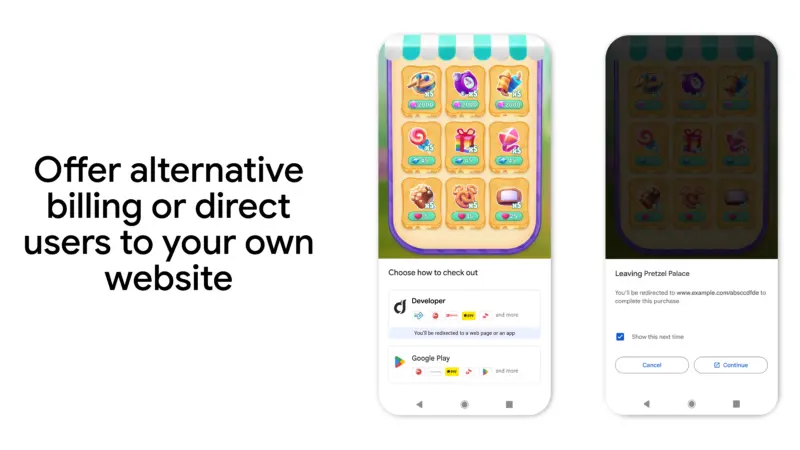
The CMA’s proposed requirements would remove platform rules that prevent UK app developers from communicating with customers about off-platform payment options. In practice, that could mean apps showing users external purchase links, explaining cheaper web subscriptions, or directing customers to payment pages that do not use Apple’s or Google’s in-app purchase systems.
The proposal does not instantly rewrite the App Store or Play Store rulebooks. Under the UK’s Digital Markets, Competition and Consumers Act, the CMA has to consult before imposing a conduct requirement. Responses to the steering consultation are due by 5 p.m. on July 28, 2026, and the regulator expects a decision later this year.
The CMA is also taking views on a possible separate requirement around NFC access, the short-range wireless technology used for contactless payments and device-to-device interactions. That consultation window is shorter: views on the potential NFC requirement are due by 5 p.m. on July 21, 2026.
Why developers should read the fine print
For developers, the practical issue is not simply whether outside payment links become possible. It is whether the final rules make steering commercially useful.
Recent app-store policy fights have shown that a platform can technically allow external payment options while still limiting where links appear, how they are worded, what screens users must pass through, what reporting developers must provide, and what residual fee the platform charges on transactions completed elsewhere. Those design details decide whether a rule gives developers real pricing freedom or just a more complicated checkout path.
The UK process lands just as Google begins rolling out a broader Play Store payment overhaul. Google’s June 24 changes lower some service fees and permit more billing choice in several markets, including the UK, but still preserve fees for developers using Play distribution and related services. The CMA said it will assess the likely impact of those changes on users and businesses during the next phase of its mobile-platform work.
Apple’s position is different because iOS app distribution remains more tightly tied to the App Store in the UK. The CMA’s Apple case page shows the regulator is separately tracking app certainty, interoperable access, and steering under Apple’s strategic market status designation. That matters because payment links are only one part of Apple’s control over iOS: browser engines, app review, ranking, data use, operating-system access, and NFC restrictions can all affect whether competing services can reach users on fair terms.
The UK is joining a global app-store reset
The CMA framed the issue as part of a wider international wave. App-store terms, steering, external payments, and platform fees are under pressure in the European Union, the United States, Japan, Brazil, and other markets. The common pattern is clear: regulators and courts are no longer treating app-store billing as a private contract issue between platforms and developers. They are treating it as infrastructure for the mobile economy.
That does not mean every jurisdiction will land in the same place. The EU’s Digital Markets Act has pushed Apple into alternative marketplaces and web distribution rules, while U.S. litigation has focused heavily on payment steering and anti-steering restrictions. Brazil has forced Apple toward a regional opening of iOS distribution and payments. Google’s latest Play Store changes reflect both antitrust pressure and an attempt to define a fee model before regulators impose one.
The UK approach is more procedural for now. Apple and Google were designated as having strategic market status in mobile platforms in October 2025, giving the CMA a route to impose conduct requirements. The June 30 consultation is one of the first concrete tests of how hard the regulator will push after that designation.
What app teams should do now
UK-facing app developers should treat the consultation as more than a policy document. Subscription apps, media services, dating apps, education platforms, creator tools, game publishers, and productivity software companies should model what external payment steering would change in their economics, support flows, fraud controls, refund processes, tax handling, and customer messaging.
Teams should also separate Apple and Google planning. Android developers may be dealing with Google’s new global terms immediately, while iOS developers are still watching whether the CMA forces Apple to relax UK steering rules and, separately, whether NFC access becomes a live interoperability requirement.
The most useful comments to the CMA are likely to be specific: how current rules affect pricing, what warnings or restrictions make external payment links ineffective, which data developers need to reconcile off-platform purchases, how users should be protected from scams without blocking legitimate competition, and what fees would still make outside payments uneconomic.
For users, the immediate experience will not change overnight. But if the CMA imposes strong steering rules later this year, UK apps could begin to show more visible routes to web subscriptions, direct checkout, loyalty pricing, and customer support outside the App Store and Play Store. The bigger question is whether Apple and Google can still charge enough for distribution and platform services that the savings never fully reach developers or customers.
The July deadlines now give developers a short window to influence that balance before the UK decides how far its new digital markets regime should reach into app-store payments.