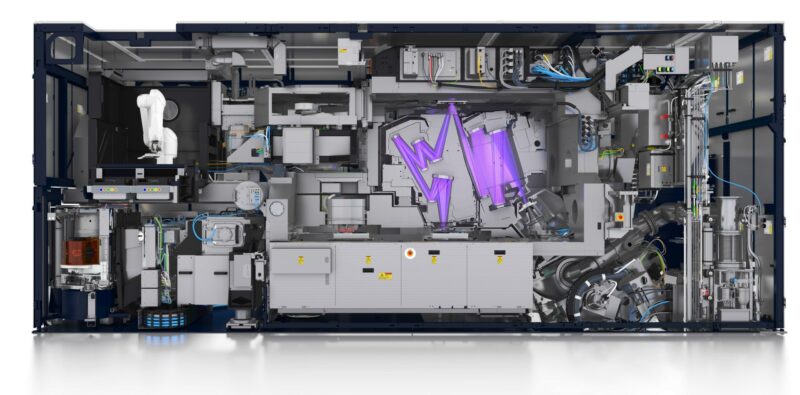
U.S. Commerce Secretary Howard Lutnick has reportedly told ASML executives that Washington is concerned one of the Dutch company’s extreme ultraviolet lithography systems, or EUV-related equipment, may have reached China despite export controls. ASML is rejecting the claim in unusually categorical terms.
TechCrunch, citing Bloomberg, reported on June 19 that U.S. officials say they have evidence involving EUV-related components and transport equipment, though the evidence has not been made public. Techzine reported that ASML told Bloomberg it has never shipped an EUV machine to China or any component, module, or equipment specially designed for one.
The Commerce Department has not publicly shown that a full EUV system is operating in China. That distinction matters. A verified EUV transfer would be a major breach of the technology controls that have kept ASML’s most advanced chipmaking tools out of China for years. An unproven allegation, however, still lands in the middle of a much broader fight over how enforceable those controls are as AI demand pushes advanced chip capacity into a strategic bottleneck.
Why EUV is treated differently from ordinary chip equipment
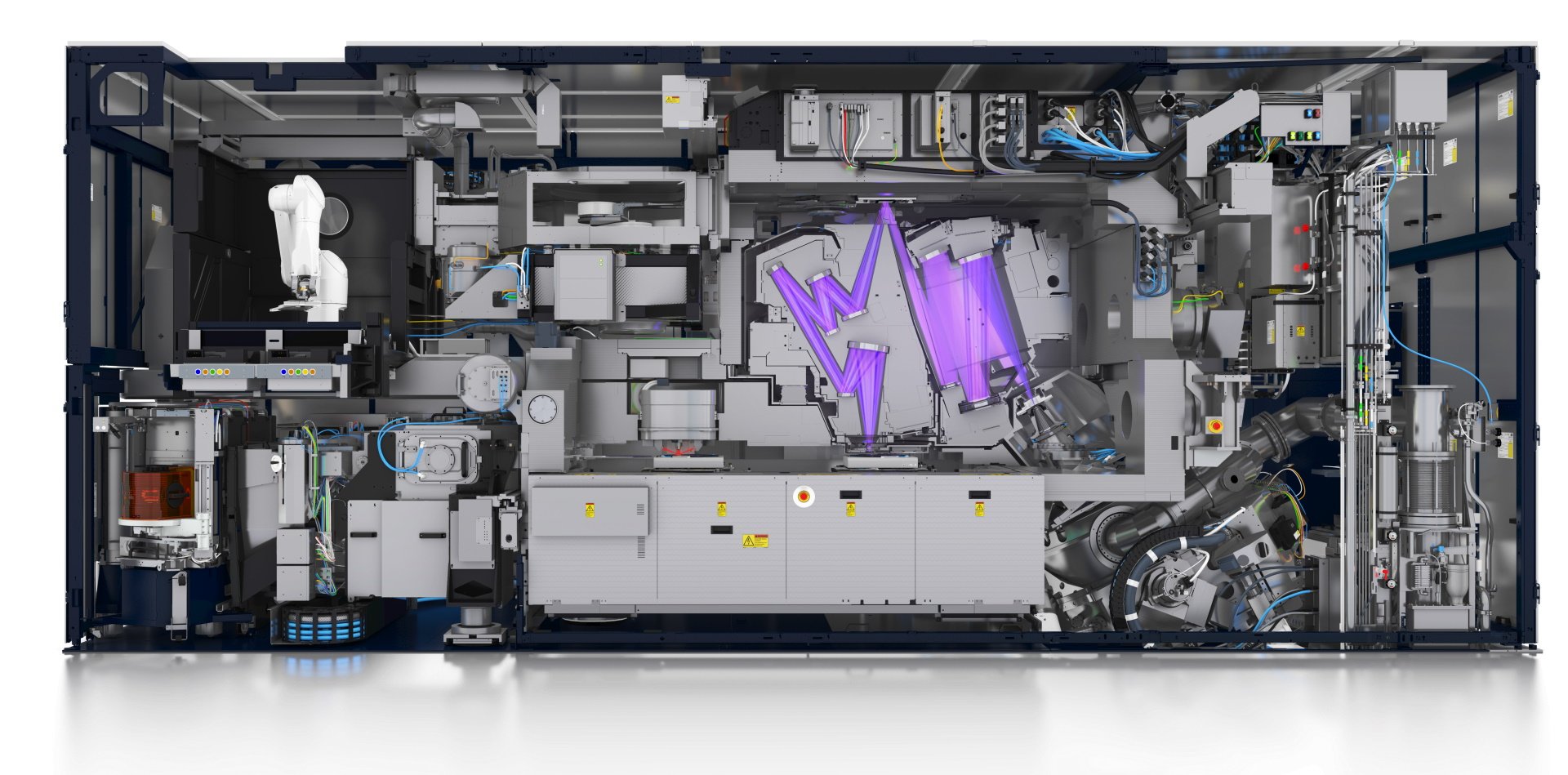
ASML is not just another supplier in the semiconductor chain. Its EUV systems are the only production tools used at scale to print the most intricate layers of leading-edge chips. On ASML’s own product page, the company describes EUV as using 13.5 nanometer light, near the x-ray range, to support advanced chip architectures and the continuation of transistor scaling.
The technical dependence is what gives the policy fight its force. ASML says its NXE systems are used for high-volume manufacturing of advanced logic and memory chips, including the complex layers in 7 nm, 5 nm, and 3 nm nodes. Its newer High NA EXE platform is designed to support sub-2 nm logic and leading-edge memory production. Those are the process generations tied most closely to high-performance AI accelerators, premium smartphones, advanced servers, and future data-center hardware.
Unlike chips, which can be diverted through resellers and intermediaries, an EUV lithography system is a vast industrial machine that depends on installation, calibration, spare parts, software support, and continuing service. That is why ASML’s denial emphasizes not only machine shipments but also modules, components, and equipment designed for EUV. The control point is not a single box at a border; it is the equipment, maintenance, know-how, and logistics around the machine.
The dispute arrives as Congress targets the remaining gaps
The ASML dispute is surfacing while U.S. lawmakers are trying to tighten rules around semiconductor manufacturing equipment, not just finished chips. In April, House China committee chairman John Moolenaar backed the Multilateral Alignment of Technology Controls on Hardware Act, known as the MATCH Act. The bill is aimed at closing gaps between U.S. controls and allied controls on chipmaking equipment.
The committee summary says the bill would prohibit sales of key chipmaking equipment into countries of concern, apply Entity List-like restrictions to facilities tied to companies including SMIC, Huawei, Hua Hong, CXMT, and YMTC, and give allies a 150-day deadline to align controls before the Commerce Department acts unilaterally. That is a direct challenge to the current export-control compromise: EUV has been off limits, while some less advanced DUV equipment and service activity have remained possible under licenses.
ASML acknowledged that older balance in a 2023 statement on Dutch export-control rules. The company said the Netherlands would require licenses for shipments of its most advanced immersion DUV systems, while reminding investors that EUV sales were already restricted and that ASML would comply with Dutch, EU, and U.S. rules. The current argument is whether those rules are enough, whether they can be verified, and how much pressure Washington can put on allied firms without splintering the chip supply chain it is trying to defend.
China does not need a clean EUV win to keep pressure on controls
A working EUV system in China would be an extraordinary development, but China’s chip strategy does not depend on that single outcome. Chinese foundries have used advanced DUV multi-patterning, packaging, chiplet design, and domestic equipment substitution to keep moving even without access to ASML’s most sensitive tools. Those approaches are more expensive and less efficient than clean leading-edge EUV production, but they can still produce strategically useful chips at scale if yields improve.
That is why the U.S. policy focus has moved from finished AI chips toward the tools that make them. Restricting Nvidia or AMD accelerators can slow access in the short term. Restricting lithography, etching, deposition, inspection, and servicing targets the production base itself. The tradeoff is that manufacturing equipment controls are harder to coordinate across allies, harder to police after shipment, and more exposed to retaliation from China on rare earths, critical minerals, and market access.
ASML’s own financial outlook shows the tension. In its first-quarter 2026 results, the company reported €8.8 billion in net sales and said AI-related infrastructure demand was pushing chipmakers to accelerate capacity plans. It also noted that its 2026 guidance accounted for possible outcomes from ongoing export-control discussions. In other words, ASML is benefiting from the same AI hardware boom that makes its China exposure politically sensitive.
What to watch next
The immediate question is whether the U.S. government produces evidence that goes beyond private warnings. A claim involving transport equipment or components is not the same as proof that China has a functioning EUV production system. But if Washington can document a violation, pressure for harsher allied controls on ASML, Tokyo Electron, Nikon, Canon, and other equipment suppliers would grow quickly.
The second question is whether the MATCH Act or similar policy becomes law in a form that restricts servicing of existing machines. Servicing rules matter because high-end chipmaking equipment is not a one-time purchase. Without maintenance, calibration, and upgrades, yield and uptime degrade. For Chinese fabs, losing service could be almost as consequential as losing new tools.
The third question is how the Netherlands and other allied governments respond. ASML sits at the center of a European economic asset, a U.S. national-security strategy, and China’s push for semiconductor self-sufficiency. Even if the latest allegation remains unproven, the episode shows that the next phase of the AI chip race may be fought less over which model gets trained first and more over who can still buy, service, and verify the machines that make the chips.