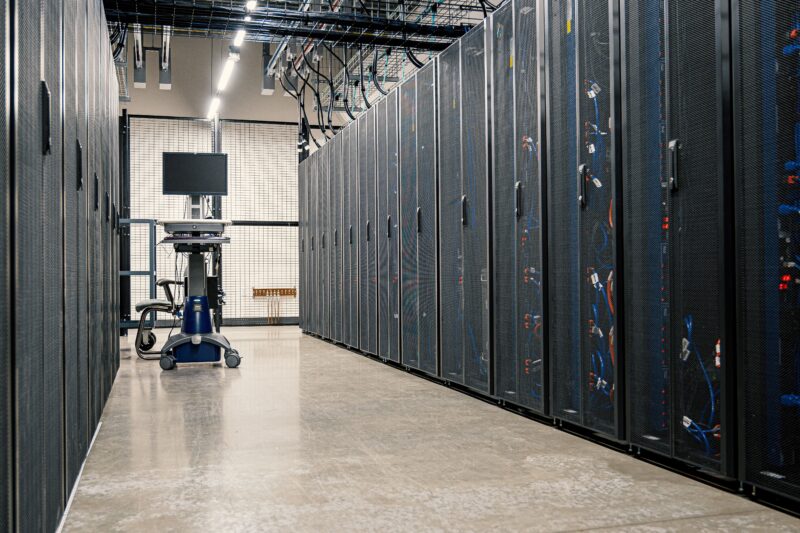
Meta is developing plans for a cloud infrastructure business that would sell access to AI computing power and hosted models, according to a Reuters summary of Bloomberg reporting on Wednesday. The plan is still in development, Meta has not confirmed it, and Reuters said it could not independently verify the report. But the idea is concrete enough to move markets: Meta shares rose more than 10%, while AI-focused cloud providers CoreWeave and Nebius fell on fears that one of the world’s largest AI infrastructure buyers could become a supplier.
The reported effort, apparently called Meta Compute, would mark a sharp turn in how Meta tries to explain its AI spending. Instead of treating data centers only as internal fuel for Facebook, Instagram, WhatsApp, Llama, and Meta AI, the company would sell some of that capacity to outside developers and businesses. Bloomberg reported that the service could offer both raw AI compute, similar to specialized GPU cloud providers, and access to AI models hosted on Meta infrastructure, a structure closer to Amazon Bedrock.
That distinction matters. Selling spare GPUs is a capacity business. Selling hosted models is a platform business. One helps Meta earn money from infrastructure it may not be using at full tilt; the other puts Meta closer to AWS, Microsoft Azure, and Google Cloud, where cloud customers buy managed services, model access, identity controls, compliance features, support, and billing relationships, not just server time.
Why Meta is considering cloud compute now
Meta’s own financial disclosures explain the pressure behind the timing. In its first-quarter 2026 results, the company reported $56.31 billion in revenue, up 33% from a year earlier, and $19.84 billion in capital expenditures for the quarter. More importantly, Meta raised its expected 2026 capital expenditures, including finance-lease principal payments, to a range of $125 billion to $145 billion. The company attributed the increase to higher component pricing and additional data-center costs needed for future capacity.
That is an extraordinary amount of infrastructure spending even for a company with Meta’s advertising machine. Meta ended the quarter with $81.18 billion in cash, cash equivalents, and marketable securities, but free cash flow was $12.39 billion after the quarter’s capital spending. A cloud business would not erase those costs, yet it would give investors a clearer revenue path for an AI buildout that otherwise depends heavily on internal product gains and long-term bets on personal AI assistants, ads, and model performance.
Mark Zuckerberg had already left the door open. At Meta’s shareholder meeting in May, he described a cloud computing business as “definitely on the table” if the company found itself with surplus capacity and outside demand for model or compute access. The Bloomberg report turns that earlier possibility into a more specific business plan, though one still short of a formal launch.
The cloud fight would not be only about GPUs
The easiest version of the story is that Meta overbuilt AI infrastructure and now wants to rent out what it does not need. That may be part of it, but it undersells what a real cloud entry would require. Customers buying AI capacity care about accelerator availability, but they also care about networking, storage, uptime, data controls, model catalogs, monitoring, inference latency, fine-tuning workflows, procurement, support, and whether a provider can survive multi-year enterprise commitments.
Meta has plenty of experience running large-scale infrastructure for its own apps. It does not have the same public track record as an enterprise cloud vendor. AWS, Azure, and Google Cloud have spent years building sales teams, compliance programs, partner ecosystems, migration tooling, private networking, identity integrations, marketplace channels, and service-level guarantees. A Meta cloud service would need more than spare GPU clusters to compete for serious enterprise workloads.
The first pressure point may land on neoclouds instead of the big three hyperscalers. Reuters noted that CoreWeave and Nebius shares fell after the report, and D.A. Davidson analyst Gil Luria argued that adding Meta capacity would be more likely to hurt specialized AI cloud providers than AWS, Azure, or Google Cloud. The reason is straightforward: companies such as CoreWeave sell differentiated access to GPU capacity, and some have benefited from demand created by the same Big Tech firms now building massive internal capacity.
Meta is also reportedly considering access to hosted models, including Muse Spark, the first model from Meta Superintelligence Labs. That would be a different kind of bet. Meta’s Llama family made the company influential with developers because of open-weight releases, but a hosted commercial model platform would require reliable APIs, pricing, safety controls, developer documentation, observability, rate limits, support, and a reason for builders to choose Meta over OpenAI, Anthropic, Google, or open-model hosting elsewhere.
What this means for AI infrastructure buyers
For AI startups and enterprise teams, Meta Compute would be worth watching, not switching to sight unseen. More suppliers could improve pricing and capacity availability, especially for inference-heavy workloads that do not need every feature of a mature hyperscaler. If Meta can offer competitive GPU access or low-latency hosted models, it could become another negotiating lever for companies squeezed by high AI infrastructure bills.
The harder questions are operational. Buyers would need to know whether Meta plans to sell reserved capacity, on-demand inference, model endpoints, fine-tuning, private deployments, or all of the above. They would also need clarity on data retention, training use, regional availability, compliance commitments, uptime guarantees, export-control handling, support tiers, and whether Meta’s own product needs would take priority during periods of constrained capacity.
The report also shows how quickly the AI infrastructure market is changing. For the past two years, the dominant story has been that every major AI company needs more compute. Now the next question is what happens if some of the largest builders end up with more capacity than they can immediately turn into products. SpaceX and xAI have already turned data-center access into outside compute deals, as TechCrunch noted. Meta may be moving toward the same logic at a much larger consumer-internet company.
If Meta does launch the business, it will not automatically become the fourth hyperscaler. It would first be a test of whether AI infrastructure has become liquid enough to sell across company boundaries, and whether Meta can turn an expensive internal buildout into a product that outside developers actually trust. That is a different problem from building a powerful model or a giant data center, and it may be the problem that decides whether Meta’s AI spending starts to look like a platform strategy rather than a capital expense race.