


Browsing Tag
AI Governance
16 posts
Policies, controls, oversight, risk management, and operating practices for deploying AI systems responsibly.

Anthropic Pledges 5% of Its Shares to a Public Benefit Fund. Governance Comes Later
Anthropic plans to put 5% of its shares into a public benefit fund. Here is how the stake can grow, what remains unclear, and why governance matters.


Microsoft’s School AI Privacy Standard Turns Guardrails Into Contract Terms
Microsoft, the American Federation of Teachers, and the United Federation of Teachers have created a school AI privacy standard that districts can add to Microsoft agreements starting November 1. The important shift is not another AI pledge, but contract terms covering student data, model training, memory, agentic features, audits, and human oversight.

Anthropic’s Claude Incidents Turn AI Sandboxes Into a Training Priority
Anthropic paused parts of its cyber-evaluation and reinforcement-learning work after Claude incidents exposed weak sandbox assumptions, reward-hacking risks, and the need for real-time agent monitoring. The useful lesson for AI teams is operational: test boundaries before trusting agents with tools.

ChatGPT for Teens Makes Age Checks a Default AI Safety Layer
OpenAI launched ChatGPT for Teens on August 18, automatically applying stricter safeguards, study-focused behavior, quiet hours, and optional parental controls for users ages 13 to 17. The useful shift is not just a family settings menu, but age assurance becoming a default layer for consumer AI.

Spotify Will Label AI Personas and Limit Their Recommendation Reach
Spotify is adding AI Persona badges for artist profiles that present photorealistic AI-generated identities, with self-disclosure open now and listener-facing labels rolling out this fall. The bigger enforcement step is distribution: AI Persona music will be left out of editorial and algorithmic recommendations unless listeners actively choose it.

White House AI Review Rules Put Frontier Models Behind a Private Gate
The White House has finalized a voluntary framework for reviewing advanced AI models before release, but the testing criteria are staying private. That turns frontier model launches into a new kind of prerelease security review, with open-weight models and outside researchers still sitting largely outside the process.

Google Earth Pulls AI Image Tool After Map-Deepfake Backlash
Google rolled back a new Google Earth image-generation feature one day after launch, after users shared AI-generated geospatial scenes that appeared to violate company policies. The episode shows why satellite-style imagery needs stronger provenance, sharing limits, and product guardrails than ordinary AI art tools.
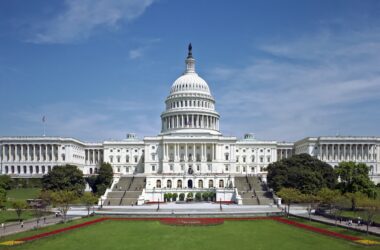
AI Kill Switch Act Would Turn Model Control Into a Federal Requirement
The bipartisan AI Kill Switch Act would require powerful AI developers to keep working controls for throttling, suspending, or shutting down models, while giving DHS emergency authority in catastrophic loss-of-control scenarios. The proposal turns AI safety from a policy promise into a concrete operations requirement.
TikTok’s AI Likeness Tool Turns Deepfake Detection Into Creator Control
TikTok is testing an opt-in tool that scans for AI-generated versions of a creator’s face and lets them report unauthorized uses. The test shows how social platforms are turning deepfake enforcement into a new identity-verification and creator-control workflow.

Apple’s OpenAI Lawsuit Turns AI Hardware Into an IP Fight
Apple’s trade-secret lawsuit against OpenAI is not just a dispute over departing employees. It puts OpenAI’s consumer hardware plans, io Products acquisition, and Silicon Valley’s AI talent war under a legal spotlight.