Meta has priced $37.5 billion of stock and mandatory convertible preferred shares to help finance its AI expansion, while two of the chipmakers supplying that buildout are buying into the company.
The company priced the two offerings late Monday, increasing the common-stock component to $25 billion from an initially proposed $22.5 billion and leaving the preferred component at $12.5 billion. On Tuesday, Nvidia committed $3 billion and AMD committed $1 billion to Meta’s equity offering as both companies expanded the technical details of their work with Meta.
The transactions connect three parts of the AI boom that are often discussed separately: Meta’s capital needs, the hardware suppliers competing for its spending, and Muse, the new agent platform whose adoption will determine whether some of that infrastructure earns a return. They do not, however, put $97.5 billion into Meta’s bank account today. Much of the immediate common-stock funding arrives later, and a separate $60 billion share-sale program remains only a plan.
What Meta has actually priced
The immediate financing has two components with different timelines and risks.
First, Meta is selling 250 million depositary shares at $50 each. Every depositary share represents one-twentieth of a share of new Series A mandatory convertible preferred stock. The preferred security carries a 6.5% annual dividend and, unless converted earlier, is scheduled to convert into common stock around August 15, 2029. Meta expects net proceeds of about $12.5 billion, rising to about $14.3 billion if underwriters fully exercise their option for another 37.5 million depositary shares.
Second, Morgan Stanley and Goldman Sachs are using forward-sale agreements tied initially to 40 million Meta Class A shares offered at $625 each. The banks or their affiliates are expected to borrow shares and sell them into the offering. Meta does not receive that $25 billion at closing. It expects about $24.9 billion before expenses when it settles the forwards, which can occur in stages through November 19, 2027. An underwriter option could increase this leg to 46 million shares and expected proceeds to about $28.7 billion.
Both offerings are expected to close October 29, subject to closing conditions. They are independent: either can close even if the other does not.
Meta is also considering an approximately $60 billion at-the-market program after its new Class C common stock begins trading. The company has not entered an agreement for that program, and its filing does not set final timing, terms or an amount that must be sold. The widely repeated $97.5 billion figure therefore combines $37.5 billion of priced offerings with a future program that may be smaller, delayed or never launched.
Nvidia and AMD are investing in a major customer
Nvidia’s $3 billion commitment accompanies an expanded Muse partnership covering model training and inference. Meta plans to increase its deployments of Nvidia Vera Rubin systems and Vera CPUs, as well as Spectrum-X Ethernet and BlueField-4 networking hardware. The companies also identified Nvidia OpenShell and Sentry as possible parts of Meta’s agent-security stack.
AMD committed another $1 billion. Its announcement disclosed that Helios rack-scale systems are already running at Meta, EPYC processors power the Muse agent, and AMD provides day-one support for models including Muse Spark Open and Muse Glimmer. That builds on a February agreement covering as much as six gigawatts of AMD AI infrastructure.
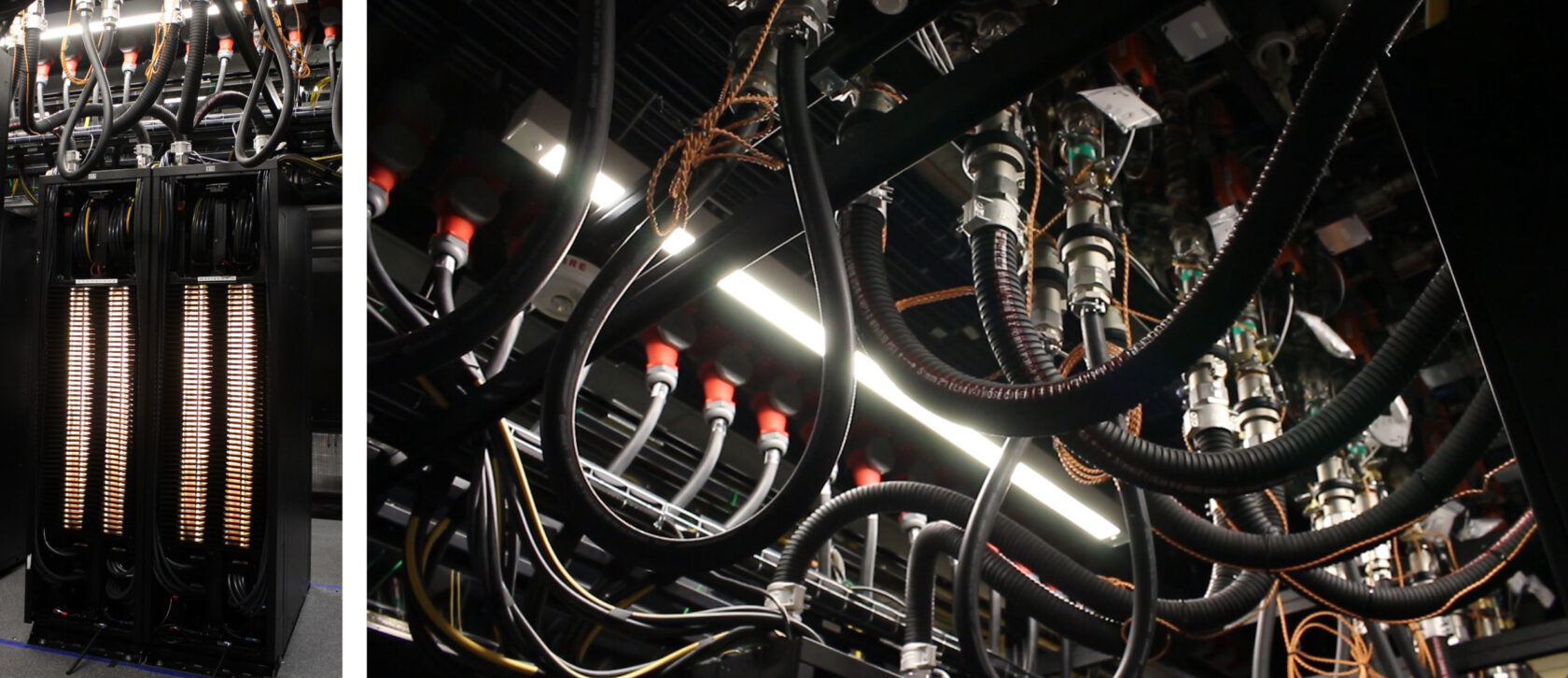
Broadcom was named alongside Nvidia and AMD when Meta launched the offering. At that stage, the three suppliers had given nonbinding indications of interest for as much as $5 billion in aggregate. Nvidia and AMD have now publicly assigned $4 billion of that amount. Broadcom has not disclosed a final investment amount. It remains an important supplier through its work on Meta’s custom MTIA accelerators.
The supplier commitments matter because Meta is not choosing a single compute architecture. The company is deploying Nvidia systems, AMD accelerators and processors, and its own Broadcom-assisted silicon. It has also put Google TPUs into production through TorchTPU. The financing may tighten commercial relationships, but the infrastructure strategy still depends on hardware diversity and software portability.
Why this is not a simple closed loop
The structure invites an obvious description: chip suppliers invest in Meta, and Meta spends heavily with those same suppliers. That is a real alignment worth scrutinizing, but the disclosed transactions are not a contractual loop in which the investment proceeds must be returned to Nvidia or AMD as hardware purchases.
Nvidia and AMD are purchasing shares in a public offering on the same stated terms as other buyers. Meta lists the use of proceeds as general corporate purposes. Its AI spending will include chips and systems from both companies, but also data centers, power, networking, custom silicon, leases, model development and personnel. The supplier investments are equity risk, not customer prepayments.
There is still a reinforcing economic relationship. Nvidia and AMD gain exposure to the value created by one of their largest AI customers. Meta gets strategic buyers for an unusually large capital raise. Both chipmakers gain another reason to optimize their hardware and software for Muse workloads, while Meta gains leverage to demand better performance, supply and deployment support across competing platforms.
That alignment can reduce execution friction, but it also complicates how investors interpret demand. A supplier buying a customer’s shares is not the same as an independent customer placing an order from operating cash flow. The useful questions are whether Meta’s infrastructure is deployed on schedule, whether Muse usage produces sustainable revenue or engagement gains, and whether supplier investments remain small relative to the resulting commercial contracts.
Meta has cash, but its AI bill is larger
The financing is not an emergency raise by a cash-starved company. Meta reported $97 billion of operating cash flow in the first nine months of 2026 and ended September with about $82 billion in cash, equivalents and marketable securities. Third-quarter revenue rose 26% from a year earlier to $64.6 billion, while net income was $9.9 billion.
Its spending plan is larger still. Meta expects 2026 capital expenditures of $135 billion to $145 billion as it adds compute capacity for recommendation systems, advertising, Muse, business agents, smart glasses and model development. The company is funding that expansion with operating cash, investment-grade debt, partnerships and now a broader mix of equity securities.
The Class C plan is central to that mix. Meta created the nonvoting class so it can issue more equity without reducing Mark Zuckerberg’s voting control in the same way a large Class A sale would. The preferred shares are also designed to convert into Class C stock once the new class is issued and other conditions are met. That makes this financing as much a capital-structure change as a one-off stock sale.
What to watch next
The first checkpoint is the October 29 closing and final allocation. Nvidia’s and AMD’s announcements describe investments, but completion remains subject to the offering’s closing conditions. Broadcom may still disclose whether it participated.
The second is settlement of the common-stock forwards. Meta can receive the roughly $24.9 billion over time through November 2027, so reported financing cash flow will not match the offering’s headline size immediately.
The third is the Class C at-the-market program. Until Meta establishes it and begins selling shares, the extra $60 billion is capacity, not raised capital.
Finally, the commercial test sits with Muse and the infrastructure behind it. Meta has already published Muse Wonder pricing and developer access; it now needs to show that consumer adoption, API use and advertising or business-agent revenue can justify a buildout large enough to make its chip suppliers shareholders.