Sonos introduced two new audio products and a rebuilt software platform on September 1, giving the company its biggest chance yet to move the conversation away from its bruising app transition and back toward the system that made its speakers useful in the first place.
The new lineup includes Beam Ultra, a $699 compact soundbar with true 7.1.2 Dolby Atmos, and Sonos Ace Ultra, a $449 pair of premium noise-canceling headphones. Both are available for preorder now and are scheduled for general availability on September 29, according to Sonos’s announcement. The products arrive alongside Sonos 27, the company’s updated audio operating system.
The launch is not just a normal hardware refresh. Sonos is trying to make the case that its best feature is still the way its devices work together across rooms, TVs, music services, voice control, headphones, and app settings. That is a familiar promise for Sonos, but it matters more now because the company has spent much of the last two years trying to recover trust after a major app overhaul frustrated many longtime users.
Beam Ultra Moves True Atmos Into Sonos’s Middle Tier
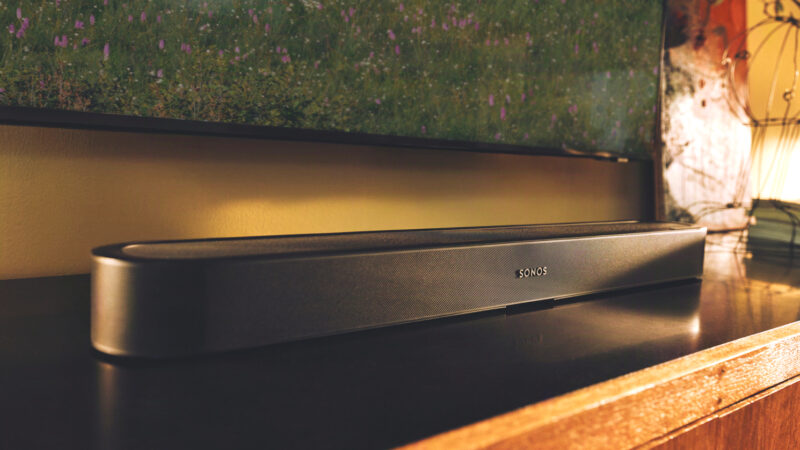
Beam Ultra is the more broadly important product because it brings upward-firing drivers to Sonos’s smaller soundbar line. The current Beam has long been the easier buy for smaller rooms and TVs, but its Dolby Atmos experience has depended on virtualization. Beam Ultra changes that with nine custom drivers, including two dedicated up-firing drivers, plus five tweeters and four low-profile woofers.
That makes the $699 Beam Ultra a more serious middle option between the $499 Beam Gen 2 and the $1,099 Arc Ultra. Sonos says the new soundbar supports true 7.1.2 Dolby Atmos, Dolby Atmos Music, HDMI eARC, Bluetooth 5.3, Wi-Fi 6, Apple AirPlay 2, Trueplay tuning on iOS and Android, TV Audio Swap with Sonos headphones, and a redesigned center channel for clearer dialogue.
The dialogue work is worth watching because it is where Sonos is putting one of the launch’s most practical AI features. Beam Ultra includes four levels of AI Speech Enhancement, which Sonos says detects human voices and raises clarity when action scenes, room noise, or low-volume listening make speech harder to understand. Night Sound remains available for reducing louder effects while keeping quieter details audible.
Beam Ultra is still a compact soundbar, not a full home theater kit in one box. Buyers who want heavier bass or rear-channel separation will still be looking at a Sub, Sub Mini, Era speakers, Play speakers, or Move 2 speakers as add-ons. But for smaller living rooms, apartments, and bedrooms, the meaningful upgrade is that Sonos no longer has to sell its mid-size Beam line mostly on simulated height effects.
Ace Ultra Is Really About Sonos System Linking
Sonos Ace Ultra is positioned as a premium headphone upgrade, but its most distinctive feature is not the battery rating or ANC claim. It is the direct connection to the Sonos system.
The headphones use a Sonos-designed 40mm driver in each ear cup, ten microphones for adaptive active noise cancellation, calls, Aware mode, and TrueCinema, and a 1060 mAh battery rated for up to 35 hours of listening with ANC or Aware mode on. Sonos also lists Bluetooth 6.0, USB-C audio, 3.5mm support through the included cable, dynamic head tracking, wear detection, replaceable ear cushions, and a replaceable battery kit.
The bigger system feature is headphone linking, which Sonos is launching in Early Access. Pressing the Content Key can push music playing on compatible Sonos speakers to the Ace Ultra headphones, then pull it back to the speakers later. The same control can also move TV audio from a compatible Sonos soundbar to the headphones, including Dolby Atmos audio.
That is the clearest attempt to make Ace Ultra feel less like a normal Bluetooth headphone competitor and more like part of a home audio system. Sony, Bose, Apple, and others already compete aggressively on noise cancellation, spatial audio, comfort, and battery life. Sonos’s best chance to justify another premium headphone is to make speaker-to-headphone handoff feel natural enough that owners use it every day.
Sonos 27 Carries the Real Risk
The software side is where the launch becomes more consequential. Sonos’s own product pages frame the new products around Sonos 27, and early coverage from The Verge and Engadget has focused heavily on whether the company can make its app and platform feel dependable again.
Sonos 27 brings a cleaner app direction, portable-speaker surround support, expanded system handoff, and early AI-related features. Sonos’s public Sonos 27 page describes Sonos 27mcp as an Early Access feature that lets users control a Sonos system with the large language model they already use. Separate reporting says Sonos is also working toward custom voice agents in 2027.
That opens an interesting path, but it also gives Sonos another place where execution has to be careful. Audio systems live in shared spaces: living rooms, kitchens, bedrooms, offices, and family areas. Voice and AI controls need to work reliably without making private listening habits, account connections, or room-level device control feel unpredictable. For many users, a faster app and dependable grouping will matter more than a futuristic agent demo.
The most useful interpretation of Sonos 27 is not that the company suddenly needs to become an AI assistant company. It is that the audio system is becoming more programmable. If Sonos can expose useful controls to assistants while keeping account permissions, household profiles, voice behavior, and room-level access understandable, it can make the system more flexible without turning music playback into a troubleshooting exercise.
What Buyers Should Wait to See
The early hardware story is promising, especially for Beam owners who wanted real height drivers without moving to the larger Arc Ultra. Beam Ultra’s 29.53-inch width and 2.48-inch height keep it friendly to smaller TVs and media consoles, while HDMI eARC and Bluetooth make it more flexible than older Sonos soundbar setups.
Ace Ultra is more of a wait-and-test product. The specs are competitive, and the direct Sonos link is genuinely differentiated, but headphone comfort, microphone quality, ANC performance, multipoint behavior, app reliability, and long-session fatigue cannot be judged from spec sheets. The Early Access status of headphone linking also means buyers should not treat every system feature as final on day one.
The bigger buying question is whether someone is already invested in Sonos. For existing households, Beam Ultra could be a clean upgrade path because it can grow with the speakers and subs already in the home. Ace Ultra becomes more compelling if the handoff between speakers, TV audio, and headphones is smooth enough to replace the awkward dance of switching outputs at night.
For people outside the Sonos ecosystem, the calculus is tougher. A $699 soundbar and $449 headphones compete against strong alternatives from companies that may be less dependent on a whole-home software layer. Sonos’s advantage is integration; its risk is also integration. The new products will succeed if Sonos 27 makes the system feel calmer, faster, and more reliable than the version users have been arguing about.
That is why this launch matters. Beam Ultra and Ace Ultra are not only new devices. They are a public test of whether Sonos can turn software back into a reason to buy its hardware.