Meta has removed dormant facial-recognition components from the Meta AI companion app for its smart glasses after WIRED reported that code for an unreleased system, internally called NameTag, had already been embedded in software installed on millions of phones.
The code was not active for consumers, and Meta has not announced a public launch of face recognition for Ray-Ban Meta or Oakley Meta glasses. But the sequence is now the story: a mass-market wearable camera platform had substantial biometric-recognition machinery in its required companion app; outside researchers confirmed key findings; Meta disputed the framing; and then a new app version removed the face-recognition system WIRED had identified.
Meta communications executive Andy Stone told WIRED after the removal that no final decision had been made on the feature. In an earlier response, Meta said it was exploring the category and was not building a central face database. That distinction matters, but it does not end the privacy question. WIRED’s analysis described a system that would create faceprints from faces captured by the glasses and compare them with data stored on the user’s phone, with updates configured to come from Meta.
What WIRED Found in the App
WIRED reported on June 4 that the Meta AI app contained code for detecting faces, cropping them, and encoding them into biometric data. The system was designed to identify people seen by the glasses’ camera and alert the wearer when it recognized someone. Faces that were not recognized were reportedly cropped, indexed, and saved locally in a pending folder for possible future processing.
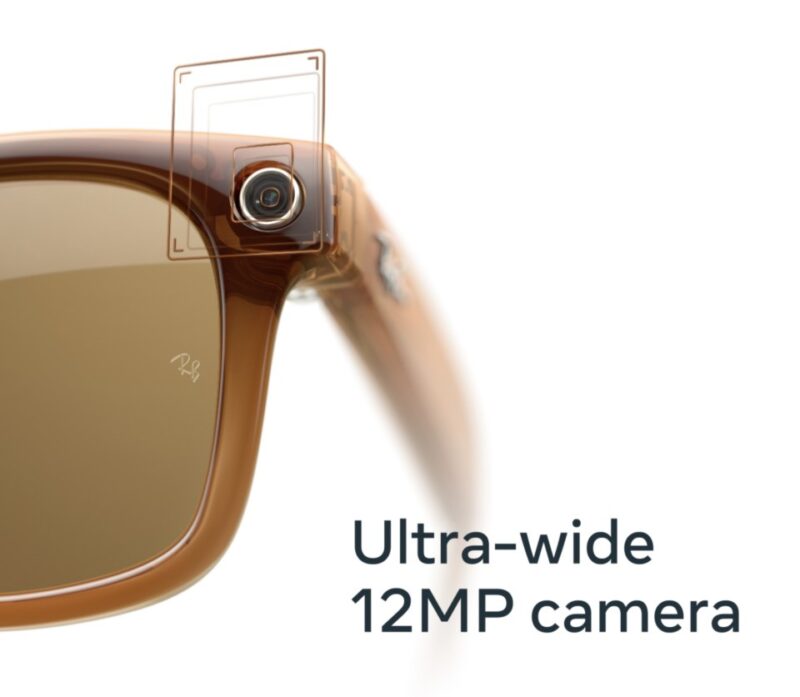
The app is not a side accessory for a niche developer kit. It is the companion app for Meta’s smart-glasses lineup, including Ray-Ban and Oakley models, and WIRED put the app’s install base at more than 50 million phones. Meta’s own product pages describe the glasses as camera-equipped AI wearables: Ray-Ban Meta glasses include a 12-megapixel ultra-wide camera and hands-free Meta AI controls, while Oakley Meta describes features that send photos to Meta’s cloud for AI processing when users ask questions about what they see.
That makes NameTag different from an experimental feature buried in a lab branch. Even if inactive, the code sat inside software tied to a consumer product category Meta is trying to normalize: glasses that can capture the wearer’s point of view, process images with AI, and blend into ordinary public spaces more easily than a phone held at eye level.
Why Local Faceprints Still Raise a Public Privacy Problem
Meta’s strongest public distinction is that it is not building a central database of faces. A local-device design can reduce some centralized collection risks, especially compared with a cloud service that stores every faceprint on company servers. But a local database does not make the feature private for everyone in front of the camera.
The core privacy problem is consent by bystanders. If a wearer can identify people in public through glasses, the person being scanned may have no practical way to know that recognition is happening, no meaningful chance to opt out in the moment, and no control over whether their face was previously added to a recognition set. The risk is sharper because glasses are socially different from phones. A phone camera is visible as an action; eyewear can make capture feel ambient.
The Electronic Frontier Foundation said its Threat Lab verified the WIRED findings through static analysis and welcomed the removal of the unactivated code. EFF still framed the reversal as only a pause in the broader debate, because the same product category can reintroduce similar functionality later through app updates, cloud features, or new hardware.
The American Civil Liberties Union had already organized a coalition of 75 organizations against facial recognition in Meta’s Ray-Ban and Oakley eyewear. In its April letter, the coalition argued that people should not have to worry that a stranger’s glasses can identify them at protests, clinics, workplaces, or other public settings. That argument is not only about Meta. It is about whether consumer wearables should make biometric lookup a normal part of public life.
The Rank One Connection Adds Another Layer
The controversy expanded on June 15 when WIRED reported that Meta had tested facial-recognition software from Rank One Computing, now ROC.ai, under a software license tied to a test version of the Meta AI app. WIRED described Rank One as a company with substantial government business, including law enforcement and military customers.
ROC’s own site markets biometric and vision AI products for national security, public safety, law enforcement, digital identity, and physical security. It describes tools including face recognition, automated biometric identification, access control, and video analytics. None of that means Meta planned to turn consumer glasses into a law-enforcement product. It does show how the same biometric tooling can move between public-sector surveillance markets and mainstream consumer platforms.
That movement is what makes the smart-glasses fight larger than a single hidden-code discovery. A face-recognition system in eyewear is not just another AI feature. It changes what wearable cameras are for. They shift from capturing a scene to interpreting the identities of people inside it.
What Meta Needs to Answer Before Any Rollout
If Meta revisits face recognition for AI glasses, the useful questions are now specific. Who can be identified? How does a person get into the recognition database? Are profiles built from Facebook or Instagram data, personal contacts, manually enrolled faces, or some combination? What happens to unrecognized faces? How long are local crops, embeddings, or logs retained? Can bystanders meaningfully opt out? Would the feature be barred in sensitive places such as schools, clinics, shelters, polling locations, or protests?
There are also product questions for users who already own the glasses. Meta AI’s camera features can process photos in the cloud for visual questions, and Meta says product improvement may involve stored photos and trained reviewers for some camera-AI uses. A face-recognition rollout would need far clearer controls than an ordinary feature toggle, because the affected people are not always the account holder wearing the device.
For now, the practical status is narrower: Meta says no consumer face-recognition feature has shipped, and WIRED’s follow-up found that the latest Meta AI app removed nearly all traces of the NameTag machinery. The public debate is not over, because the product category is still moving toward more capable cameras, more on-device AI, and more cloud-assisted interpretation of the physical world.
That is why this episode matters even without an active launch. It gives regulators, buyers, and privacy advocates a concrete preview of the questions AI eyewear will keep raising. A smart-glasses camera can be sold as convenience, accessibility, memory, and hands-free computing. Add face recognition, and the same hardware becomes a tool for identifying people who never agreed to participate.