Apple’s HomePod mini 2 is available to preorder for $149 and will reach stores on October 30, giving the company’s smallest smart speaker its first substantial hardware refresh since 2020. The new model adds an S10 chip, faster wireless connections, a music-reactive light display and new audio setups for Macs and Apple TV.
The feature at the center of Apple’s pitch, however, will not be ready when the speaker ships. Siri AI is due in a future software update, and Apple has not provided a release date. That makes the HomePod mini 2 an easier recommendation for someone buying a first Apple speaker than for an owner deciding whether to replace a working original.
What $149 buys on October 30
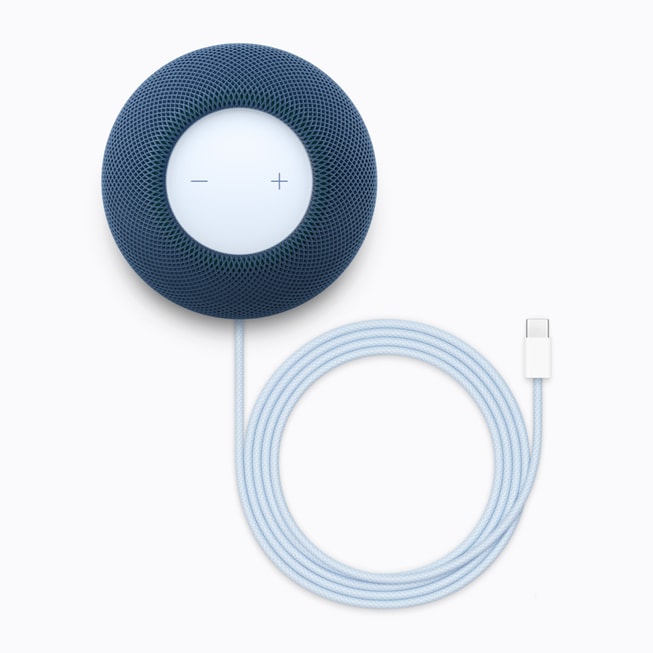
The immediate hardware change is the move from the original HomePod mini’s S5 processor to Apple’s S10. Apple says the chip powers computational audio that analyzes music in real time to adjust dynamic range, loudness and acoustic performance. The basic acoustic design remains familiar: a full-range driver, dual passive radiators and a waveguide that disperses sound around the speaker.
Connectivity moves from 802.11n Wi-Fi and Bluetooth 5.0 in the first model to Wi-Fi 6E and Bluetooth 6. Thread support remains for compatible smart-home devices, while an Ultra Wideband chip handles proximity features such as handing music off from an iPhone. Apple has not identified which Bluetooth 6 capabilities it uses, so the newer version number alone should not be treated as a specific audio upgrade.
A new feature called Sound Glow uses the illuminated touch surface to pulse with the music and draw colors from album artwork. The speaker can also become a Mac’s default audio output rather than functioning only as an AirPlay target, a potentially useful improvement for desks and small workspaces.
HomePod mini 2 still serves as an Apple Home hub and supports Matter, HomeKit automations, Intercom, temperature and humidity readings, and Sound Recognition for smoke and carbon monoxide alarms. The alarm feature listens for the sound of an existing detector and sends a critical alert to an iPhone, iPad or Apple Watch; it is not itself a smoke or carbon monoxide detector.
Siri AI is a later update with regional limits
Apple’s announcement promises more natural conversations, current information from the web and the ability to use personal context from apps. In one example, a person can ask the speaker to find a song that a friend recommended in a message. HomePod mini 2 can recognize as many as six household members by voice.
Those personal-context requests require the speaker to be paired with an Apple Intelligence-compatible iPhone or iPad. People without a compatible mobile device will still get Siri AI’s general knowledge, conversation and music-discovery features after the update, according to Apple.
The initial rollout is also narrow. Apple says Siri AI will come to HomePod mini 2 in English in the United States, Australia, Canada, India, New Zealand, Singapore, South Africa and the United Kingdom. Buyers elsewhere should not assume that the feature will arrive at the same time. Apple also notes that usage limits may apply.
That distinction matters because Siri AI is the clearest functional reason to choose the second-generation speaker. At launch, buyers are paying for the newer processor, connectivity, audio processing and ecosystem integrations, while the redesigned assistant remains a promise.
Four-speaker surround is a $895 setup
Apple is promoting a four-speaker surround configuration, but it requires four matching speakers and the fourth-generation Apple TV 4K. At list prices, four HomePod mini 2 units cost $596. The new Apple TV 4K costs $299, bringing the hardware total to $895 before the television.
The speakers are installed as matching front and rear pairs. Apple TV then detects their positions and calibrates timing and levels to the room. The configuration cannot be built by mixing old HomePod mini units into the new array, and it does not work with an older Apple TV 4K. A conventional stereo pair needs only two compatible HomePod speakers.
The new Apple TV 4K does include its own upgrades, including an A19 chip, AV1 decoding, built-in far-field microphones and a Find My-enabled remote. But the surround feature is better viewed as an Apple ecosystem option than as a low-cost reason to buy four mini speakers.
Should existing HomePod mini owners upgrade?
For music alone, probably not yet. The second-generation model keeps the same size and broadly similar speaker hardware, while Apple has not published comparative acoustic measurements or independent listening results. Sound Glow and newer wireless radios are refinements, not automatic reasons to replace a functioning speaker.
The price also changes the calculation. The original HomePod mini launched at $99 in 2020 and rose to $129 earlier this year. HomePod mini 2 is $50 above that original price and $20 above the first generation’s most recent list price.
New buyers who already use Apple Music, HomeKit or several Apple devices get the cleanest case for buying now: the new model is the future-facing HomePod mini, provides the S10 hardware required for Apple’s newest experiences and can act as a compact Mac speaker or smart-home hub immediately.
Existing owners should wait for three pieces of evidence: a firm Siri AI release date in their region, independent audio comparisons, and confirmation that the new assistant handles the requests they actually make more reliably. The HomePod mini 2 is available in blue, green, pink, white and midnight, with preorders open now and retail availability scheduled for October 30.