


Browsing Tag
Enterprise AI Agents
15 posts
Enterprise AI agents, governed autonomous workflows, AI operations, agent security, and business deployment coverage.

Microsoft Guardian Agents Can Strip Risky AI Tools of Write Access
Microsoft's Guardian Agents can reduce permissions, require approval or stop risky AI tools mid-task. Here is what the private preview covers and misses.


Copilot Studio Agents Get Microsoft 365 Accounts: What Admins Need to Know
Microsoft’s new Copilot Studio agent accounts add mailboxes, Teams presence and Entra identities. Here are the permissions, shared-memory risks and preview limits admins should check.

Atlassian AMP Puts AI Agents Inside Jira and Confluence Workflows
Atlassian's Agentic Multiplayer Protocol puts AI agents into shared Jira, Confluence and Loom workflows. Here is what ships now, what is still coming, and what admins should test.

Ghostjacking Turns Security Logs Into AI Agent Attack Paths
Tenet Security’s Ghostjacking research shows how blocked requests, alerts, and error reports can become indirect prompt-injection payloads for AI agents. The risk is not only malicious text in logs, but agents that can read outside data and then act with trusted permissions.

Cloudflare Kitesurf Gives AI Agents a Browser Built for Scale
Cloudflare’s Kitesurf is a new browser for AI agents, not people. It runs on Workers, works with Browser Run, and trades pixel-perfect Chromium compatibility for lower CPU, lower memory use, stateless isolation, and cheaper bursty automation.

Claude Opus 5 Turns Frontier AI Into a Model-Routing Decision
Anthropic released Claude Opus 5 on July 24 with near-Fable performance claims, 1 million-token context, Opus 4.8 pricing, Fast mode, and automatic fallbacks. The practical question for developers and enterprises is not only whether Opus 5 is stronger, but where it belongs in a routed AI workflow.

Kimi K3 Turns Open-Weight AI Into a Deployment Test
Moonshot AI’s Kimi K3 is available through apps, Kimi Code, and an API now, with full model weights promised by July 27. The launch gives developers a powerful new open-weight contender, but the real test is deployment: hardware scale, pricing, agent controls, and independent verification.
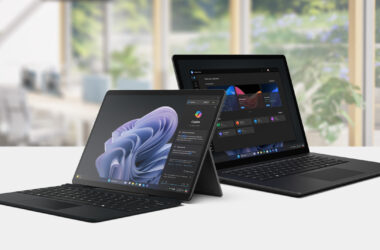
Microsoft’s Aion Leak Shows the Shape of an Agent-First Windows Future
A leaked Microsoft Aion prototype does not mean a Copilot-first Windows replacement is about to ship. It does show how Microsoft is testing a future where agents, local models, Windows 365, and Project Solara-style devices become part of the same computing layer.
Microsoft Frontier Company Turns Enterprise AI Into an Embedded Engineering Race
Microsoft is putting $2.5 billion and 6,000 industry and engineering experts behind Microsoft Frontier Company, a new operating business meant to help customers turn AI pilots into production systems. The move follows AWS, OpenAI, and Anthropic into embedded enterprise AI work, where the hard part is no longer access to models but making agents, data, governance, and workflows actually function inside large companies.

Microsoft Defender Starts Watching Local AI Agents on Developer Machines
Microsoft Defender now discovers local AI agents and MCP server configurations across managed endpoints, while preview runtime protection can audit or block prompt-injection attempts in Claude Code and GitHub Copilot CLI before risky tool actions execute.