


Apple used its September 9 event to introduce the iPhone Duo, the company’s first foldable iPhone, alongside the iPhone 18 Pro and iPhone 18 Pro Max, AirPods 5, and new Apple Watch models. The launch was also the first major product showcase led by John Ternus, who became Apple’s CEO on September 1 after Tim Cook moved into the executive chairman role.
The event gives Apple a much clearer answer to two questions that have followed the company through the past year: whether it can make the iPhone feel materially new again, and whether Apple Intelligence can become more than a software demo. The answer, for now, is an expensive foldable phone wrapped around a familiar Apple argument: the device should be powerful enough to run personal AI close to the user, and private enough that people will trust it with more context.
According to AP’s event coverage, Ternus opened the presentation at the Steve Jobs Theater in Cupertino and positioned the iPhone 18 Pro line around battery life, camera performance, processing power, and Siri’s new AI capabilities. Apple’s foldable entry arrives years after Samsung, Motorola, Google, Huawei, Oppo, and Honor brought folding phones to market, but that timing fits Apple’s usual pattern: arrive late, polish the hardware and software story, then try to expand a category that has remained niche.
What Apple Announced
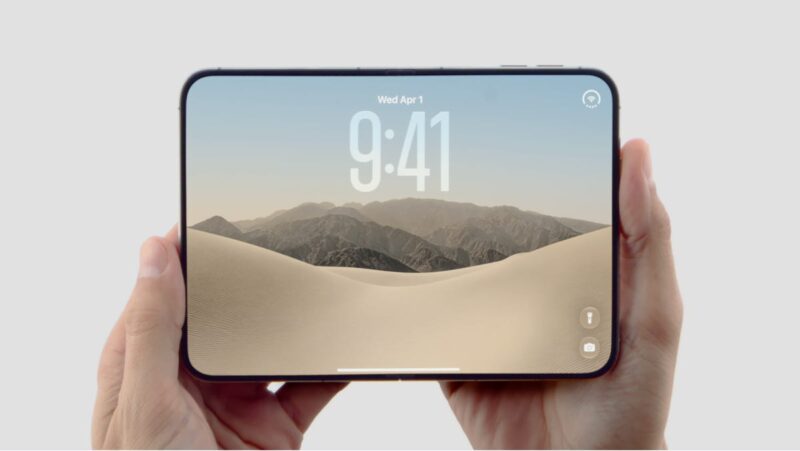
The iPhone Duo is a book-style foldable that looks roughly like a passport when closed and opens into a tablet-like iPhone screen. The Verge reported that the Duo uses a 5.4-inch outer display and a 7.6-inch inner display, making the unfolded screen substantially larger than the iPhone 18 Pro Max. The device uses a titanium frame reinforced with ceramic fibers, Ceramic Shield glass on the front and back, and an IP68 dust and water resistance rating.
The live event coverage from Business Insider described the Duo as Apple’s first folding phone and noted that Apple pitched the transition between open and closed use as fluid rather than stitched together. Ternus also took a direct shot at competing foldables, saying others can feel like “two phones stuck together.”
That criticism points to the software challenge. Foldable phones do not succeed merely by giving users a bigger panel. They need apps that scale cleanly, multitasking that feels worth using, and a reason for people to open the device instead of treating it like a thick ordinary phone. The Duo’s real test will be whether iPhone apps, iPad-style layouts, keyboard behavior, Pencil support, and split-screen workflows feel native enough to justify carrying a heavier and pricier device.
The Price Makes This a Selective Upgrade
Apple is not turning foldables into a mainstream iPhone option on day one. Business Insider’s live coverage said the Duo is priced above $2,000, while pre-event reporting from The Verge had pointed to a starting price around $2,000 for 256GB of storage. That puts the device in a different buying category from the standard annual iPhone upgrade. It is closer to a phone-plus-small-tablet purchase, or a work device for people who actually use a large screen on the go.
The iPhone 18 Pro line is also moving upward. Brazilian newspaper Folha de S.Paulo reported U.S. starting prices of $1,199 for the iPhone 18 Pro and $1,299 for the iPhone 18 Pro Max, each $100 above last year’s Pro pricing, with availability beginning September 18. Apple is leaning harder into higher-end models, and buyers who were waiting for the base iPhone 18 may need to wait for a later release window.
The Pro phones bring the less dramatic but more practical improvements many buyers will care about first: longer battery life, faster charging, camera changes, and the A20 Pro chip. Business Insider’s live coverage said Apple claimed up to 24 hours per charge for iPhone 18 Pro, up to 30 hours for Pro Max, and a 50 percent charge in about 15 minutes. Folha reported that Apple described the A20 Pro as a six-core CPU with up to 40 percent higher performance and 50 percent more memory bandwidth than the previous generation.
Siri AI Is the Other Half of the Launch
The event was not only about screens. Apple framed the iPhone as an “intelligent personal hub,” with Apple Intelligence running on-device when possible and using Private Cloud Compute for heavier work. That privacy pitch remains Apple’s main AI differentiator, especially against assistants that lean more visibly on cloud processing and account-level data collection.
The new Siri rollout still has limits. Business Insider reported that Siri AI is launching in beta for English speakers and expanding to French, Japanese, Korean, Portuguese, and Spanish in October. Some features may also face usage limits when they depend on larger models. That matters because Apple is asking users to judge AI by daily reliability, not only by a polished keynote sequence.
Apple also introduced a Reference Image system for iPhone 18 Pro that works like a digital negative for photos, giving users a way to compare an editable image against the camera-captured original. In an era of AI-edited images, that may become one of the more important camera features if it is easy to inspect and travels reliably with shared photos. It is less flashy than a zoom lens, but more relevant to the growing problem of image authenticity.
Wearables Get More AI Context
The Apple Watch Series 12 and Apple Watch Ultra 4 extend the same idea to health and ambient audio. Apple showed a new health sensing system, more frequent background heart-rate readings, heart-rate variability support, a readiness score, and a health-age metric. Business Insider reported that the readiness score analyzes recent activity, vitals, and sleep, then updates during the day on Apple Watch and in the iPhone Fitness app.
The more sensitive addition is Audio Intelligence. Apple Watch can recognize sounds such as doorbells, crying babies, and sirens, and a Live Rewind feature can look back up to 15 seconds in conversation context. Apple’s event language emphasized that these tools do not create or store audio recordings and that raw audio used for processing is inaccessible even to Apple. That is exactly the sort of claim Apple will need to make loudly, because always-near microphones plus AI summaries are useful only if users believe the processing boundaries.
AirPods 5 fit into the same ecosystem story. Apple announced live translation, a new acoustic architecture, computational audio, an open-ear fit, and a swipe gesture for volume. The new AirPods start at $129 with the standard charging case and $149 with the wireless charging case, according to Business Insider’s live coverage.
Who Should Actually Care
The iPhone Duo is the most interesting Apple phone in years, but it is not automatically the best iPhone for most people. Early foldable buyers should wait for durability reviews, app behavior tests, battery comparisons, repair pricing, AppleCare terms, and camera tradeoffs before treating the Duo as a normal upgrade. The larger screen could be genuinely useful for reading, travel, work apps, creative review, and side-by-side tasks. It could also be a very expensive way to discover that most iPhone workflows still happen one app at a time.
The iPhone 18 Pro and Pro Max are the safer Apple upgrades: better battery life, faster charging, stronger AI hardware, and the first practical version of Apple’s new Siri direction. The Watch and AirPods announcements show Apple trying to move AI into moments where users do not want to pull out a phone: translation, audio summaries, sound alerts, health context, and quick answers.
For Ternus, that makes the event a clean opening statement. Apple is still selling integrated hardware, not standalone AI. The difference is that the hardware now has to prove it can make personal AI more useful, more private, and more natural than a chatbot sitting in another app. The iPhone Duo gives Apple a bold new shape. The harder work starts when people try to live with it.