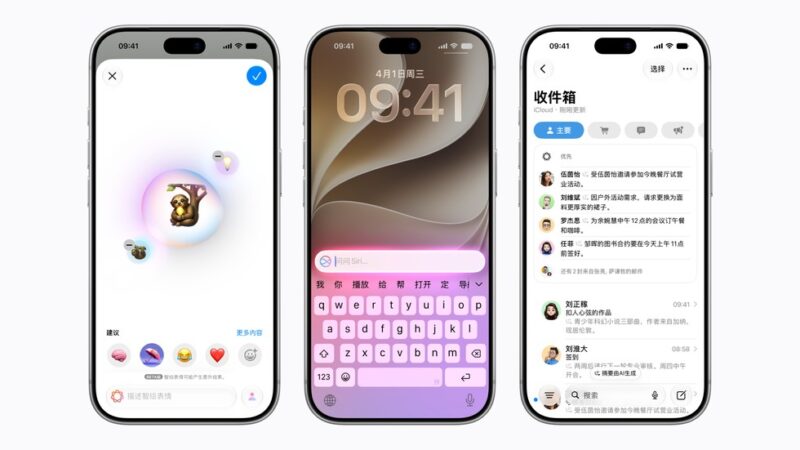
Apple will open its first Apple Intelligence features for mainland China to developers on November 4, with a public release planned for December in iOS 27.3. The rollout brings Alibaba’s Qwen into Siri, Writing Tools and Visual Intelligence, but it does not include the rebuilt Siri AI that Apple introduced at WWDC 2026.
The dates and feature list come from an October 31 announcement in Apple’s China newsroom. The release turns a long-delayed regional expansion into a concrete software schedule: a developer beta this week, followed by a consumer launch in December. Apple has not given an exact December release date.
What Apple Intelligence will include in China
The first release is broader than a single chatbot connection. Apple is bringing a collection of system features to supported iPhones, including Live Translation in Messages, FaceTime and Phone; Writing Tools for rewriting, proofreading and summarizing text; Visual Intelligence; the Clean Up tool in Photos; Genmoji; natural-language photo search; notification summaries; Priority Notifications; and transcription summaries in Notes and Phone.
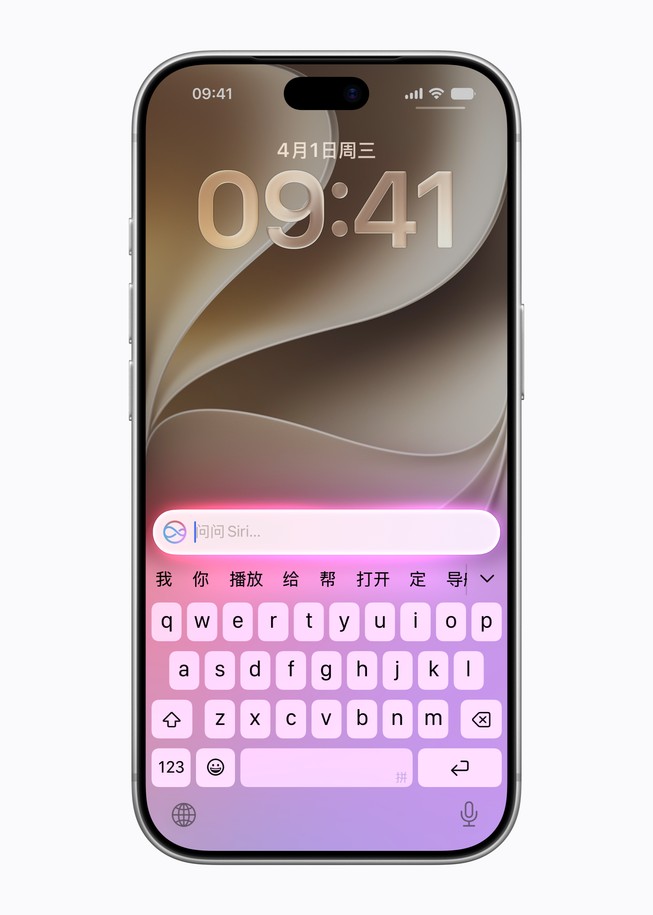
Mail will gain summaries, Smart Reply and a Priority Messages section. The Reduce Interruptions Focus mode will attempt to surface only notifications that need immediate attention. Users will also be able to type to Siri, and Apple says the assistant can follow context when a request is phrased imperfectly or continues across several exchanges.
| Rollout detail | What Apple has confirmed |
|---|---|
| Developer testing | Starts November 4 in the latest iOS developer beta |
| Public launch | December with iOS 27.3; no exact day announced |
| Initial platform | iPhone; other platforms require additional approvals |
| Local AI partner | Alibaba’s Qwen in selected Siri, Writing Tools and Visual Intelligence requests |
| Major omission | Siri AI and other next-generation features shown at WWDC 2026 |
How Qwen fits into Siri and Writing Tools
Apple describes the release as using its own generative models for the core Apple Intelligence experience while allowing Qwen to handle certain requests. In Siri, Qwen can supply broader knowledge and answer questions about photos and documents, including PDFs and presentations. Writing Tools can also call Qwen to create original text from a prompt rather than only rewrite existing material.
Access is not completely invisible. Apple says users can sign in to a Qwen account or use Sign in with Apple to reach the service through Apple Intelligence. The announcement does not spell out which requests stay on-device, which use Apple’s Private Cloud Compute system, or what infrastructure processes Qwen queries. Those details will matter when the beta arrives, particularly for users comparing the China implementation with Apple Intelligence in other regions.
Which iPhones are supported
Apple lists the iPhone 15 Pro and iPhone 15 Pro Max, the iPhone 16 family and later models, iPhone Air and iPhone Duo as eligible for the first release. Siri and the device language must be set to English and simplified Chinese.
Visual Intelligence will work on Apple Intelligence-enabled iPhones, though individual capabilities can still vary by language or region. Face-to-face Live Translation through AirPods requires current firmware and a compatible iPhone. Apple lists AirPods 4 with active noise cancellation, AirPods 5, AirPods Pro 2 and later, and AirPods Max 2 as supported models.
The initial launch is limited to iPhone. Apple says support for other platforms will follow after the necessary approvals, leaving the timing for iPad and Mac unresolved.
This is not the new Siri AI
The naming is easy to blur, but the December release does not bring Apple’s latest Siri architecture to China. Apple explicitly excludes Siri AI and the other next-generation Apple Intelligence capabilities announced at WWDC 2026.
Chinese users will still receive several Siri improvements: typed requests, better tolerance for conversational stumbles, continuity across follow-up questions and optional Qwen assistance. What they will not receive is the newer assistant experience marketed around deeper personal context and more extensive action across apps.
That distinction makes the December release substantial but incomplete. It closes the largest geographic gap in Apple Intelligence’s availability and gives Chinese iPhone owners practical translation, writing, photo and notification tools. It also creates a region-specific AI stack in which Apple’s software interface and models coexist with a domestic partner required for selected generative tasks.
What to watch when the beta opens
The November 4 developer build should answer questions the announcement leaves open: whether Qwen is enabled by default, what consent appears before a request leaves Apple’s systems, how clearly the interface labels the model handling a query, and whether a Qwen account changes data retention or feature access.
Developers will also be able to test how the localized tools behave inside apps and whether summaries, rewriting and notification ranking work consistently across English and simplified Chinese. Apple’s release names many features, but beta testing will show which are fully localized and which carry limits inherited from earlier Apple Intelligence rollouts.
For consumers, the practical decision is simpler: supported iPhones should receive the first wave in iOS 27.3 this December, while anyone waiting specifically for Siri AI will have to wait for a later approval and release. As The Next Web noted in its rollout coverage, the China launch arrives roughly two years after Apple Intelligence first reached the United States.