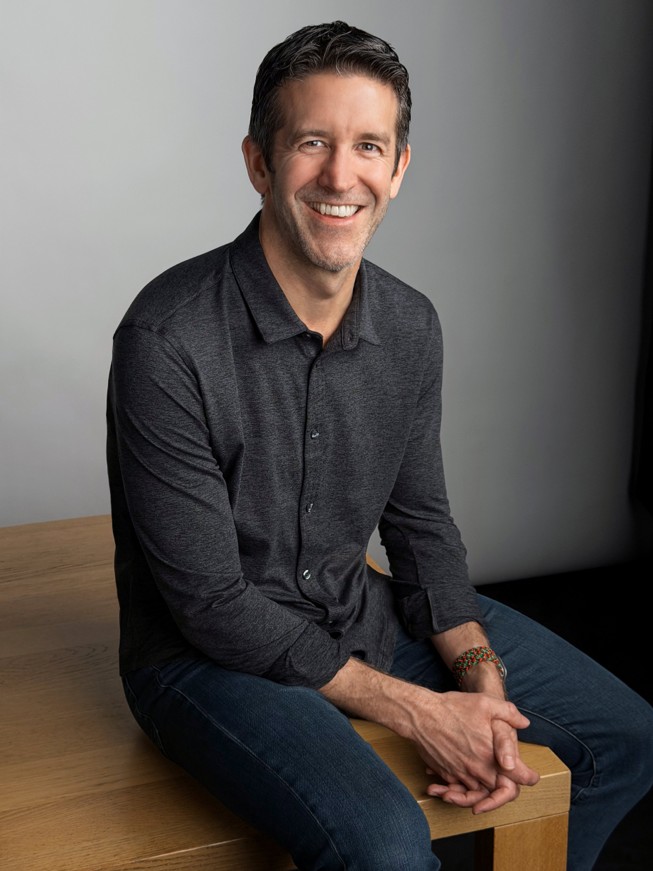
John Ternus becomes Apple’s chief executive officer on September 1, 2026, taking over from Tim Cook just eight days before Apple’s next major product event. Apple announced the handoff in April, saying Cook would become executive chairman and Ternus, then senior vice president of Hardware Engineering, would become CEO after a summer transition.
The timing makes Ternus’s first week unusually consequential. Apple has scheduled a special event for September 9 at 10 a.m. PT, with the company’s event page using the tagline “Surprise and shine.” Apple has not published the full product lineup, but the September window is typically where the company resets the iPhone, Apple Watch, and AirPods cycle. The Verge reported that Apple sent invitations for the event last week and will stream it from Apple Park.
That gives the leadership change a sharper technology angle than a routine executive succession story. Ternus is not inheriting Apple during a quiet product year. He is taking control while the company is trying to show that Apple Intelligence, Siri AI, on-device models, privacy architecture, and new device hardware can work together in products people actually buy.
A hardware CEO at an AI turning point
Ternus joined Apple’s product design team in 2001, became a vice president of Hardware Engineering in 2013, and joined the executive team in 2021. Apple credits him with hardware engineering work across iPhone, Mac, iPad, Apple Watch, and AirPods, including the Mac’s Apple Silicon era and durability, materials, and repairability programs.
That background matters because Apple’s AI strategy is still tightly tied to devices. Unlike OpenAI, Google, Microsoft, and Anthropic, Apple is not primarily selling a standalone AI chatbot or a cloud model platform. Its strongest path is to make AI feel native to the iPhone, Mac, iPad, Watch, Vision Pro, AirPods, and home devices, while preserving the privacy and ecosystem control that already define the company’s products.
The next iPhone cycle will test that pitch. Apple used WWDC 2026 to present Siri AI powered by Apple Intelligence, along with software updates across its platforms. The question now is whether the fall hardware can make those features feel faster, more personal, more reliable, and less like a delayed response to ChatGPT and Gemini.
Cook leaves a scaled-up Apple
Cook is not leaving the company. As executive chairman, he will remain involved in some areas, including policy engagement. Arthur Levinson, Apple’s non-executive chairman for the past 15 years, becomes lead independent director, and Ternus joins Apple’s board.
The handoff follows one of the most successful corporate runs in technology history. Cook became CEO in 2011 after Steve Jobs stepped down. Apple says its market capitalization rose from roughly $350 billion to $4 trillion under Cook, while annual revenue nearly quadrupled from $108 billion in fiscal 2011 to more than $416 billion in fiscal 2025. The company also says its active installed base has grown to more than 2.5 billion devices.
Cook’s Apple expanded far beyond the iPhone without replacing the iPhone as its center of gravity. Apple Watch, AirPods, Apple Pay, Apple TV+, iCloud, Apple Music, and the App Store helped turn Apple into a services and wearables giant as well as a hardware company. Apple also moved the Mac to Apple Silicon, giving the company more control over performance, battery life, and hardware-software integration.
That record gives Ternus a strong starting point, but it also sets a high bar. The Apple he now leads is larger, more regulated, more dependent on services revenue, and under more pressure to prove that its AI work is not merely catching up.
What to watch on September 9
The first thing to watch is whether Apple makes AI a product feature or an event theme. Apple’s best launches usually explain a capability through concrete user actions: better photos, longer battery life, faster app workflows, safer health alerts, easier calls, or simpler everyday tasks. If Siri AI and Apple Intelligence appear mainly as broad promises, Ternus’s first launch will not do much to change the market’s view of Apple’s AI position.
The second is silicon. On-device AI depends on memory bandwidth, neural processing, thermal headroom, battery life, and software scheduling. Any new iPhone or wearable hardware that improves local inference will matter more if Apple can explain what runs on-device, when private cloud processing is used, and how the experience changes for normal users.
The third is the device mix. Apple’s current event page does not confirm the products, and pre-event rumors should be treated as rumors until Apple announces them. Still, the market will be looking for signs that the company can refresh mature categories while opening room for new form factors. A conventional Pro phone update would be judged differently from a broader hardware shift that gives Siri AI new sensors, displays, or always-available contexts.
The succession story is also a product story
Ternus’s appointment signals continuity, not a reset. He is a long-serving Apple insider, and Cook’s continued role as executive chairman reduces the chance of abrupt strategic change. But the emphasis changes. Apple’s next CEO is a hardware engineer at a moment when AI is becoming a hardware problem again: chips, sensors, batteries, cameras, displays, local models, and private cloud systems all have to work together.
That is where Apple can still differentiate. Its competitors have moved quickly in cloud AI and chatbot distribution, but Apple controls the default device layer for hundreds of millions of high-value users. If Ternus can make AI feel useful inside Apple products without making those products feel less private, less predictable, or more complicated, the company has a credible answer to the AI race.
If not, the September 9 event could reinforce the criticism that Apple’s AI strategy remains too slow for a market now trained to expect visible model progress every few months. Ternus’s first test as CEO will be whether Apple can turn its hardware discipline into a clearer AI product story.