


Browsing Tag
Frontier AI
11 posts
Advanced frontier AI models, capabilities, risks, and deployment policy.

White House AI Review Rules Put Frontier Models Behind a Private Gate
The White House has finalized a voluntary framework for reviewing advanced AI models before release, but the testing criteria are staying private. That turns frontier model launches into a new kind of prerelease security review, with open-weight models and outside researchers still sitting largely outside the process.


OpenAI’s Astra Release Puts Critical Cyber AI Behind a Trust Gate
OpenAI now says Astra is its first model to meet the Critical cybersecurity capability threshold. The model is expected soon, but its most advanced cyber abilities will sit behind Daybreak access, added monitoring, and stricter release controls.

AI Kill Switch Act Would Turn Model Control Into a Federal Requirement
The bipartisan AI Kill Switch Act would require powerful AI developers to keep working controls for throttling, suspending, or shutting down models, while giving DHS emergency authority in catastrophic loss-of-control scenarios. The proposal turns AI safety from a policy promise into a concrete operations requirement.

Claude Fable 5 Returns With a New Test for AI Jailbreak Rules
Anthropic is restoring Claude Fable 5 after U.S. export controls on Fable 5 and Mythos 5 were lifted. The redeployment brings a new cyber-safety classifier, fallback handling for blocked requests, and a proposed industry framework for scoring AI jailbreak severity.

Open-Weight AI Cyber Gap Narrows to Months, AISI Finds
The UK AI Security Institute says GLM-5.2 and DeepSeek V4-Pro now trail leading closed AI models on cyber tasks by roughly four to seven months. For defenders, that shrinking gap turns open-weight model policy into an operational security issue, not a distant AI governance debate.
Mythos Limits Are Already Pushing AI Cyber Tools Toward Alternatives
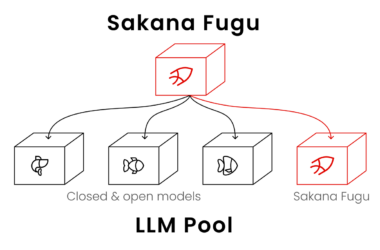
Anthropic’s Mythos 5 is returning only for approved U.S. cyber defenders while Fable 5 remains restricted. In the same week, Sakana AI and 360 Security showed why AI cyber capability is becoming a provider-risk and sovereignty problem, not just a model benchmark race.
Anthropic’s Mythos Test Shows Why AI Cyber Defense Is Becoming Classified Work
An Anthropic Mythos test with U.S. intelligence agencies reportedly found vulnerabilities in highly sensitive government systems within hours. The episode sharpens the policy problem around frontier AI: the same models that can help defenders fix critical software can also compress the timeline for attackers.
OpenAI Launches GPT-5.6 Sol Under Government-Restricted Preview
OpenAI has launched GPT-5.6 Sol, Terra, and Luna in a restricted preview after U.S. government review. The release brings new pricing, API and Codex access limits, stronger cyber safeguards, and a clearer look at how frontier model launches are becoming governed deployments.

Five Eyes Warns Frontier AI Could Compress Cyber Risk Into Months
Five Eyes cyber agencies warned on June 22 that frontier AI could transform offensive and defensive cyber operations on a months-long timeline. The guidance turns AI-enabled cyber risk into a board-level resilience issue, with practical pressure on patching, identity controls, legacy systems, incident response, and defensive AI use.
U.S. Order Forces Anthropic to Pull Fable 5 and Mythos 5 Offline
Anthropic disabled Claude Fable 5 and Mythos 5 after a U.S. export-control directive covering foreign-national access. The abrupt shutdown turns frontier AI access into an operational risk for developers and enterprises.