

Browsing Tag
AI Security
50 posts
Security risks, defenses, and engineering practices for AI systems and models.

Claude Fable 5 Returns With a New Test for AI Jailbreak Rules
Anthropic is restoring Claude Fable 5 after U.S. export controls on Fable 5 and Mythos 5 were lifted. The redeployment brings a new cyber-safety classifier, fallback handling for blocked requests, and a proposed industry framework for scoring AI jailbreak severity.


AI Pentesting Is Finding Bugs Faster Than Teams Fix Them
Cobalt’s latest AI pentesting research shows security teams are testing AI apps more often, but serious LLM vulnerabilities still have the lowest fix rate of any category. The useful lesson is not to abandon automation, but to connect AI security tests to ownership, triage, and retesting.

Open-Weight AI Cyber Gap Narrows to Months, AISI Finds
The UK AI Security Institute says GLM-5.2 and DeepSeek V4-Pro now trail leading closed AI models on cyber tasks by roughly four to seven months. For defenders, that shrinking gap turns open-weight model policy into an operational security issue, not a distant AI governance debate.

Meta’s Virtue AI Hires Move Agent Security Into the Model Lab
Meta Superintelligence Labs is hiring Virtue AI co-founders Bo Li, Dawn Song, Sanmi Koyejo and other team members. The move brings automated red teaming, runtime guardrails, and agent-action security closer to Meta’s frontier AI work as labs race to make agents safer before they reach billions of users.
Mythos Limits Are Already Pushing AI Cyber Tools Toward Alternatives
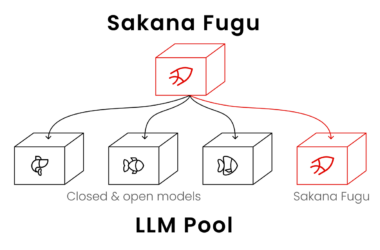
Anthropic’s Mythos 5 is returning only for approved U.S. cyber defenders while Fable 5 remains restricted. In the same week, Sakana AI and 360 Security showed why AI cyber capability is becoming a provider-risk and sovereignty problem, not just a model benchmark race.
Anthropic’s Mythos Test Shows Why AI Cyber Defense Is Becoming Classified Work
An Anthropic Mythos test with U.S. intelligence agencies reportedly found vulnerabilities in highly sensitive government systems within hours. The episode sharpens the policy problem around frontier AI: the same models that can help defenders fix critical software can also compress the timeline for attackers.

Dragos EmberAI Puts AI Security Workflows Inside the Control Room
Dragos launched EmberAI, an OT-native AI assistant for industrial cybersecurity teams. The product matters because critical infrastructure defenders need AI that understands plant assets, threat groups, vulnerable equipment, and operational impact rather than treating OT security like ordinary IT alert triage.

OpenAI Daybreak Turns AI Bug Finding Into a Patching Race
OpenAI expanded Daybreak with Patch the Planet, an updated GPT-5.5-Cyber model, Codex Security workflows, and a partner program for vetted security vendors. The move shifts the AI cybersecurity race from finding more bugs to validating, patching, testing, and landing fixes before maintainers are overwhelmed.

DeepMind’s AI Control Roadmap Makes Agent Security a Runtime Problem
Google DeepMind’s AI Control Roadmap treats powerful internal AI agents as systems that need monitoring, access limits, response plans, and shutdown paths. The framework is a signal for enterprises moving from chatbots to tool-using agents: alignment claims are no longer enough if the agent can touch code, data, infrastructure, or security workflows.

AWS AgentCore Turns Enterprise AI Agents Into an Operations Stack
AWS used its New York Summit to expand Bedrock AgentCore, launch AWS Context and AWS Continuum, and push AI agents deeper into enterprise operations. The real story is not another chatbot layer, but a managed stack for grounding, governing, testing, and remediating agent behavior.