Google is rolling out a new Android fake call detection feature that tries to solve a problem caller ID can no longer handle on its own: a scammer can spoof a familiar phone number and use AI voice cloning to sound like someone in your contacts.
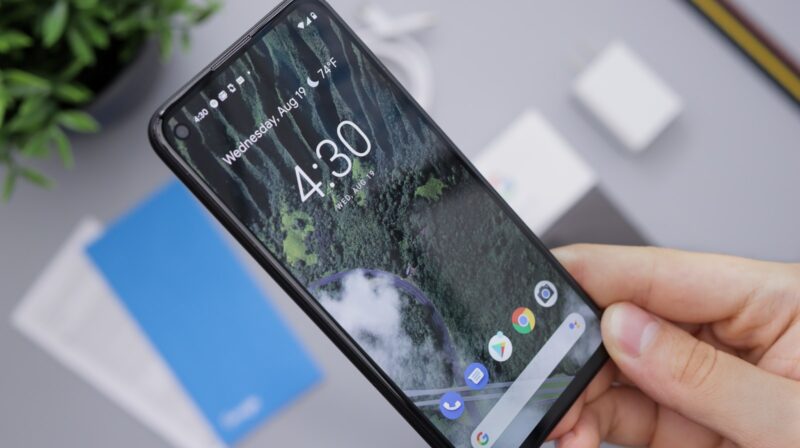
The feature, announced June 2, is rolling out globally this month in Phone by Google for Android 12 and newer devices, starting with Pixel phones. When it works, Android can warn that someone may be pretending to call from a contact’s number and give the user a clear option to hang up.
The important part is not that Google is using AI to listen harder to calls. This feature is closer to device verification. It uses end-to-end encrypted Rich Communication Services, or RCS, as a private signal between phones so the receiving device can check whether the call is actually coming from the contact’s phone.
How the Android fake call check works
Google describes the system as a silent confirmation between devices. If a real contact calls and both people are using Phone by Google, the caller’s device sends a confirmation signal in real time. The recipient does not have to press anything or compare a code.
If a scammer spoofs the same contact’s number, that first signal is missing. The receiving phone can then check with the real contact’s device. If that device reports that it is not currently making a call, Android shows a warning that the caller may be an impostor.
That design makes the feature narrower than a broad fraud detector, but also more concrete. It is not trying to judge whether a voice sounds synthetic. It is trying to answer a simpler question: did this call come from the phone that belongs to the person saved in your contacts?
The catch: both sides need the right setup
Fake call detection has meaningful limits. Google’s footnote says it requires Android 12 or later, Phone by Google, Contacts, Google Messages, RCS capability in Google Messages, and Phone by Google on both the caller’s and recipient’s devices. That means the feature will be strongest between Android users who are already inside Google’s default calling and messaging stack.
It will not magically verify every call from every friend, bank, workplace, doctor, school, or family member. It also cannot protect a user when the real contact’s device is unavailable, the contact is on another platform, RCS is not set up, or the call comes through a dialer that does not support the verification path.
That limitation matters because voice scams often work by creating urgency. A caller may claim to be a child in trouble, a parent in an emergency, an employer authorizing a payment, or a public official asking for immediate action. If the phone does not show a warning, that should not be treated as proof that the call is safe.
Why Google is aiming at contact spoofing
Scammers have a practical reason to impersonate saved contacts. Many people ignore unknown numbers, but a familiar name on the lock screen can lower suspicion immediately. Add a cloned voice and a plausible emergency, and the attack can bypass the habits people use to avoid ordinary robocalls.
The FBI’s 2025 Internet Crime Report shows why phone-based impersonation is no longer a fringe concern. The bureau recorded more than 22,000 complaints with AI-related information and adjusted losses above $893 million. In the same report, the FBI specifically noted that voice cloning can be used in business email compromise, distress scams, investment fraud, and other schemes where the attacker needs to sound like a trusted person.
Google’s broader Android security post also points to the scale of impersonation fraud. The company cited Interpol’s March 2026 assessment of global financial fraud and FTC data showing billions in impersonation-scam losses. The Android feature does not solve that entire problem, but it targets one high-pressure moment: the instant a trusted contact’s name appears on a call screen.
Fake call detection is different from scam detection
Google already offers scam-related protections in Android, including scam detection for calls and messages. Fake call detection should not be confused with those tools.
Scam detection looks for suspicious behavior in a call or message, such as common fraud patterns. Fake call detection is about verifying that a contact call came from the contact’s device. One is behavior analysis. The other is caller-origin verification.
That distinction is useful for privacy and expectations. Users should not assume Android is listening to every contact call for deepfake audio. Google says fake call detection runs automatically in the background and uses an encrypted RCS confirmation signal. The protection is on by default, though it can be disabled in Phone by Google settings.
What Android users should do now
Android users who want the protection should check that Phone by Google is installed and set as the default dialer, Google Messages is installed, RCS is enabled, and the device is running Android 12 or later. Pixel owners should see the rollout first, with broader Android availability during June.
Families and small businesses should treat the feature as a backup, not the whole plan. A simple verification habit still matters: if a call sounds urgent and asks for money, credentials, gift cards, wire transfers, cryptocurrency, or sensitive information, hang up and call back using a known number. A short family passphrase can also help when someone claims to be in distress.
For employers, the lesson is similar. Voice approval should not be enough for wire transfers, password resets, payroll changes, vendor-payment updates, or emergency exceptions. AI voice cloning makes familiar sound less trustworthy. Payment and account-change workflows need out-of-band verification, logs, and written approval paths that do not depend on recognizing a voice under pressure.
Why this could become bigger than one Android feature
The most interesting part of Google’s approach is that it is built on RCS, an open standard, rather than a Pixel-only trick. Google argues that other apps and device makers could adopt the same kind of verification. If that happens, caller ID could begin moving from a display label toward a stronger trust signal.
That will take time. The current version depends on Google apps, Android version support, RCS availability, and adoption by both sides of a call. Apple, carriers, enterprise phone systems, and third-party dialers would all matter if this idea is going to become a broader anti-spoofing layer.
Still, the direction is right. AI voice scams exploit human trust at the exact moment a phone call feels personal and immediate. Android fake call detection gives the device a way to ask whether the call came from the right phone before the user has to decide whether the voice on the line is real.
Sources: Google Android Security Blog, Google’s June Android Drop, FBI 2025 Internet Crime Report, FTC consumer guidance on AI voice-cloning scams.