
Microsoft’s May 29 report on malicious npm packages shows why package security is becoming harder as AI coding tools move from suggestions into hands-on development work. The campaign did not need a new vulnerability. It used dependency confusion, credible-looking package metadata, and install-time execution to profile developer and CI environments.
Microsoft said a threat actor using three npm maintainer aliases published malicious packages on May 28 and May 29, 2026, across organizational scopes that resembled internal corporate namespaces. Several packages spoofed enterprise-style GitHub, Jira, and documentation URLs in package.json. Some used inflated versions such as 100.100.100 or 99.99.100; others used ordinary-looking versions like 3.5.22. The point was to look plausible enough to survive a rushed dependency review.
The AI angle is not that coding assistants invented the attack. It is that agentic development compresses the steps between “try this library,” a changed package.json, a noisy lockfile diff, and an npm install command running on a developer machine or CI runner. When a tool can recommend packages, edit dependency files, and execute setup commands, package trust becomes part of the AI workflow.
How The npm Campaign Worked
Dependency confusion works when a package manager resolves a dependency name to an attacker-controlled public package instead of the intended private one. That can happen when internal package names leak through source code, docs, examples, stack traces, build logs, or autocomplete context, and when registry configuration allows private scopes to fall back to the public npm registry.
Microsoft’s report identified packages across scopes including @cloudplatform-single-spa, @wb-track, @data-science, @ce-rwb, @payments-widget, @travel-autotests, @t-in-one, @capibar.chat, and @sber-ecom-core. Examples such as @data-science/llm, @payments-widget/payments-widget-sdk, @capibar.chat/ui-kit, and @sber-ecom-core/sberpay-widget were named to look like internal platform, payment, or UI components.
The execution path was direct. Each malicious package used a lifecycle hook so code could run during installation. npm lifecycle scripts are legitimate package behavior; that is why they are so useful to attackers. A postinstall hook can execute before application code is imported and before a reviewer has meaningfully inspected the package contents.
Microsoft found an obfuscated JavaScript stager under scripts/postinstall.js. After installation, it checked CI-related environment variables, verified the Node.js version, created a cache marker under the user’s home directory to avoid repeated execution, walked upward to find the project root, detected the operating system, downloaded a platform-specific payload from an attacker-controlled command-and-control server, wrote it into a temporary directory, and launched it as a detached process.
The May 29 wave was more polished. Microsoft said the @t-in-one packages shipped a three-layer-obfuscated postinstall stager of about 13 KB, honored a functional T_IN_ONE_NO_TELEMETRY kill switch, and used a run-once marker directory at ~/.cache/._t-in-one_init/. The observed payload focused on reconnaissance, but the design could support later credential theft, exfiltration, or targeted backdoor behavior.
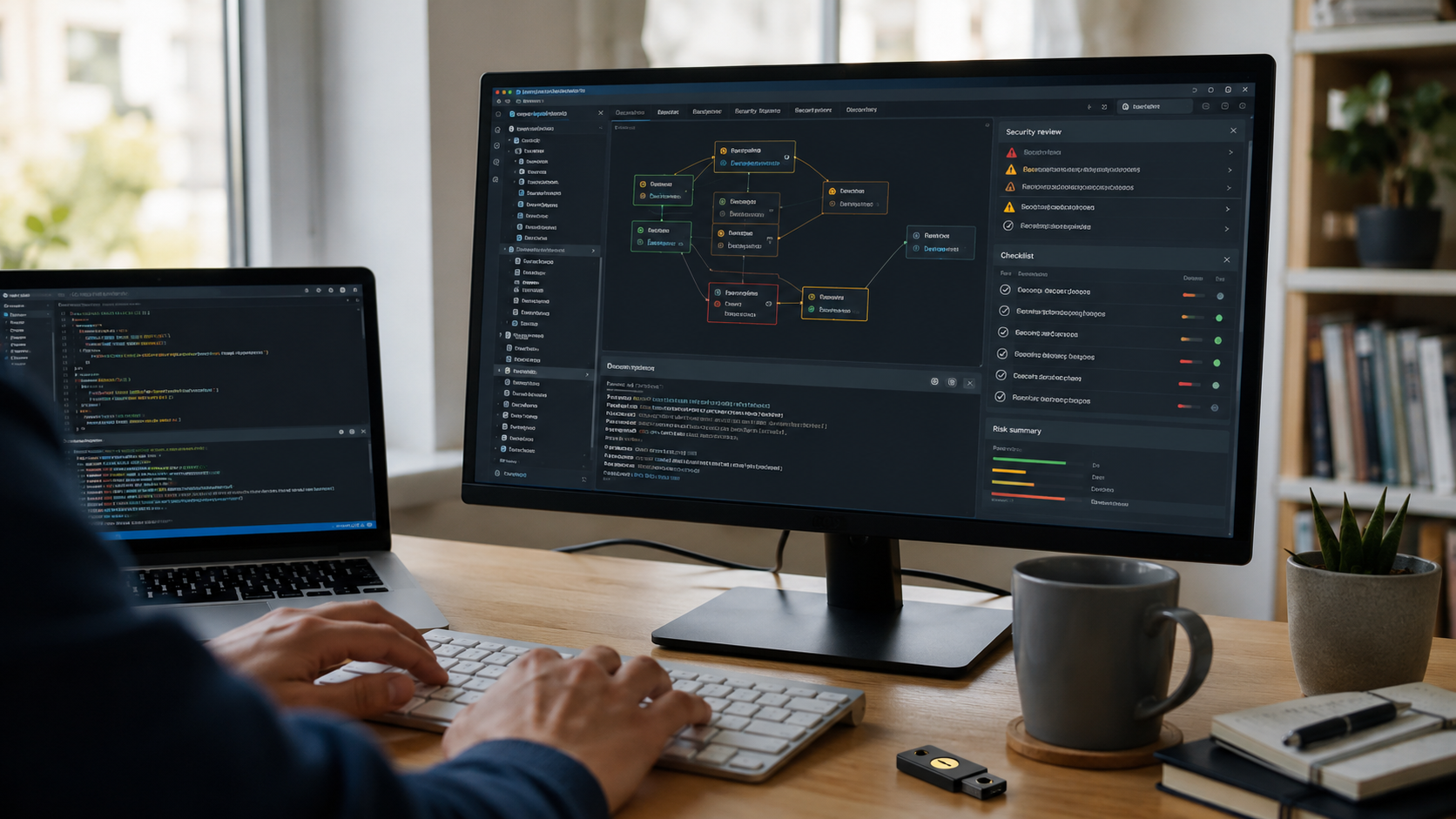
Why Agents Change The Review Surface
Traditional dependency review has natural friction. A developer searches for a package, reads documentation, checks adoption signals, installs it, and notices the project files change. AI coding agents can compress that sequence into one repair attempt: diagnose the failure, add a package, update the lockfile, run the installer, and report that tests passed or failed.
The risky places are often the least glamorous. A lockfile change can add hundreds of lines. A generated setup step can install packages into a workspace that already has cloud credentials, npm tokens, shell history, SSH keys, or GitHub credentials nearby. A CI job can expose environment variables the app never needed at install time. A package that only profiles the machine today may be selecting targets for a second-stage payload tomorrow.
The problem extends beyond npm. PyPI, RubyGems, crates.io, VS Code extensions, GitHub Actions, container registries, and model-plugin ecosystems all combine public discovery, package identity, maintainer trust, and automated execution. npm is the sharp example because lifecycle scripts and deep dependency trees make install-time code execution ordinary.
What Reviewers Should Check
Reviewers should stop treating dependency diffs as background noise. The important question is not whether a lockfile looks normal; it is whether the change introduces a new trust decision.
- New direct dependencies. Ask why the package is needed, who maintains it, how old it is, whether it has a credible release history, and whether an existing dependency or standard API can do the same job.
- Lifecycle scripts. Check new packages for
preinstall,install,postinstall, andpreparehooks. Treat install-time execution as a privileged behavior, not a footnote. - Registry routing. Review
.npmrc, workspace config, package scopes, and registry URLs. Internal scopes should resolve only to the intended private registry. - Version anomalies. Investigate very high versions, sudden jumps, fresh packages with inflated numbers, and names that resemble internal modules.
- Lockfile summaries. Use tooling that highlights newly introduced packages, resolved tarball URLs, integrity hashes, maintainers, publish age, and install scripts instead of expecting humans to parse raw lockfile churn.
- Agent-created commands. Treat AI-generated
npm install,pip install, registry changes, and lockfile edits as actions that need explicit approval in sensitive repositories.
Controls That Reduce The Blast Radius
Teams do not need to ban AI coding tools to reduce this class of risk. They need to decide what a generated dependency change is allowed to do before it is trusted.
For npm projects, high-sensitivity environments should consider installs with --ignore-scripts or ignore-scripts=true where practical, then explicitly allow packages that genuinely need install-time behavior. That can break native-module builds or packages that download browsers and binaries, so it works best as a policy with documented exceptions.
Registry configuration is just as important. Organizations should pin internal scopes to private registries, prevent fallback to public registries for private packages, monitor for public packages that resemble internal names, and consider reserving important public scopes when appropriate. Dependency confusion becomes easier when private names leak and registry resolution is permissive.
CI runners and agent workspaces should install dependencies with the minimum secrets required for that job. Build steps should not expose long-lived cloud keys, npm publish tokens, signing keys, or production credentials unless the step truly needs them. Short-lived credentials, isolated runners, egress logs, and alerts for unexpected outbound connections make install-time malware less useful even when it runs.
The Practical Takeaway
AI coding tools make package decisions faster, but they also move dependency trust into a workflow where files can be edited and commands can be run automatically. Microsoft’s npm findings show the shape of the risk: corporate-looking packages, malicious install hooks, environment profiling, run-once behavior, and targets selected by what the package learns after installation.
The response should be specific. Make new dependencies visible. Inspect lifecycle scripts. Lock internal scopes to private registries. Strip unnecessary secrets from developer and CI environments. Gate AI-generated install commands and lockfile changes before they run in sensitive projects. That keeps the speed benefits of agentic coding without granting every package suggestion the same trust as approved project code.